Cold Storage Robotics & Refrigerated Warehouses

Cold storage and refrigerated warehouses are brutal places to work. Picture this: temperatures plunging down to an almost unimaginable –25°C to –40°C, plus the constant struggle with ice, humidity, and the non-negotiable demands of food safety. This extreme environment makes manual labor slow, incredibly expensive, and outright dangerous. When people are battling frostbite and fatigue, productivity inevitably suffers, making it nearly impossible to run these facilities efficiently at a large scale.That’s where cold storage robotics steps in. 

This new generation of automation is engineered from the ground up to conquer the deep freeze. These systems bring together incredibly durable hardware, components built to withstand extreme cold, and smart software. The result? They deliver a level of accuracy and consistency that human workers simply cannot sustain inside freezers. 

Today, this low-temperature automation is becoming essential for the global food supply, pharmaceuticals, and all temperature-controlled logistics. In this article, let’s dive into the science, engineering, and huge business advantages of robotic picking systems designed for the deep chill and how they’re completely transforming the way refrigerated warehouses operate.

The Harsh Reality of Cold Storage Picking

Cold environments introduce challenges not present in standard warehouses. Understanding these barriers illustrates why automation is accelerating in this sector.

1. Human Productivity Drops Sharply in Freezers

Exposure to freezing temperatures limits how long workers can remain inside the warehouse. Break cycles, safety protocols, and physical strain reduce picking speed.

2. Safety Risks Are High

Cold injuries, slipping hazards from ice accumulation, and difficult visibility create risky working conditions.

3. Equipment Fails Faster

Traditional machinery struggles in sub-zero conditions. Battery performance drops, lubricants freeze, sensors fog, and plastics crack.

4. Labor Shortages Are Common

Few workers are willing to operate in severe cold, especially during long shifts. These limitations have opened the door for thermal-safe robotics tailored to freezer operations.

Also See: The Role of Robot Sensing and Perception

How Cold Storage Robotics Are Engineered for Extreme Durability

what is freezer warehouse picker

Robots used in refrigerated warehouses must survive conditions that would quickly break conventional machines. Here’s what makes freezer warehouse pickers special:

1. Thermal-Resistant Materials

Cold storage robots use specially engineered components:

  • Low-temperature industrial plastics
  • Reinforced metal alloys
  • Insulated casings for electronics
  • Anti-fog sensor lenses

This prevents cracking, warping, or malfunctioning.

2. Heated Sensors & Electronics

Robots rely heavily on cameras, LiDAR, and RFID. In freezing air, these can frost over. Thermal-safe robotics counter that with:

  • Micro-heaters around sensors
  • Insulated vision modules
  • Temperature regulation systems

This keeps critical components clear and operational.

3. Freezer-Optimized Batteries

Lithium batteries lose capacity in low temperatures. This ensures reliable runtime even in –30°C environments. Cold storage robots use:

  • High-density power cells
  • Battery warmers
  • Cold-charge algorithms

4. Anti-Ice Mobility Systems

Wheel slippage is a major problem. Robots use:

  • Ice-grip treads
  • Anti-skid logic
  • Adaptive suspension

Some systems even melt ice beneath the wheels using micro-heat elements.

5. Condensation-Proof Internal Design

When robots leave the freezer and re-enter ambient temperatures, moisture forms instantly. Solutions include:

  • Hermetically sealed enclosures
  • Moisture extraction systems
  • Anti-condensation fans

This prevents short circuits and rust.

How Robotic Picking Works in Refrigerated Warehouses

Cold storage robotic systems typically follow a workflow engineered for speed and precision.

Step 1: Product Identification

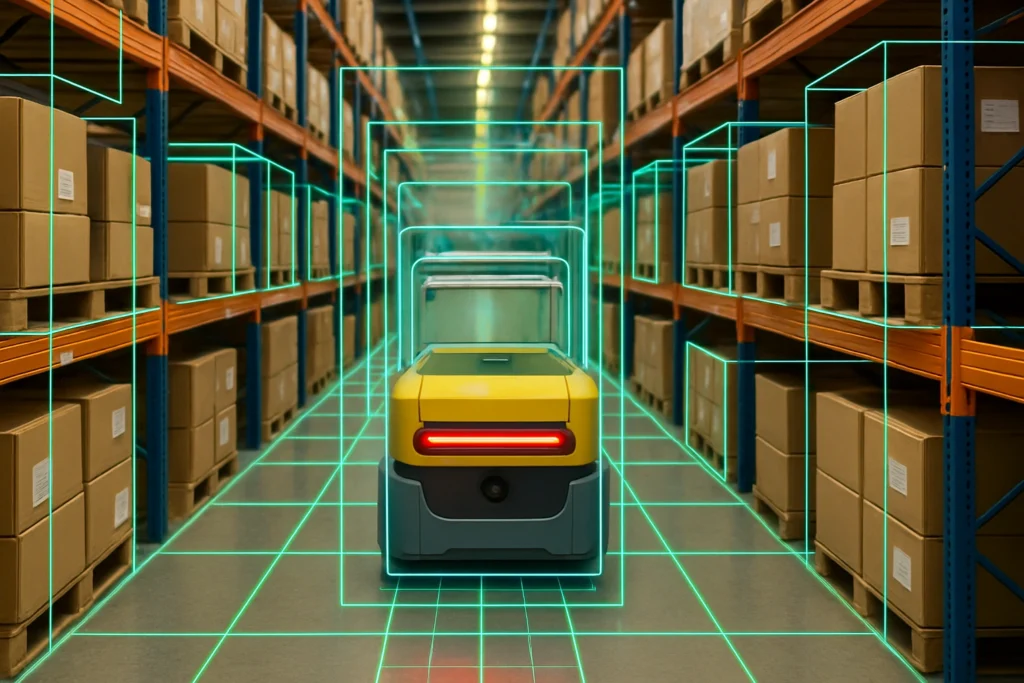
Using LiDAR, 3D vision, and RFID tags optimized for cold environments, robots locate inventory on racks or pallets.

Step 2: Item Retrieval

Freezer warehouse pickers use:

  • Vacuum grippers
  • Clamps
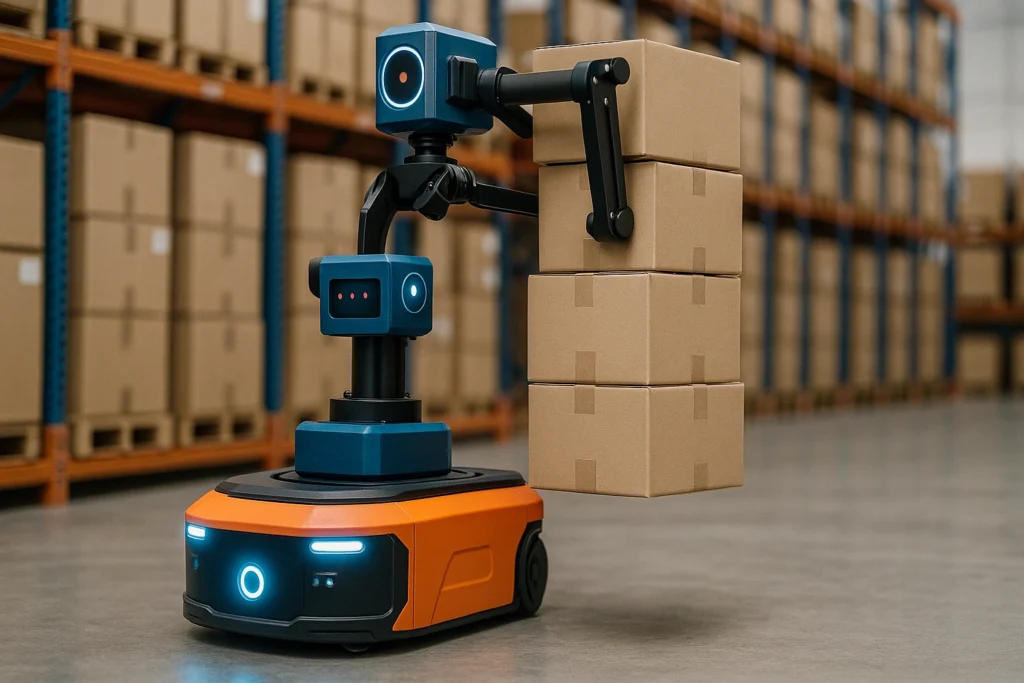
  • Soft robotic arms
  • Pneumatic end-effectors

These tools are adapted to function without freezing.

Step 3: Navigation Through Freezers

Robots navigate autonomously using:

  • Low-temperature SLAM
  • Thermal-stable sensors
  • Real-time obstacle detection

Warehouse layouts are optimized for safe robot paths.

Step 4: Packing & Sorting

After picking, robots place items into insulated bins or automated conveyors.

Step 5: Transfer to Ambient Zones

Goods move toward loading docks or staging areas, maintaining uninterrupted cold chain compliance.

Benefits of Robotic Picking in Cold Storage Facilities

1. Massive Productivity Gains

One of the biggest advantages of robotic picking in cold storage is the dramatic boost in productivity. Human workers cannot operate for long periods in freezing conditions without breaks, protective routines, and recovery time. Robots don’t face those limitations. 

They maintain a consistent picking speed, work around the clock, and never slow down due to temperature fatigue. In many freezer warehouses, automation has been shown to increase throughput by two to three times, simply because the systems can perform continuously without interruption.

2. Better Worker Safety

Safety is another major benefit. Cold storage environments are filled with risks—slippery floors, frostbite exposure, reduced visibility, and overall physical strain. By shifting picking tasks to robots, facilities significantly reduce these hazards. 

Workers no longer have to spend long hours inside freezer zones; instead, they can monitor and manage operations from warm control rooms, dramatically improving both morale and workplace safety.

3. Perfect Temperature Compliance

Robots also strengthen cold chain integrity. Maintaining stable temperatures is essential for food, pharmaceuticals, and other sensitive products. Automated systems help by reducing unnecessary door openings, minimizing dwell time between zones, and ensuring items stay within required temperature thresholds. This level of consistency is difficult to achieve with manual operations, which often introduce small temperature fluctuations every time a worker enters or exits a cold area.

4. Lower Operational Costs

From a financial perspective, automation cuts many of the costs associated with human labor in freezers. Recruiting and retaining workers willing to operate in extreme cold is expensive. 

Additional costs include safety gear, specialized training, insurance, and turnover management. Robotic systems eliminate most of these challenges. While the upfront investment is significant, many facilities achieve a full return on investment in 12 to 24 months, particularly high-volume operations.

5. Improved Accuracy and Less Waste

Accuracy also improves significantly when robots take over picking tasks. Machines don’t misread labels, drop products, or place items in the wrong bins—mistakes that become more common when human workers are cold, tired, or rushed. In environments handling perishable goods, even small errors can lead to product loss or compliance issues. Robots, with their precise sensors and consistent behavior, help reduce waste and maintain higher overall quality control.

Applications Across the Cold Supply Chain

what is  thermal-safe robotics

Cold storage robots are now common in:

1. Frozen Food Distribution Centers

Pizza, meats, vegetables, and packaged foods require constant sub-zero handling.

2. Pharmaceutical Warehousing

Vaccines, insulin, and biotech products depend on stable low temperatures.

3. Seafood Logistics

Fresh and frozen seafood must be handled precisely to maintain freshness.

4. Ice-Cream & Dairy Supply Chains

Robots eliminate human errors that often lead to spoilage.

5. High-Velocity Grocery Fulfillment

Grocery e-commerce creates demand for fast, reliable freezer automation.

FAQ: Cold Storage Robotics

Can standard warehouse robots work in low-temperature freezers?

No. Only specially engineered cold storage robotics with thermal-safe components can function reliably below 0°C.

What temperatures can freezer warehouse pickers handle?

Most operate from –10°C down to –30°C. Advanced models reach –40°C.

Are cold storage robots expensive?

Initial investment is high, but ROI is rapid due to reduced labor costs and increased throughput.

Do robots reduce compliance risks?

Absolutely. Robots maintain consistent operation, ensuring airtight cold chain integrity.

Can robots replace all humans in freezers?

Not yet. Humans still oversee complex decision-making, but operational exposure to cold is drastically reduced.

Conclusion

Cold storage environments are some of the harshest workplaces in modern logistics. Manual labor struggles to keep pace with the increasing demand for frozen food, pharmaceuticals, and temperature-sensitive products. Thermal-safe robotics, engineered to survive extreme conditions, are revolutionizing refrigerated warehouses with higher speed, accuracy, and safety.

As supply chains expand globally and cold chain compliance becomes more critical, low-temperature automation will be indispensable. The companies that embrace robotic picking now will secure long-term competitive advantages ensuring reliability, maximizing throughput, and creating safer, more efficient operations.

Adaptive Grippers & End-Effectors for Robotic Picking

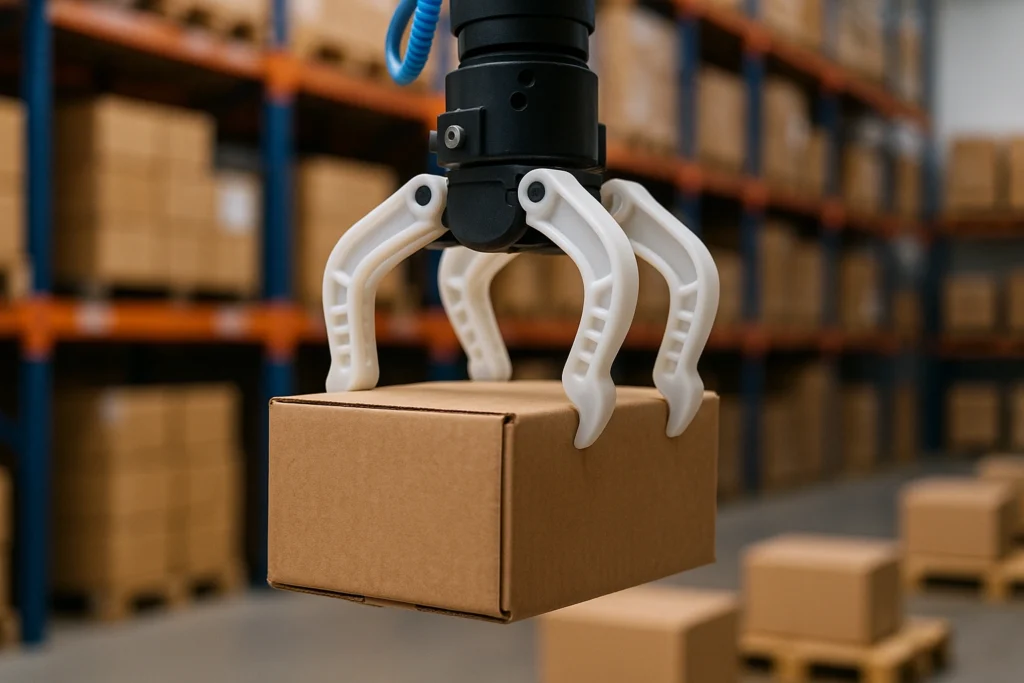
Warehouse automation is moving forward rapidly, and the single most critical component in this evolution is the gripper. As robots increasingly handle more complex picking tasks including fragile goods, irregular geometries, mixed SKUs, and highly variable environments the limitations of traditional, rigid tooling have become clear. This need has driven the development of highly adaptive grippers and advanced robotic end-effectors, engineered to closely emulate the dexterity, sensitivity, and intelligent decision-making of the human hand. 

From soft robotic systems that delicately envelop objects to smart, sensor-driven end-effectors that dynamically adjust grip force, adaptive gripper technology is fundamentally reshaping the potential of automated picking. This article will explore the underlying science, engineering principles, and practical applications of these flexible picking systems, explaining why they have become indispensable to modern, robotics-enabled warehouse operations.

What Are Adaptive Grippers?

Adaptive grippers are robotic gripping devices capable of adjusting shape, grip force, and contact surface to handle objects with varying sizes, textures, and fragility. Unlike traditional mechanical grippers, they don’t rely solely on rigid jaws and fixed actuation. Instead, they use advanced materials, sensors, algorithms, and flexible geometries to mimic human-like touch.

Key Characteristics of Adaptive Grippers

  • Shape-shifting surfaces that conform to irregular geometries
  • Flexible materials that prevent damage to fragile goods
  • Integrated sensors for pressure, texture, and proximity
  • AI-driven adjustments for grip precision
  • High versatility across product categories

These features make adaptive grippers invaluable in environments such as e-commerce fulfillment centers, grocery warehouses, pharmaceutical logistics, and manufacturing plants.

Also See: How Robotics Guarantees Consistent Compliance and Reduces Errors in Logistics

The Science Behind Robotic End-Effectors

The “end-effector” is the part of a robot that interacts directly with an object. In picking systems, this includes:

  • Grippers
  • Vacuum cups
  • Magnetic tools
  • Multi-finger robotic hands
  • Hybrid gripper-vacuum systems

Modern robotic end effector technology blends materials science, biomechanics, machine learning, and control engineering. These innovations enable robots to grasp items previously unpickable by automation like soft produce, transparent packaging, deformable bags, and oddly shaped toys.

How Robotic End-Effectors Work

what is robotic end effector

Detection: Vision systems identify object shape, weight, and orientation.

Selection: The robot chooses the most suitable grip strategy.

Adaptation: The gripper adjusts its geometry or suction parameters.

Execution: The object is grasped securely with real-time force modulation.

Feedback: Sensors validate grip quality and trigger adjustments if needed.

This closed-loop system is essential for achieving high accuracy, minimal damage, and reliable cycle times.

Why Adaptive Gripper Design Matters

1. Handling High SKU Diversity

E-commerce warehouses often carry thousands of product variations, making rigid grippers impractical. Adaptive grippers enable robots to pick:

  • Bottles
  • Clothing
  • Electronics
  • Bags of snacks
  • Produce
  • Cosmetics
  • Home goods

Their versatility reduces the need for multiple end-effectors or manual intervention.

2. Reducing Product Damage

Soft robotics grippers are intentionally compliant. They apply even pressure without crushing delicate items like fruit, baked goods, or blister packs.

3. Improving Picking Accuracy

Real-time sensor feedback helps maintain stable grasps even when packages shift or surfaces are slippery. This reduces drops, mispicks, and rework.

4. Supporting High-Speed Automation

Adaptive systems work seamlessly in high-throughput robotic arms and autonomous mobile picking robots. Their ability to quickly adjust between objects keeps operations flowing efficiently.

Soft Robotics Grippers: The Future of Gentle Handling

Soft robotics is a breakthrough field enabling robots to handle the world the way humans do through flexible, muscle-like materials and organic motion.

Features of Soft Robotics Grippers

  • Made from silicone, rubber, or polymer composites
  • Actuated using air pressure, fluid dynamics, or shape-memory materials
  • Safe to touch and inherently anti-crush
  • Highly adaptive to shape variations

Soft grippers excel in grocery, pharmaceutical, and delicate item fulfillment where traditional claws would cause damage.

Flexible Picking: The New Industry Standard

Flexibility in robotic picking is no longer a luxury—it’s an operational necessity. With constantly changing inventory, unpredictable consumer demands, and multi-format packaging, warehouses need adaptive systems that can self-correct.

Advantages of Flexible Picking Systems

  • Faster onboarding of new SKUs
  • Reduced engineering and integration costs
  • Less downtime for tool changes
  • Higher uptime and productivity
  • Better compatibility with AI-driven warehouse software

Types of Adaptive Grippers in Modern Warehousing

1. Soft Pneumatic Grippers

Use air pressure to wrap around objects. Ideal for fragile and irregular products.

2. Vacuum & Hybrid Grippers

Use suction combined with tactile fingers for maximum versatility.

3. Multi-Finger Anthropomorphic Hands

Mimic human hand structure for complex manipulation tasks.

4. Magnetic Grippers

Effective for metal components in manufacturing.

5. Geometry-Shifting Grippers

Mechanically reconfigure shape to match product needs.

Each gripper type addresses different warehouse challenges and object categories.

AI’s Role in Modern End-Effector Performance

what is soft robotics grippers

AI enables adaptive grippers to:

  • Predict ideal grip points
  • Classify object fragility
  • Adjust pressure dynamically
  • Learn from past failed picks
  • Improve accuracy over time

By analyzing millions of picks, machine learning models create optimal picking strategies tailored to each object type. This is vital for unpredictable environments where robots must quickly adapt.

How Adaptive Grippers Improve Warehouse KPIs

1. Higher Throughput

Robots spend less time switching tools or failing picks.

2. Lower Labor Dependency

Even complex items can be handled without human involvement.

3. Reduced Costs

Less product damage and fewer workflow interruptions.

4. Increased Safety

Soft grippers are inherently safe around humans and sensitive items.

5. Higher Accuracy & Quality Control

AI reduces picking errors and ensures consistency.

These improvements add up to stronger operational ROI across any warehouse size.

Conclusion

Simply put, adaptive grippers and advanced robotic hands are redefining what automated picking can do. They inject human-like skill, intelligence, and adaptability into warehouse operations. With systems ranging from soft robotics and multi-finger hands to hybrid suction, robots can now reliably tackle almost any item, from a delicate piece of produce to a complex consumer product. 

The key to navigating today’s complex, high-demand warehouses is the reliability to pick everything. Adaptive grippers aren’t just tools, they’re the essential foundation for making warehouse robotics faster, smarter, and safer.

FAQs: Adaptive Grippers

1. What makes an adaptive gripper different from a traditional robotic gripper?

Traditional grippers use rigid jaws and fixed movements, which work only for predictable objects. Adaptive grippers adjust their shape, pressure, and contact points in real time. They can handle soft, irregular, or fragile items without damaging them.

2. Are soft robotics grippers strong enough for heavy items?

Yes, but within limits. Soft grippers are designed mainly for delicate and lightweight goods. However, hybrid systems mix soft surfaces with mechanical reinforcement to lift heavier products.

3. How do sensors improve robotic picking accuracy?

Sensors provide feedback on pressure, slip, texture, orientation, and weight. With this data, the robot can adjust its grip instantly. If the object starts slipping, the robot knows before it falls.

4. Can one adaptive gripper handle every object in a warehouse?

Not yet, but it’s getting close. Many warehouses now use a single adaptive gripper for 80–90% of SKUs.

5. Are adaptive grippers safe to use around human workers?

Yes. Because they’re flexible and pressure-sensitive, adaptive grippers significantly reduce injury risks. Soft robotics grippers, in particular, are designed to be “human-safe.”

Exploring Warehouse Robotics Companies: Innovation

Introduction

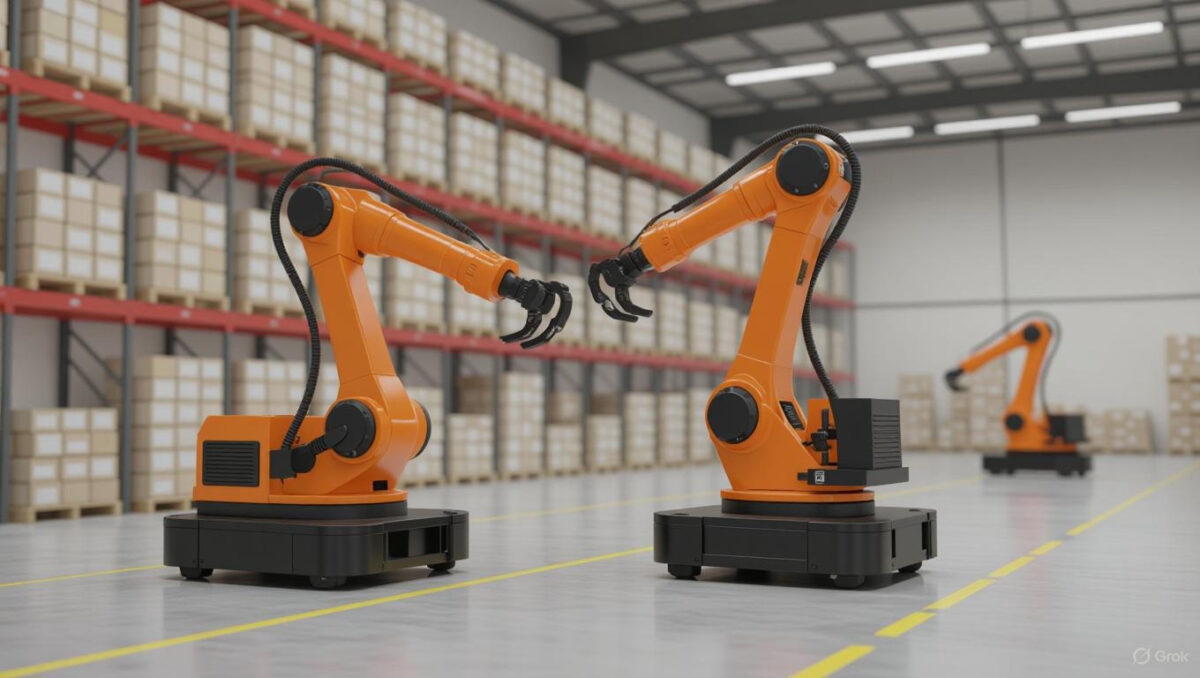
The evolution of warehouse robotics has been one of the most significant developments in the logistics and supply chain industry. Warehouse robotics companies are at the forefront of this revolution, offering robotic warehouse solutions that enhance efficiency, productivity, and cost-effectiveness in warehouse operations. From automated material handling to intelligent sorting systems, robots in warehouse environments are transforming the way goods are managed, stored, and transported.

In this blog, we will explore the role of warehouse robotics companies, the innovation driving these companies forward, and how investment in robotic warehouse systems is changing the landscape of warehouse management.


What Are Warehouse Robotics Companies?

1. Defining Warehouse Robotics Brands

Warehouse robotics companies are businesses that design, manufacture, and provide robotic warehouse solutions. These companies are pioneering the integration of robotic systems into warehouses and distribution centers to automate tasks like order picking, inventory management, sorting, and transportation of goods. The goal is to increase operational efficiency, reduce human error, and minimize labor costs while improving overall warehouse performance.

These companies leverage technologies such as AI, machine learning, autonomous mobile robots (AMRs), and robotic arms to create cutting-edge warehouse robotics systems that can handle tasks traditionally performed by human workers.

Benefits:

  • Automation of repetitive and time-consuming tasks.
  • Enhanced operational efficiency and scalability.
  • Lower labor costs and reduced dependency on human workers.

The Role of Warehouse Robotics Companies in the Logistics Industry

2. Driving Innovation in Warehouse Robotics Systems

Warehouse robotics companies are the driving force behind the rapid adoption of automation in warehouses. These companies are innovating by creating robots that not only perform basic tasks but also interact with warehouse management systems (WMS), IoT devices, and other technologies to optimize warehouse operations.

For example, robotic warehouse solutions are becoming more intelligent with AI-powered robots that can navigate complex environments, avoid obstacles, and adapt to changes in the warehouse. These advancements are helping businesses keep pace with increasing demand and improve operational workflows.

Benefits:

  • Innovative robot designs for a wide range of warehouse tasks.
  • AI-powered robots for smarter decision-making and improved workflows.
  • Seamless integration with existing warehouse systems.

3. Warehouse Robotics Brands and Their Impact on Warehouse Management

The integration of robotic systems into warehouse management processes is a game-changer for businesses. Robots in warehouse environments are capable of performing complex tasks such as inventory tracking, order picking, sorting, and material handling. This automation helps businesses improve the accuracy and speed of their operations while reducing the risk of human error.

Many warehouse robotics companies focus on creating systems that integrate seamlessly with existing warehouse management software. This allows businesses to automate tasks and streamline workflows without having to overhaul their entire system. The introduction of robotic warehouse solutions enables companies to meet growing consumer demand and improve efficiency in fulfillment centers and distribution hubs.

Benefits:

  • Faster inventory tracking and order picking.
  • Optimized workflows through automation.
  • Increased accuracy in order fulfillment.

The Investment in Warehouse Robotics Brands

4. How Investment is Fueling Growth in Warehouse Robotics

The market for warehouse robotics systems is growing rapidly, and investment in warehouse robotics companies has surged in recent years. Venture capitalists, large corporations, and private investors are pouring resources into these companies to help them scale and develop more advanced technologies.

With the increasing demand for automation and efficiency in warehouses, investors are recognizing the potential of robotic warehouse solutions to revolutionize the industry. As warehouse robotics companies continue to innovate, their products are attracting more investment, enabling them to push the boundaries of what’s possible in warehouse automation.

Benefits:

  • Increased funding for research and development in warehouse robotics.
  • Acceleration of innovation through investment in new technologies.
  • Expansion opportunities for robotics companies as they scale operations.

Key Players in the Warehouse Robotics Market

5. Leading Warehouse Robotics Manufacturers

Several warehouse robotics companies have emerged as leaders in the market, providing advanced solutions that are driving change across the industry. Some of the top players in the space include:

  • Amazon Robotics: Known for its use of Kiva robots to automate order picking and transport in Amazon’s fulfillment centers.
  • Locus Robotics: Specializes in autonomous mobile robots for warehouse automation and order fulfillment.
  • GreyOrange: Offers robotic automation systems that integrate with existing warehouse management systems.
  • 6 River Systems: Provides collaborative robots (cobots) to assist warehouse workers in picking and sorting.

These companies are at the forefront of innovation, continually developing new solutions to enhance the efficiency and capabilities of robotic warehouse systems.

Benefits:

  • Collaboration with top players to stay ahead of market trends.
  • Access to cutting-edge technologies and solutions.
  • Improved scalability and flexibility in warehouse operations.

The Future of Warehouse Robotics: Opportunities and Challenges

6. What’s Next for Warehouse Robotics Brands?

As the demand for warehouse robotics continues to grow, warehouse robotics companies are exploring new opportunities and facing challenges in the market. The future of robotic warehouse systems will likely see the continued evolution of AI-powered robots, collaborative robots (cobots), and autonomous mobile robots (AMRs). These robots will become smarter, more efficient, and more capable of performing complex tasks.

However, there are challenges to overcome, such as the cost of implementation, the need for integration with existing warehouse systems, and the potential impact of automation on the workforce. Despite these challenges, the future of robotic warehouse solutions looks bright, and companies that invest in these technologies will be well-positioned to succeed in an increasingly automated world.

Benefits:

  • Growth of AI-powered robots for smarter automation.
  • Better integration with existing logistics systems.
  • Opportunities for continuous improvement and innovation.

Conclusion

Warehouse robotics companies are leading the charge in transforming the logistics and warehousing industries. Through their innovative robotic warehouse solutions, these companies are streamlining operations, improving accuracy, and reducing costs. As demand for automation continues to rise, warehouse robotics systems will become even more integral to warehouse and supply chain operations.

Investing in warehouse robotics is an opportunity for businesses to stay ahead of the competition, improve their efficiency, and prepare for the future of logistics. As the technology continues to evolve, robotic systems will be essential for businesses that want to meet the growing demands of the global marketplace.


Start Exploring Warehouse Robotics Solutions Today

Interested in how warehouse robotics companies can help improve your operations? Subscribe to our newsletter for the latest insights on robotic warehouse systems, warehouse automation technologies, and how warehouse robotics can enhance your supply chain. Or download our free guide to discover how robotic warehouse solutions can transform your warehouse operations today!

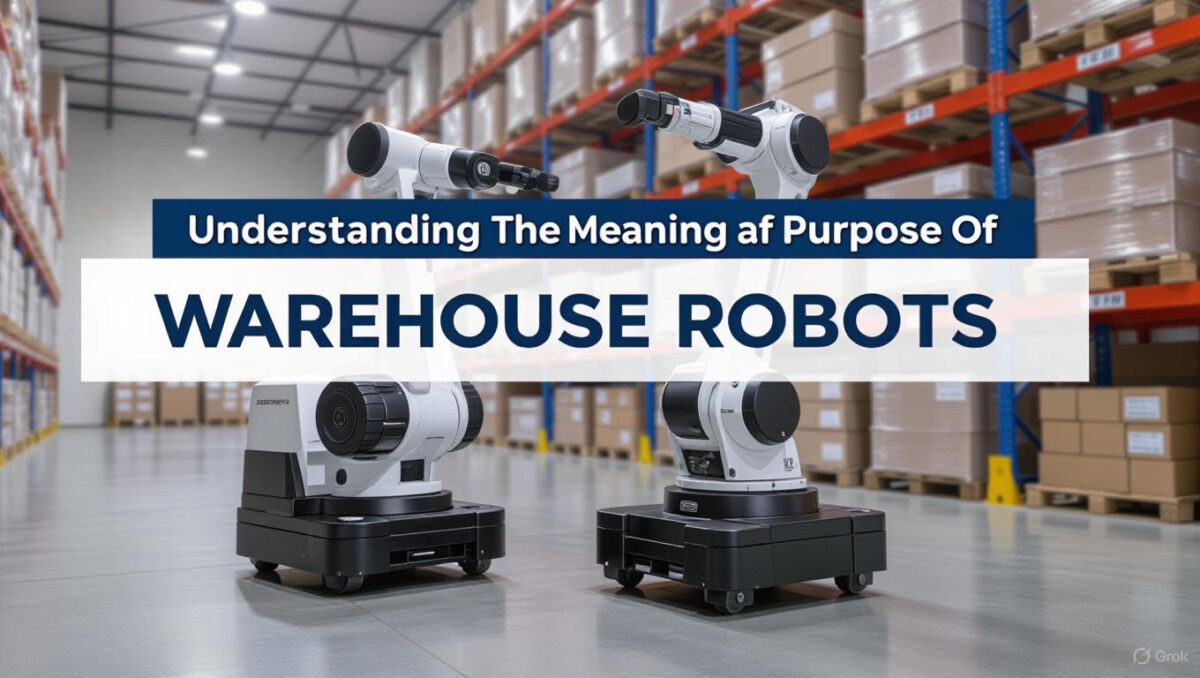
Understanding the Meaning and Purpose of Warehouse Robots

Introduction

The use of robots in warehouses has become a cornerstone of modern logistics, transforming how goods are stored, sorted, and transported. But what exactly are warehouse robots, and how are they revolutionizing warehouse operations? In this blog, we will explore the meaning and purpose of warehouse robots and discuss their growing role in industries worldwide.

From Amazon robots warehouse to cutting-edge robotic warehouse systems, robots are enhancing the speed, accuracy, and efficiency of warehouse tasks. Whether it’s picking, sorting, or transporting, warehouse robots are reshaping logistics as we know it.


What Are Warehouse Robots?

1. Defining Warehouse Robots (仓库机器人意思)

In simple terms, warehouse robots (仓库机器人意思) are autonomous or semi-autonomous machines designed to perform specific tasks within a warehouse or distribution center. These robots are equipped with sensors, cameras, and AI-powered algorithms, allowing them to navigate the warehouse, pick items, and interact with other systems. Unlike traditional automated systems that rely on fixed paths, warehouse robots can navigate freely and adapt to changes in the environment.

Warehouse robots can be used for a variety of purposes:

  • Picking items from shelves and bins.
  • Sorting products by type, size, or weight.
  • Transporting goods to different parts of the warehouse.

These robots are built to work alongside human employees, improving the speed and accuracy of operations while reducing human error and physical strain.

Benefits:

  • Enhanced accuracy in order fulfillment and inventory management.
  • Improved efficiency with faster sorting and picking processes.
  • Reduced physical strain on human workers by automating repetitive tasks.

How Warehouse Robots Are Transforming Operations

2. The Role of Robots in Warehouse Operations

The role of robots in warehouses is expanding rapidly as industries seek to improve operational efficiency and reduce costs. Warehouse robots are designed to automate routine tasks such as picking, sorting, and packing products, allowing human workers to focus on more complex tasks, such as quality control or customer service.

For example, warehouse robot picking is one of the most common applications in modern fulfillment centers. Robots are programmed to identify and retrieve specific items from shelves based on order requirements. These robots use vision systems and RFID technology to find and accurately pick items, ensuring a faster and more reliable picking process.

Benefits:

  • Faster order picking and improved throughput.
  • Reduced human error in picking and sorting.
  • Higher productivity with robots handling repetitive tasks.

3. Amazon Warehouse Robots: A Leading Example

One of the most prominent examples of warehouse robots in action is Amazon Robotics, formerly known as Kiva Systems. Amazon employs robots in Amazon warehouses to automate the picking, packing, and sorting of products. Amazon robots work alongside human employees, fetching shelves of products and delivering them to workers who pick the required items.

This integration of robotic warehouse systems in Amazon’s fulfillment centers has revolutionized its ability to handle large volumes of orders efficiently. Amazon robots warehouse are capable of working around the clock, reducing the time it takes to fulfill customer orders, increasing the speed of product processing, and reducing operational costs.

Benefits:

  • Increased order fulfillment speed in Amazon’s global warehouses.
  • Better space utilization through robot-driven systems.
  • Faster inventory management and product retrieval.

The Benefits of Warehouse Robotics

4. Enhancing Operational Efficiency

One of the primary benefits of robotic warehouse systems is the ability to optimize warehouse operations. A Warehouse robot is designed to handle repetitive, time-consuming tasks at a much faster pace than humans. This increases the throughput of products in and out of the warehouse, ensuring that orders are filled more efficiently.

Robotic warehouse automation helps eliminate bottlenecks and delays in the supply chain by automating manual processes. Robots can work continuously without rest, unlike human workers, which allows businesses to meet growing demand without increasing labor costs.

Benefits:

  • Higher throughput with automated tasks.
  • Increased scalability as warehouse capacity grows.
  • Optimized workflows for faster product movement.

5. Reducing Labor Costs

Warehouse robots help companies reduce their labor costs by automating routine tasks that would typically require human labor. With robotic systems handling tasks such as sorting, picking, and transporting, warehouses can reduce the number of employees required for manual labor, which in turn reduces labor costs.

Additionally, robotic warehouse systems can work 24/7, eliminating the need for shift-based labor and enabling warehouses to operate around the clock without incurring additional expenses.

Benefits:

  • Lower labor costs due to automation.
  • 24/7 operation without human constraints.
  • Reduced reliance on temporary or seasonal labor.

Warehouse Robotics in Supply Chain

6. Improving Warehouse Robotics in Supply Chain Efficiency

As businesses strive to enhance their supply chain efficiency, warehouse robots are playing an increasingly critical role. The integration of robotic systems in warehouses helps businesses manage their inventory, track goods in real-time, and streamline logistics operations.

Warehouse robots enable real-time inventory updates, reducing the risk of stockouts or overstocking. This leads to better demand forecasting, improved supply chain visibility, and optimized operations. As warehouse robotics technology continues to advance, it will become even more integrated into global supply chains, helping businesses respond to changing market conditions and customer demands more efficiently.

Benefits:

  • Real-time tracking and inventory management.
  • Improved supply chain visibility and demand forecasting.
  • Streamlined logistics for faster response times.

The Future of Warehouse Robots

7. The Role of Robotics in the Future of Warehousing

The future of warehouse robot looks promising, with continuous advancements in AI, machine learning, and robotic systems. As robotics in warehouse operations evolves, robots will become even more capable, handling a broader range of tasks and integrating seamlessly with other technologies like IoT and 5G.

In the near future, warehouse robot may be able to perform more complex tasks, such as self-maintenance and adaptive inventory management, further reducing the need for human intervention. Additionally, the rise of collaborative robots (cobots) will allow robots and humans to work side by side more effectively, boosting efficiency and safety in warehouses.

Benefits:

  • AI-powered robots for smarter decision-making and adaptability.
  • Greater autonomy with self-maintenance capabilities.
  • Enhanced collaboration between robots and human workers.

Conclusion

Warehouse robot is changing the way logistics and supply chains function, offering businesses faster, more efficient, and cost-effective ways to handle inventory, sorting, and order fulfillment. From robotic warehouse systems to robots in Amazon warehouses, the integration of robotics in warehouse operations is paving the way for a more automated and scalable future in warehousing.

As technology continues to evolve, the role of warehouse robot will only grow, transforming the supply chain and logistics industries. Whether you’re a business looking to optimize your warehouse operations or simply curious about the future of automation, robotic warehouse systems are here to stay.


Start Implementing Warehouse Robotics Today

Interested in learning how warehouse robots can enhance your operations? Subscribe to our newsletter for insights on robotic warehouse systems, warehouse automation, and how robots in warehouses can optimize your supply chain. Or download our free guide to get started with warehouse robotics in your business today!

The Role of Robot Sensing and Perception

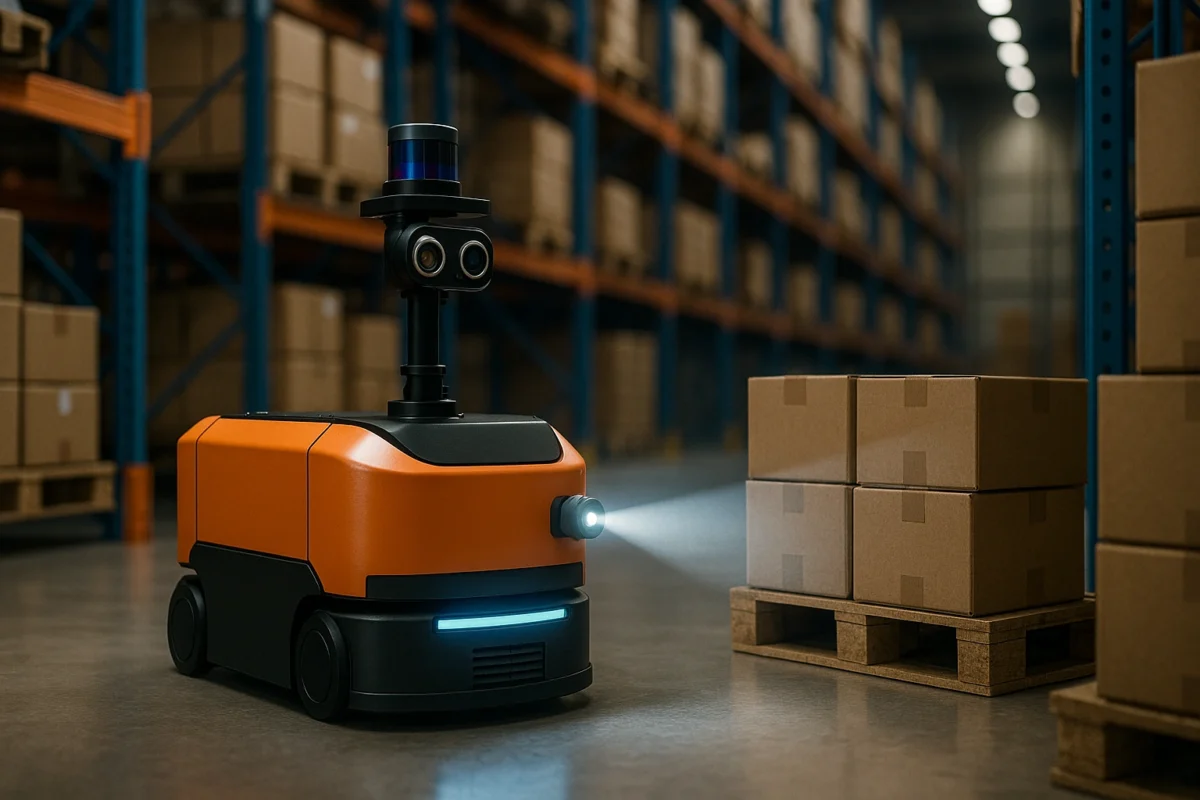
Walk into a modern warehouse today and you’ll find it’s not just about racks and conveyors anymore. What you’ll really notice is the smooth, silent action of robots picking, sorting, and moving with incredible accuracy. It makes you wonder: how are they pulling this off? How do these robots manage to “see” what’s going on, navigate a crowded floor without crashes, and constantly make smart choices? The whole trick comes down to robot sensing and perception. 

This is the tech that bridges the gap between simply moving and actually thinking. If we didn’t have it, automation would rely on stiff, unchanging instructions instead of being truly adaptable.

In this article, we’ll break down exactly how robots perceive their environment, check out the key sensors that power smart warehouses, and discuss how AI is completely changing the future of shipping and logistics.

What Is Robot Sensing and Perception?

At its core, sensing and perception means giving robots a way to experience the world around them. Sensors collect raw data from the environment like light, distance, motion, and texture. Perception systems then interpret that data, transforming it into understanding.

Think of it as a robot’s version of human senses. Cameras act as eyes. Force sensors act as touch. LiDAR and ultrasonic devices act as spatial awareness. The combination of these technologies enables robots to:

  • Recognize objects and obstacles.
  • Estimate distances and dimensions.
  • Detect movement and speed.
  • Navigate safely in dynamic environments.
  • Adapt to unexpected changes on the warehouse floor.

This combination of AI perception and sensory hardware allows robots to make complex decisions without constant human supervision.

The Importance of Perception in Warehouse Robotics

In a warehouse, the environment is rarely static. Forklifts move, workers walk by, pallets shift, and lighting changes. Robots must not only follow paths but also react instantly.

Here’s why warehouse robot vision and perception are vital:

Safety: Robots with real-time obstacle detection prevent collisions with people or objects.

Efficiency: Accurate perception ensures the right items are picked and placed without delay.

Adaptability: Robots can function in changing layouts or when unexpected obstacles appear.

Autonomy: With perception, robots need minimal external guidance, reducing human intervention.

Without perception, robots would be limited to pre-programmed routes and static workflows unsuitable for modern dynamic warehouses.

Also See: How Robots are Changing Warehouse Operations: An Insight

The Core Sensing Technologies Behind Robot Perception

what is warehouse robot vision

To “see” the warehouse floor, robots rely on a mix of sensors. Each type contributes a unique layer of awareness.

1. Vision Cameras

High-resolution cameras are the most common form of robotic eyes. They capture 2D or 3D images of shelves, products, and obstacles. Combined with computer vision algorithms, cameras allow robots to identify items by shape, color, and label.

Modern AI-driven perception systems use neural networks to recognize even irregular or partially hidden objects. For example, a robotic arm identifying the correct package among many similar boxes by analyzing patterns and textures.

2. LiDAR Sensors

LiDAR (Light Detection and Ranging) uses laser pulses to map the surroundings in 3D. Each pulse measures distance based on how long it takes for light to reflect back.

In warehouses, LiDAR creates real-time 3D maps that help robots:

  • Navigate complex aisles.
  • Maintain safe distances.
  • Detect unexpected obstacles quickly.

It’s especially effective in low-light or dusty environments where cameras struggle.

3. Depth and Time-of-Flight Sensors

Depth cameras or ToF sensors measure how far objects are from the robot. This depth information helps with:

  • Accurate grasping and placing of items.
  • Detecting shelf height and object positioning.
  • Guiding arms during delicate operations.

For robotic picking, this depth perception ensures precision which is essential when handling fragile or high-value items.

4. Ultrasonic and Infrared Sensors

These short-range sensors help robots detect nearby obstacles. They’re simple but reliable tools for collision avoidance in tight spaces. Ultrasonic sensors measure sound wave reflections, while infrared detects heat and movement.

They act as a safety layer, supporting the main vision and LiDAR systems.

5. Inertial Measurement Units (IMUs)

IMUs measure motion, acceleration, and rotation. They help the robot understand its own movement like how fast it’s turning or tilting. When combined with vision and mapping, IMUs ensure smooth navigation even if visual cues are lost temporarily.

How Robots Interpret What They See

Collecting data is one thing. Understanding it is another. Once sensors gather input, perception algorithms analyze and integrate that information into a unified view of the world.

Here’s how AI-driven perception processes it step by step:

Data Collection – Sensors capture visual, spatial, and motion data simultaneously.

Sensor Fusion – Data from multiple sensors is merged to form a single, consistent model.

Object Recognition – AI models identify specific objects, people, or zones.

Mapping and Localization – Robots determine their position on the warehouse floor (often using SLAM (Simultaneous Localization and Mapping)).

Decision-Making – The robot’s control system uses this understanding to plan its next action like picking, avoiding, or navigating.

Obstacle Detection and Environment Understanding

One of the most critical aspects of robot sensing and perception is safety. In busy warehouses, obstacles are unpredictable like human workers, moving vehicles, or fallen boxes.

Robots detect and respond using:

  • LiDAR mapping for long-range awareness.
  • Cameras for visual confirmation.
  • Ultrasonic sensors for close-range alerts.

AI perception models analyze this data to determine if the obstacle is static like a rack or dynamic like a moving person. Depending on the situation, the robot either slows down, changes course, or pauses completely.

This layered detection system keeps operations efficient without compromising worker safety.

Applications of Perception in Modern Warehouses

1. Autonomous Picking and Sorting

Vision-guided robots can identify and handle individual products with high accuracy. Using AI models, they learn to differentiate between items even if they’re slightly misplaced or misaligned.

2. Navigation and Pathfinding

Robots continuously scan their environment, updating routes on the fly. Robot pathfinding systems prevent bottlenecks, ensuring smooth traffic even during peak hours.

3. Collaborative Work with Humans

Cobots (collaborative robots) rely on perception to work safely alongside people. They detect gestures, predict motion, and adjust their speed when humans are nearby.

4. Dynamic Inventory Management

With perception, robots can track item locations and detect misplaced products. This real-time visibility improves inventory accuracy and reduces downtime.

The Role of AI in Robot Sensing and Perception

what is AI-driven perception

AI transforms raw data into understanding. Machine learning algorithms allow robots to:

  • Recognize new object types through training.
  • Predict movement patterns in busy spaces.
  • Improve accuracy over time through continuous learning.

AI also enables predictive perception where robots anticipate rather than react. For example, a robot might slow down before a corner where it predicts human traffic.

Challenges in Robotic Perception

Even advanced systems face challenges:

Lighting Conditions: Cameras struggle in glare or darkness.

Dust and Debris: LiDAR signals can be scattered by airborne particles.

Data Overload: Managing streams from multiple sensors requires high processing power.

Cost and Maintenance: High-end sensors add expense and need calibration.

Researchers are working on hybrid systems that adapt to these variables, using machine learning to balance accuracy and speed.

Conclusion

The future of warehouse automation depends on how well robots can sense, interpret, and act. Robot sensing and perception enable machines to move beyond mechanical repetition and into intelligent collaboration.

By combining LiDAR, cameras, AI-driven perception, and obstacle detection, modern robots are becoming active participants in warehouse ecosystems—capable of learning, adapting, and improving productivity.

Warehouses that invest in perception-powered robotics today aren’t just automating, they’re future-proofing.

FAQ: Robot Sensing and Perception

Why is sensing and perception critical for warehouse robots?

Because it allows robots to understand and adapt to their environment, improving accuracy, safety, and autonomy.

What’s the difference between sensors and perception systems?

Sensors collect data; perception systems interpret it. Both work together to help robots “see” and make decisions.

How does LiDAR improve robot navigation?

LiDAR provides 3D spatial mapping, helping robots avoid obstacles and plan efficient routes.

Can robots operate without cameras?

Yes, but vision cameras enhance accuracy and flexibility especially for picking and identification tasks.

Are sensing systems expensive?

They can be, but as AI and sensor technology evolve, costs are dropping and accessibility is improving.

How Robotics Guarantees Consistent Compliance and Reduces Errors in Logistics

In the modern logistics industry, the margin for error is razor-thin. When global supply chains are moving at breakneck speed, even a small labeling or picking mistake can trigger a massive ripple effect, we’re talking lost income, significant shipping delays, and real damage to customer trust. It’s becoming clear that the older, people-dependent systems just can’t keep up with the demand for flawless performance. This is why robotics logistics is such a game-changer. 

It’s revolutionizing the warehouse, from distribution centers to fulfillment hubs. By taking over critical processes, automation achieves something human workers often struggle with: consistent accuracy and compliance. 

In this article, we’ll explore the practical ways automated warehouse systems provide 24/7 uptime, guarantee standards are always met, and practically eliminate errors, all of which are reshaping the future of logistics.

The Rising Pressure on Logistics Operations

Today’s logistics environment is more complex than ever. Globalization, e-commerce, and real-time delivery expectations have forced warehouses to process enormous volumes of data and goods.

Yet, the old ways like manual scanning, handwritten documentation, and human-led picking simply can’t keep up with the pace or precision demanded by modern commerce.

Key challenges include:

  • Human error in data entry or product handling.
  • Compliance gaps with safety and shipping regulations.
  • Inconsistent operations due to fatigue, shift changes, or staffing shortages.

These problems cost companies millions annually. The solution? Robots built for precision and compliance.

The Role of Robotics Logistics

Robotics logistics uses intelligent machines to automate and optimize movement, tracking, and fulfillment inside warehouses. These systems are guided by advanced software and artificial intelligence to perform tasks once handled by humans such as picking, packing, sorting, and inventory checks.

What sets robotics apart is its consistency. Robots don’t get distracted or fatigued. They perform with the same accuracy at 3 a.m. as they do at noon.

This predictability makes them ideal for:

  • Accuracy in picking and sorting.
  • 24/7 warehouse operation.
  • Data-driven compliance tracking.
  • Error-free labeling and documentation.

When integrated with warehouse management systems (WMS), robotic solutions maintain a closed loop of control and reporting, ensuring that every movement aligns with compliance requirements.

Also See: Benefits of Robotic Warehouse Systems for Modern Logistics

How Robotics Guarantees Consistent Compliance

Compliance in logistics goes far beyond safety checklists. It’s about adhering to strict standards set by clients, regulators, and international authorities. From product labeling to temperature control, compliance is non-negotiable. Robotics guarantees it in three major ways:

1. Automated Documentation and Tracking

Every robot movement generates data like timestamped, logged, and stored. This automatic recordkeeping ensures complete audit trails. Whether you’re tracking food safety standards or pharmaceutical handling requirements, robotic systems eliminate the risk of missing documentation.

2. Precise Labeling and Packaging

Compliance often depends on accurate labeling like wrong codes or missing barcodes can lead to shipment rejection. Robotic systems read and verify labels with near-perfect accuracy, ensuring each product meets customer and regulatory standards.

3. Consistent Process Execution

Robots follow the same protocols every time. There’s no improvisation or oversight. This uniformity guarantees consistent compliance, even across multi-site operations or during high-demand periods.

Reducing Human Error Through Automation

what is automated warehouse systems

Errors are inevitable in human-led systems. Fatigue, distractions, and stress all contribute to costly mistakes in logistics operations. But robotics changes that equation.

Precision in Picking

Automated picking robots use cameras, sensors, and AI algorithms to identify items accurately. They recognize barcodes, shapes, and even subtle color differences achieving accuracy in picking that exceeds human capability.

Smart Pathfinding

Using mapping algorithms, robots find the most efficient route through a warehouse. This reduces collisions, minimizes handling time, and ensures that goods arrive exactly where they should.

Continuous Quality Checks

Integrated quality assurance features mean robots can flag damaged packaging, missing items, or irregular weights. This prevents errors from moving downstream in the fulfillment process.

Real-Time Alerts

If something goes wrong, say, a barcode scan fails or an item mismatch occurs, the system instantly flags the issue for human review. This hybrid model ensures small issues don’t turn into large-scale errors.

The 24/7 Advantage: Nonstop Precision

One of the biggest benefits of robotics is round-the-clock operation. Robots don’t clock out, need breaks, or suffer from shift fatigue.

This means:

Consistent throughput: Orders processed day and night.

Predictable productivity: Robots maintain optimal performance across all shifts.

Shorter delivery times: Faster turnaround increases customer satisfaction.

Data continuity: Sensors collect data nonstop, feeding predictive maintenance and quality systems.

For industries like e-commerce, pharmaceuticals, and cold storage, 24/7 automation ensures goods are handled safely and efficiently regardless of time zone or labor availability.

Robotics and Compliance in High-Stakes Industries

1. Food and Beverage

In cold chain logistics, automated warehouse systems ensure temperature-sensitive goods remain compliant with health standards. Robots equipped with sensors continuously monitor and log environmental data.

2. Pharmaceuticals

Every vial, packet, or box must meet exact handling and labeling criteria. Robotic arms and vision systems reduce contamination risks and ensure proper traceability.

3. E-commerce

With thousands of orders per minute, e-commerce warehouses rely on robots for reduced errors in logistics ensuring every order reaches the right customer on time.

4. Manufacturing and Automotive

Here, compliance involves not just product handling but also component verification. Robotics ensures that the correct parts are used and assembled, reducing defects and maintaining quality assurance.

Safety Benefits: Protecting Workers and Assets

Warehouse robotics safety goes hand in hand with productivity. Automation eliminates many of the physically demanding and risky tasks traditionally assigned to human workers.

Reduced accidents: Robots handle heavy lifting and repetitive movements, lowering the risk of injury.

Safe collaboration: Modern cobots (collaborative robots) are designed with sensors and vision tech that prevent collisions with humans.

Cleaner workflows: Robots minimize clutter and streamline layouts, reducing trip hazards and human congestion in warehouse aisles.

This human-robot collaboration not only improves safety but also creates a more organized and efficient workplace.

Long-Term Impact: Compliance Meets Competitive Advantage

what is warehouse automation

When compliance becomes automated, it turns from a burden into a strategic advantage.

Fewer penalties: Automated checks prevent non-compliance fines.

Faster audits: Comprehensive digital records simplify inspections.

Customer trust: Accuracy builds reliability, reinforcing brand reputation.

Sustainability: Optimized operations reduce waste and emissions, aligning with corporate ESG goals.

The integration of robotics in logistics transforms compliance from a box-ticking task into a core component of operational excellence.

Challenges and Considerations

While the benefits are clear, adopting robotics comes with a few challenges:

High upfront costs: Robotic infrastructure requires investment, though ROI is rapid through efficiency gains.

Integration with legacy systems: Older WMS may need upgrades for full automation compatibility.

Maintenance demands: Predictive maintenance tools must monitor robotic components to avoid downtime.

Still, these challenges are manageable with the right strategy and software ecosystem.

Conclusion

The future of logistics is all about being precise, compliant, and automated. Robotics makes that happen. By standardizing processes, keeping perfect records, and completely eliminating human error, automated systems guarantee consistent compliance. 

Manual systems just can’t keep up. With robots running the warehouse 24/7, businesses get a level of efficiency and reliability that’s simply unbeatable. As the market gets tougher, automation isn’t a nice-to-have anymore, it’s the critical foundation for any logistics operation serious about accuracy, safety, and compliance moving forward.

FAQ: Robotics Logistics

How do robots help with compliance documentation?

They automatically log every task like movement, scan, and label creating a verifiable digital trail for audits.

Can robots fully replace human workers?

Not entirely. Robots handle repetitive and precise tasks, while humans oversee strategy, decision-making, and quality control.

What type of robots are used in warehouses?

Common types include picking robots, automated guided vehicles (AGVs), and collaborative robotic arms.

How does robotics improve order accuracy?

With sensors, cameras, and barcode scanners, robots ensure each item is picked and packed exactly as required, reducing costly mispicks.

Recycling Center Simulator Warehouse Robot: The Future

Introduction

As the world’s population grows and the volume of waste increases, innovative solutions are being explored to manage recycling more effectively. One of the most promising advancements in waste management is the development of recycling center simulator warehouse robot. These robots are not just transforming how materials are sorted but also improving the efficiency, speed, and accuracy of recycling operations.

In this blog, we will explore how robot warehouse systems, particularly recycling center robots, are revolutionizing the waste management industry. We will also look at the broader role of warehouse robotics in automating various aspects of recycling and the future of waste management with advanced robotics.


What is a Recycling Center Simulator Warehouse Robot?

1. Understanding Recycling Center Simulator Warehouse Robots

A recycling center simulator warehouse robot is an advanced robotic system designed to automate the sorting and processing of recyclable materials. These robots are part of an integrated warehouse robot system that uses sensors, artificial intelligence (AI), and machine learning to identify, sort, and manage various types of waste.

The primary goal of these robots is to replace manual labor, which is often slow and inefficient, by automating the sorting process. They can accurately detect recyclable materials like paper, plastic, metal, and glass, and direct them into the appropriate bins for further processing. This automation not only speeds up the recycling process but also improves accuracy, reducing contamination and increasing recycling rates.

Benefits:

  • Efficient sorting of recyclable materials.
  • Reduced contamination of recyclables, leading to higher-quality materials.
  • Faster processing speeds in recycling facilities.

How Robots Are Revolutionizing Warehouse Robotics in Recycling

2. Robots Used in Warehouses: Transforming Recycling Centers

The introduction of robots in warehouses has been a game-changer for the recycling industry. In traditional recycling centers, workers manually sort materials, a process that is not only time-consuming but also prone to human error. Warehouse robots have revolutionized this process by performing sorting, handling, and packaging tasks autonomously, increasing throughput and accuracy.

For instance, robotic warehouse systems can use vision systems and AI algorithms to recognize and sort materials based on their type and composition. This automation allows the recycling process to be scaled up and streamlined, ensuring that recyclables are processed more quickly and efficiently.

Benefits:

  • High-speed sorting of recyclables with minimal human intervention.
  • Reduction in sorting errors and contamination.
  • Increased throughput in recycling facilities.

3. The Role of Warehouse Robots in Waste Management

Warehouse robots are playing an essential role in waste management by improving the sorting process, reducing labor costs, and enhancing overall efficiency. Robots used in warehouses for recycling are equipped with AI-powered sensors and advanced algorithms that allow them to learn from their environment, adapt to new tasks, and improve over time.

In addition to sorting, recycling center warehouse robots can also handle materials like cardboard, plastic packaging, and glass bottles, ensuring that each item is placed in the correct recycling stream. This automation reduces the reliance on manual labor, minimizes errors, and increases the overall speed of recycling operations.

Benefits:

  • Reduced labor costs through automation.
  • Improved sorting accuracy for better recycling outcomes.
  • Faster material processing with robot-assisted operations.

The Future of Recycling Center Robots: Advancements and Opportunities

4. The Impact of Robotics on the Future of Waste Management

As recycling center simulator warehouse robots continue to evolve, their impact on the waste management industry will only increase. The future of warehouse robotics in recycling will likely include robots that are even more intelligent, capable of handling more complex sorting tasks, and working in collaboration with other robotic systems.

Emerging trends in robotics technology for recycling include:

  • AI-powered robots with deep learning capabilities for better material identification.
  • Collaborative robots (cobots) that work alongside human workers for more complex tasks.
  • Robotic arms capable of picking up larger and more irregularly shaped objects.

As these technologies improve, the effectiveness of robotic warehouse systems in recycling centers will continue to grow, helping to meet the global challenges of waste management and environmental sustainability.

Benefits:

  • Smarter robots that adapt to complex recycling tasks.
  • Collaboration between robots and humans to maximize efficiency.
  • Better integration of robotic systems into the recycling process.

5. Reducing Environmental Impact with Automated Recycling

The environmental benefits of recycling center robots go beyond efficiency. By automating the sorting process, these robots help increase recycling rates, reduce landfill waste, and promote a more sustainable approach to waste management.

Robotics in warehouse automation allows for the creation of more eco-friendly and resource-efficient recycling systems. As automation in recycling grows, we can expect to see reductions in energy usage, contamination rates, and carbon footprints, which are crucial in the fight against climate change.

Benefits:

  • Improved recycling efficiency, leading to a cleaner environment.
  • Reduced contamination in recycled materials, making them more valuable.
  • Lower energy consumption and carbon emissions with optimized robot operations.

Conclusion

Recycling center simulator warehouse robots are changing the way the world handles waste. With their ability to automate the sorting and processing of recyclables, these robots not only improve the efficiency of recycling operations but also contribute to a more sustainable and eco-friendly waste management process. As warehouse robotics technology continues to advance, we can expect even more powerful robots that can tackle complex sorting tasks, improve recycling rates, and reduce environmental impact.

The future of robotic warehouse automation in waste management is bright, and as more companies adopt these technologies, we will see a significant shift toward more efficient, cost-effective, and sustainable recycling processes worldwide.


Start Exploring the Future of Robotic Waste Management Today

Interested in learning how recycling center simulator warehouse robots can improve your waste management operations? Subscribe to our newsletter for insights on the latest warehouse robotics innovations, automated recycling systems, and sustainable practices. Or download our free guide to get started with robotic warehouse solutions in waste management today!

From Cost to ROI: A Business Case for Adopting Warehouse Robotics ROI in 2026

For ages, investing in warehouse robotics ROI felt like a massive, prohibitive cost, a “big cap-ex” move reserved only for the industry’s titans. But that entire picture has flipped. With constant labor shortages, booming e-commerce, and everyone demanding instant delivery, automation isn’t just a nice-to-have anymore. 

By 2026, it’s a non-negotiable competitive edge, shifting from an expensive luxury to a reliable, measurable return on investment (ROI) for any size of operation. This change is all thanks to mature tech, flexible setup options, and the clear business benefits that robotics deliver.

Warehouse Robotics ROI: Why 2026 is the Tipping Point

The current logistics environment is defined by volatility, making manual, labor-intensive operations structurally vulnerable. The confluence of these macro trends solidifies the urgent business case for adopting warehouse robotics now.

The E-commerce Volume and Velocity Crisis

Global e-commerce penetration continues its relentless ascent, necessitating a capacity for high-volume, high-velocity order fulfillment. Traditional warehouses struggle to keep pace, particularly with the proliferation of individual unit picks required for direct-to-consumer (DTC) sales. 

Robotics provides the throughput density and speed necessary to handle peak season spikes and meet demanding delivery windows without compromising accuracy. Automated storage and retrieval systems (AS/RS) and autonomous mobile robots (AMRs) can perform thousands of picks per hour, dramatically surpassing manual rates and ensuring that high fulfillment costs do not erode profit margins.

Persistent Labor Challenges and Rising Wages

business benefits of robotics

The material handling industry faces a chronic labor shortage, worsened by high turnover rates and the physical demands of the job. For many warehouse operators, labor costs and availability represent the single biggest threat to profitability and operational stability.

Mitigating Wage Inflation: Robotics offers a predictable, fixed cost structure that insulates the business from escalating minimum wages and benefits.

Solving Availability: Robots, unlike human workers, are available 24/7. Integrating automation ensures that facility output remains consistent, eliminating the costly bottlenecks and delays caused by labor volatility and call-outs.

Focusing Human Capital: By taking over repetitive, strenuous, and ergonomically challenging tasks (like lifting and walking), robots free up the existing workforce to focus on higher-value activities such as quality control, exception handling, and process improvement ultimately increasing job satisfaction and retention among skilled employees.

Technological Maturity and Flexibility

The barrier to entry for warehouse automation investment is falling. Modern warehouse robotics ROI is faster to achieve due to key technological advancements like:

AMR Evolution: Today’s Autonomous Mobile Robots (AMRs) are highly intelligent, easily programmed, and require minimal infrastructure changes, allowing for phased deployment and lower initial capital outlay compared to rigid, track-based systems of the past.

Robotics-as-a-Service (RaaS): Flexible financing models like RaaS allow companies to adopt automation with operational expenditure (OpEx) budgets, leasing robots and associated software. This lowers the initial cost hurdle and aligns technology spend directly with the revenue generated, making the warehouse robotics ROI model immediately accessible to mid-sized and smaller operations.

Also See: Exploring Robotic Grasping Techniques for Optimal Inventory Handling

Throughput Capacity Increases Without Scaling Headcount

Traditional scaling requires more workers, supervisors, space, and equipment. Robotics, however, allow volume growth without needing to multiply staff. Fulfillment centers can process more orders per hour simply by increasing robotic fleet usage or extending operational hours. This means seasonal spikes become easier to manage. Instead of hiring dozens of temporary workers—often with inconsistent reliability—robots can take on the extra workload instantly. The result is smoother holiday fulfillment, fewer bottlenecks, and reliable delivery commitments. That consistency builds customer trust.

Energy Efficiency Outperforms Heavy Machinery

Forklifts and industrial equipment consume significant power. Robots, especially newer models, operate on energy-efficient motors and smart battery systems. Their charging cycles are optimized based on usage patterns, reducing unnecessary power draw.

Over months and years, operational energy savings become noticeable. Robotics also lowers maintenance expenses typical of heavier machinery. As a result, annual service fees, spare parts, and mechanical breakdowns become less prominent line items.

Energy efficiency is not just a sustainability bonus, it’s a cost-control mechanism.

Improved Safety of Warehouse Robotics Lowers Liabilities

Warehouse injuries are costly. Beyond medical bills, downtime, legal risk, insurance claims, and replacement labor all create financial drains. Robots dramatically reduce exposure to heavy lifting, repetitive stress, and collision-prone tasks.

By taking over hazardous activities, robotics reduce incident frequency. Safer environments produce more consistent productivity. Insurance premiums can decrease. Employees take fewer sick days. As a result, worker morale improves because fatigue and risk decline.

Safety becomes an ROI driver when framed as loss prevention rather than policy paperwork.

Real-Time Data Turns Operations Into Intelligence Systems

Modern warehouse robots collect live data as they move. They capture activity patterns, traffic bottlenecks, inventory heat maps, and pick frequency. This data feeds into analytics platforms that visualize how the warehouse behaves throughout the day.

Managers gain the ability to identify delays before they become costly. They can refine layout decisions based on real movement not assumptions. Reporting becomes insight-driven instead of manual guesswork.

Robotics shift operations from reaction to proactive optimization. That intelligence supports more strategic decision-making, unlocking gains beyond physical labor efficiency.

Scalability Protects Against Future Market Shocks

The past five years have shown how unpredictable supply chains can become. Companies relying on manual systems struggled to adapt to sudden spikes. Robotics provides flexible scalability.

If demand surges, additional robotic units can be deployed. Workflows adapt quickly through software updates, not construction or new hiring cycles. This adaptability builds resilience.

Planning against volatility is ROI by prevention. Companies avoid the financial instability that comes from being caught unprepared.

Warehouse Robotics ROI Maintenance Is Predictive, Not Reactive

Older warehouse equipment breaks down unexpectedly. By contrast, modern robotic systems self-monitor. They detect stress, track motor health, and signal when preventive service is required.

Predictive maintenance limits expensive downtime and avoids emergency repairs. Instead of halting operations, maintenance becomes scheduled, affordable, and controlled. A healthier fleet delivers continuous service with fewer disruptions.

Predictability leads to lower ownership cost across the machine lifecycle.

Customer Experience Becomes a Revenue Growth Engine

warehouse automation investment

Fast and accurate order fulfillment does more than protect margins—it creates loyal customers. In competitive ecommerce, repeat buyers are the most profitable segment.

When robotics reduce mis-picks, shorten delivery windows, and improve inventory visibility, buyers notice. Retention increases, and referrals naturally occur. Customer satisfaction becomes a revenue driver, not a marketing expense.

Warehouses that consistently deliver reliability support stronger brand perception.

Conclusion

We’ve definitively moved past the point of viewing robotics as an expensive line-item and now rightly see it as a strategic asset. By 2026, warehouse operators won’t be asking themselves if they can budget for robots. 

Instead, they’ll be calculating the potentially huge losses in market share and profitability they’ll face by ignoring the undeniable return on investment now available in warehouse automation. The message is clear and urgent. You must automate to survive and tap into data science to truly excel.

The Role of Autonomous Mobile Robots in Warehouse Automation

Introduction

The world of logistics is continuously evolving, and one of the most significant advancements in recent years is the rise of autonomous mobile robots (AMRs) in warehouse automation. These robots are becoming an integral part of modern warehouses, helping businesses streamline operations, improve efficiency, and reduce costs. With their ability to navigate autonomously and perform essential tasks, autonomous mobile robots in warehouses are transforming how goods are moved, stored, and handled.

In this blog, we will explore the role of autonomous mobile robots in warehouse automation, their impact on warehouse logistics, and how robotic warehouse automation is shaping the future of the logistics industry.


What Are Autonomous Mobile Robots (AMRs)?

1. Defining Autonomous Mobile Robots (AMRs)

Autonomous Mobile Robots (AMRs) are robots designed to move goods and materials throughout a warehouse without the need for human intervention. These robots are equipped with advanced sensors, cameras, and AI-powered navigation systems that allow them to navigate the warehouse environment, avoid obstacles, and interact with other systems.

Unlike traditional automated guided vehicles (AGVs), which follow pre-determined paths or tracks, AMRs are highly flexible and adaptable. They can make real-time decisions, choose the most efficient routes, and even communicate with other robots or warehouse management systems (WMS) to optimize workflows.

Benefits:

  • Autonomous navigation for greater flexibility.
  • AI-powered decision-making to adapt to dynamic environments.
  • Scalable and adaptable to different warehouse needs.

The Role of AMRs in Warehouse Automation

2. Optimizing Material Handling and Transportation

One of the primary functions of autonomous mobile robots in warehouse automation is material handling. These robots are designed to move products, raw materials, and inventory across the warehouse, reducing the need for forklifts or manual labor. With AMRs handling the transportation of goods, warehouses can free up human workers to focus on tasks like sorting, packing, and inventory management.

AMRs are equipped with advanced navigation systems that allow them to autonomously map out their environment and select the most efficient routes to transport materials. These robots can easily navigate through tight spaces, high-density shelves, and crowded aisles, improving warehouse efficiency and throughput.

Benefits:

  • Faster material transportation within the warehouse.
  • Increased space utilization with flexible navigation.
  • Optimized workflow and reduced congestion in the warehouse.

3. Streamlining Inventory Management and Order Fulfillment

AMRs also play a crucial role in inventory management and order fulfillment. These robots are often integrated with warehouse management systems (WMS) to track inventory in real-time. As AMRs transport items from one location to another, they automatically update inventory records, ensuring accurate and up-to-date data on stock levels.

When it comes to order fulfillment, autonomous mobile robots can retrieve products from storage, deliver them to packing stations, and even assist in sorting them for shipping. This automated workflow speeds up the entire fulfillment process, reduces human error, and increases the accuracy of picking and shipping orders.

Benefits:

  • Real-time inventory tracking with automated updates.
  • Faster order picking and fulfillment processes.
  • Enhanced accuracy in inventory management.

How AMRs Improve Warehouse Efficiency

4. Enhancing Speed and Productivity

By automating the movement of goods and materials, autonomous mobile robots help warehouses achieve greater speed and productivity. Unlike traditional methods, which often require human workers to manually transport goods or wait for machinery to become available, AMRs can work continuously and efficiently, handling tasks in parallel without the need for breaks.

These robots are capable of operating 24/7, enabling round-the-clock warehouse operations. This ability to scale operations without the limitations of human work hours allows businesses to meet growing demand and increase throughput, especially during peak seasons.

Benefits:

  • Non-stop operation for increased productivity.
  • Reduced delays in material handling and order fulfillment.
  • Increased warehouse throughput and capacity.

5. Improving Safety and Reducing Human Error

Autonomous mobile robots also enhance warehouse safety by taking over high-risk tasks traditionally performed by human workers, such as transporting heavy loads or navigating hazardous areas. Since AMRs are designed to work autonomously, they can carry out these tasks with greater precision and without the risk of human injury.

Additionally, robots in warehouse logistics reduce the likelihood of human error in critical tasks like inventory management and order fulfillment. By automating repetitive tasks and minimizing manual interventions, AMRs help reduce mistakes and improve overall operational accuracy.

Benefits:

  • Reduced workplace injuries by eliminating hazardous tasks for humans.
  • Lower likelihood of human error in inventory and order management.
  • Safer work environment with autonomous robots.

The Future of Autonomous Mobile Robots in Warehouse Automation

6. Emerging Trends in AMRs and Warehouse Automation

The future of autonomous mobile robots in warehouse automation is promising, with continuous advancements in AI, machine learning, and robotics technology. As AMRs become smarter and more efficient, they will take on more complex tasks and integrate seamlessly into warehouse workflows.

Emerging trends in AMR technology include:

  • Advanced AI for real-time decision-making and route optimization.
  • Collaborative robots (cobots) that work alongside humans to handle tasks more efficiently.
  • Integration with other automation systems, such as robotic arms and automated sorting systems, to create fully integrated warehouse solutions.

As the demand for more efficient and scalable warehouse operations grows, AMRs will become even more crucial in shaping the future of warehouse automation.

Benefits:

  • Smarter robots with enhanced AI for better decision-making.
  • Seamless integration with other warehouse automation systems.
  • Greater scalability to meet future demands.

Conclusion

Autonomous mobile robots are at the forefront of warehouse automation, reshaping how warehouses handle material movement, inventory management, and order fulfillment. These robots are increasing efficiency, reducing labor costs, and improving safety within warehouses. By automating routine tasks and enhancing workflows, AMRs allow businesses to scale operations, reduce errors, and meet growing customer demands.

As robotic warehouse automation continues to evolve, the role of AMRs in warehouse logistics will only expand, bringing new possibilities for warehouses and distribution centers across industries. The future of warehouse automation is autonomous, and AMRs are leading the way.


Start Implementing AMRs in Your Warehouse Today

Interested in enhancing your warehouse with autonomous mobile robots? Subscribe to our newsletter for the latest insights on robotic warehouse automation, warehouse robotics, and how AMRs can streamline your warehouse operations. Or download our free guide to learn how to integrate autonomous mobile robots into your warehouse today!

How Robots are Changing Warehouse Operations: An Insight

Introduction

The logistics and warehousing industry is undergoing a profound transformation, largely due to the integration of robots in warehouses. From inventory management to order fulfillment, warehouse robotics technology is streamlining operations, increasing efficiency, and reducing costs. Robots are no longer just a futuristic concept; they are actively shaping the way warehouses operate.

In this blog, we will explore how warehouse robots are changing warehouse operations, the technology behind robotic warehouse systems, and the broader impact on the supply chain. Whether you are a business owner, logistics professional, or someone interested in the future of warehouse automation, this guide will provide you with valuable insights into the role of robots in warehouses.


What is Warehouse Robotics Technology?

1. Defining Warehouse Robotics Technology

Warehouse robotics technology refers to the use of robots, artificial intelligence (AI), machine learning, and automation systems to carry out tasks traditionally done by human workers in a warehouse. These tasks can include inventory management, picking, packing, sorting, and transporting goods. The primary advantage of using robotics in warehouses is that these systems can work autonomously, at a faster pace, and with higher precision than human workers.

These technologies work in tandem with other warehouse systems (like conveyor belts, AI-driven software, and autonomous mobile robots (AMRs)) to create a more efficient and seamless operation. As a result, businesses are able to scale their operations, reduce labor costs, and improve order fulfillment speed.

Benefits:

  • Higher efficiency with minimal human intervention.
  • Faster processing and order fulfillment.
  • Cost reduction through automation.

How Robots Are Changing Warehouse Operations

2. The Role of Robots in Warehouses

Robots in warehouses perform a wide range of functions that would otherwise require significant manual labor. They are not just limited to carrying out basic tasks; modern warehouse robots can handle complex processes, like inventory tracking, dynamic sorting, and automated picking.

Warehouse robots use sensors and cameras to navigate the warehouse, ensuring that products are picked, sorted, and transported without human assistance. Some of the most commonly used robots include autonomous mobile robots (AMRs), robotic arms, and automated guided vehicles (AGVs). These robots work together to create a fully integrated system that moves goods around the warehouse, increasing the overall speed and accuracy of warehouse operations.

Benefits:

  • Increased speed in picking and transporting goods.
  • Improved precision and accuracy in inventory management.
  • 24/7 operation without downtime.

3. Robotic Warehouse Automation: Streamlining Operations

Robotic warehouse automation refers to the use of robotics systems to automate tasks traditionally performed by human workers in warehouses. These tasks can include everything from picking and sorting to packaging and shipping.

The most significant advantage of warehouse robotics automation is that it reduces reliance on human labor for repetitive tasks, which often leads to inefficiencies, errors, and higher costs. By automating these tasks, robotic systems not only enhance efficiency but also reduce human error, resulting in faster and more accurate order fulfillment.

For example, robotic arms can sort products by type, size, and weight, while autonomous robots can transport those products to the correct location for packing or shipment. The seamless integration of these systems leads to faster fulfillment cycles and improved throughput.

Benefits:

  • Enhanced accuracy in inventory management and order picking.
  • Reduced labor costs and lower dependency on manual work.
  • Optimized workflows for smoother warehouse operations.

How Robots Are Enhancing the Warehouse Supply Chain

4. Robots Warehouse: Improving Supply Chain Efficiency

Robots warehouse are transforming the supply chain by enhancing inventory management and order fulfillment. As the backbone of warehouse operations, robots are now playing a critical role in how goods move through the entire supply chain. By automating material handling, sorting, and packaging, robots help streamline the supply chain, making it faster and more efficient.

For instance, AMRs can autonomously transport products to different parts of the warehouse, while robotic arms handle more complex tasks like sorting and packaging. These robots ensure that products are handled efficiently, reducing delays and increasing throughput.

Furthermore, the use of robots improves supply chain visibility. With real-time tracking and data integration, warehouse robots ensure that managers have accurate information about inventory levels, product movement, and order statuses, which allows for better decision-making and improved forecasting.

Benefits:

  • Faster shipping and delivery times.
  • Improved supply chain transparency with real-time data.
  • Better resource allocation through optimized processes.

5. Robotics in Warehouse Management

Robotics in warehouse management involves the integration of automated systems to optimize the entire warehouse operation, from receiving goods to final delivery. With robots in warehouses, businesses can track products more efficiently, reduce inventory errors, and even predict demand patterns with the help of AI-driven analytics.

Warehouse robots are integrated with warehouse management systems (WMS) to provide real-time data about inventory, product locations, and even product movement within the warehouse. This integration allows for better decision-making and ensures that the warehouse operates as efficiently as possible.

Benefits:

  • Streamlined warehouse management through automation.
  • Real-time data tracking and improved inventory visibility.
  • Smarter decision-making using AI and robotics.

The Future of Robotics Warehouse Technology

6. The Future of Robotic Warehouse Systems

As robotics warehouse technology continues to advance, we can expect more autonomous systems that are smarter, faster, and more adaptable to changing warehouse environments. The future of robots in warehouses will involve collaborative robots (cobots) working alongside human workers, enhancing the overall warehouse operation.

Future innovations in warehouse robotics will also include AI-powered robots, machine learning, and advanced sensors that allow robots to handle even more complex tasks. For example, robots might be able to predict inventory needs, autonomously place items in storage, or even self-maintain with predictive maintenance technologies.

Benefits:

  • Continued growth in robotic automation.
  • Smarter robots that learn and adapt to warehouse environments.
  • Increased efficiency through innovations in AI and robotics.

Conclusion

The integration of robots in warehouses is fundamentally changing the way logistics and supply chain operations are managed. From inventory tracking to order fulfillment, warehouse robotics technology is enabling faster, more efficient, and cost-effective warehouse operations. Robotic warehouse systems are not only improving the speed and accuracy of tasks but also allowing businesses to scale their operations and improve their supply chain performance.

As robotic warehouse automation continues to advance, the warehouse robotics market will only grow, offering businesses new opportunities to innovate and remain competitive in the fast-paced world of logistics. The future of robots in warehouses is bright, and it will continue to shape the future of warehousing and supply chain management.


Start Integrating Robotic Warehouse Systems Today

Interested in learning how robotic warehouse systems can improve your warehouse operations? Subscribe to our newsletter for the latest insights on warehouse robotics, automation technology, and the future of logistics robotics. Or download our free guide to start integrating robotic systems into your warehouse today!