
How Robotics Guarantees Consistent Compliance and Reduces Errors in Logistics

In the modern logistics industry, the margin for error is razor-thin. When global supply chains are moving at breakneck speed, even a small labeling or picking mistake can trigger a massive ripple effect, we’re talking lost income, significant shipping delays, and real damage to customer trust. It’s becoming clear that the older, people-dependent systems just can’t keep up with the demand for flawless performance. This is why robotics logistics is such a game-changer.
It’s revolutionizing the warehouse, from distribution centers to fulfillment hubs. By taking over critical processes, automation achieves something human workers often struggle with: consistent accuracy and compliance.
In this article, we’ll explore the practical ways automated warehouse systems provide 24/7 uptime, guarantee standards are always met, and practically eliminate errors, all of which are reshaping the future of logistics.
The Rising Pressure on Logistics Operations
Today’s logistics environment is more complex than ever. Globalization, e-commerce, and real-time delivery expectations have forced warehouses to process enormous volumes of data and goods.
Yet, the old ways like manual scanning, handwritten documentation, and human-led picking simply can’t keep up with the pace or precision demanded by modern commerce.
Key challenges include:
- Human error in data entry or product handling.
- Compliance gaps with safety and shipping regulations.
- Inconsistent operations due to fatigue, shift changes, or staffing shortages.
These problems cost companies millions annually. The solution? Robots built for precision and compliance.
The Role of Robotics Logistics
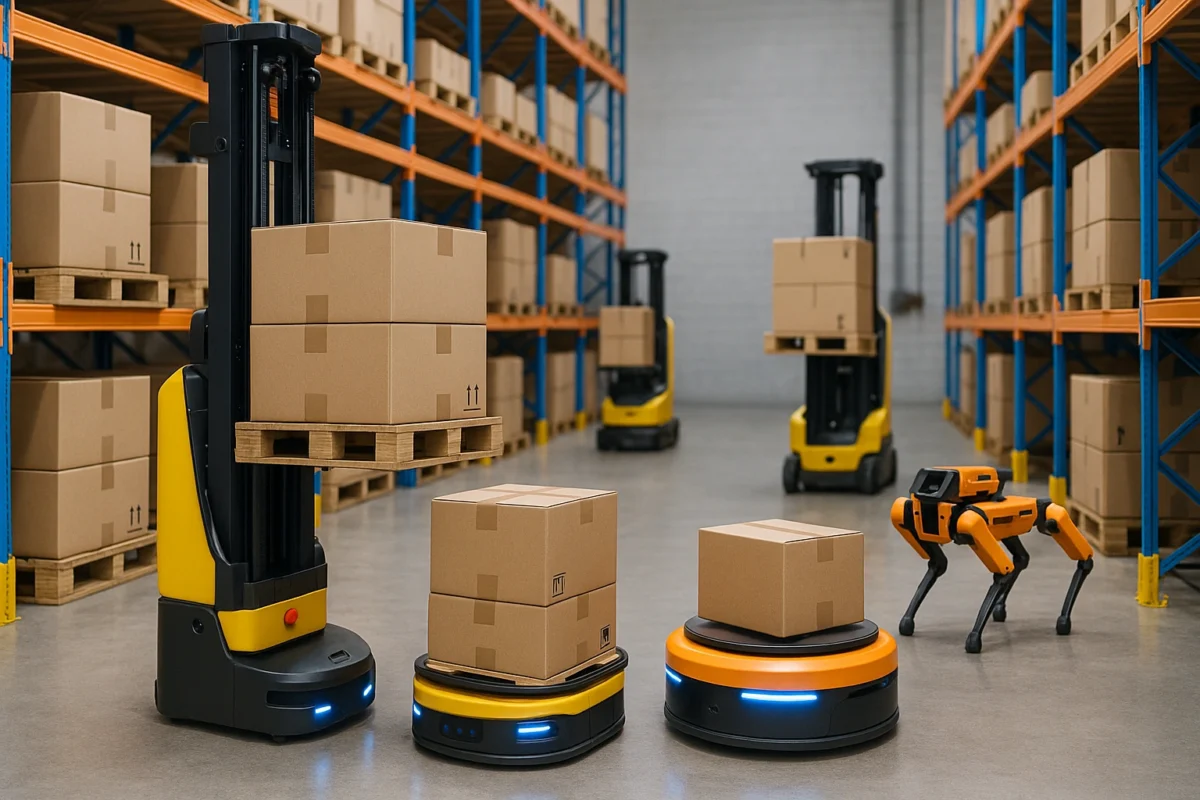
Robotics logistics uses intelligent machines to automate and optimize movement, tracking, and fulfillment inside warehouses. These systems are guided by advanced software and artificial intelligence to perform tasks once handled by humans such as picking, packing, sorting, and inventory checks.
What sets robotics apart is its consistency. Robots don’t get distracted or fatigued. They perform with the same accuracy at 3 a.m. as they do at noon.
This predictability makes them ideal for:
- Accuracy in picking and sorting.
- 24/7 warehouse operation.
- Data-driven compliance tracking.
- Error-free labeling and documentation.
When integrated with warehouse management systems (WMS), robotic solutions maintain a closed loop of control and reporting, ensuring that every movement aligns with compliance requirements.
Also See: Benefits of Robotic Warehouse Systems for Modern Logistics
How Robotics Guarantees Consistent Compliance
Compliance in logistics goes far beyond safety checklists. It’s about adhering to strict standards set by clients, regulators, and international authorities. From product labeling to temperature control, compliance is non-negotiable. Robotics guarantees it in three major ways:
1. Automated Documentation and Tracking
Every robot movement generates data like timestamped, logged, and stored. This automatic recordkeeping ensures complete audit trails. Whether you’re tracking food safety standards or pharmaceutical handling requirements, robotic systems eliminate the risk of missing documentation.
2. Precise Labeling and Packaging
Compliance often depends on accurate labeling like wrong codes or missing barcodes can lead to shipment rejection. Robotic systems read and verify labels with near-perfect accuracy, ensuring each product meets customer and regulatory standards.
3. Consistent Process Execution
Robots follow the same protocols every time. There’s no improvisation or oversight. This uniformity guarantees consistent compliance, even across multi-site operations or during high-demand periods.
Reducing Human Error Through Automation
Errors are inevitable in human-led systems. Fatigue, distractions, and stress all contribute to costly mistakes in logistics operations. But robotics changes that equation.
Precision in Picking
Automated picking robots use cameras, sensors, and AI algorithms to identify items accurately. They recognize barcodes, shapes, and even subtle color differences achieving accuracy in picking that exceeds human capability.
Smart Pathfinding
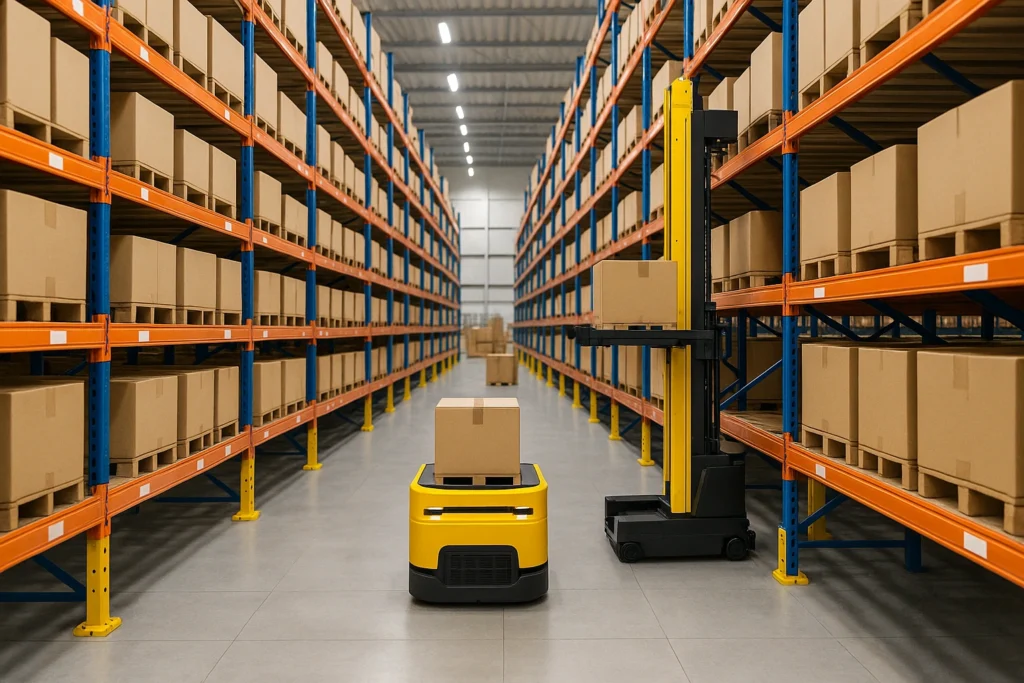
Using mapping algorithms, robots find the most efficient route through a warehouse. This reduces collisions, minimizes handling time, and ensures that goods arrive exactly where they should.
Continuous Quality Checks
Integrated quality assurance features mean robots can flag damaged packaging, missing items, or irregular weights. This prevents errors from moving downstream in the fulfillment process.
Real-Time Alerts
If something goes wrong, say, a barcode scan fails or an item mismatch occurs, the system instantly flags the issue for human review. This hybrid model ensures small issues don’t turn into large-scale errors.
The 24/7 Advantage: Nonstop Precision
One of the biggest benefits of robotics is round-the-clock operation. Robots don’t clock out, need breaks, or suffer from shift fatigue.
This means:
Consistent throughput: Orders processed day and night.
Predictable productivity: Robots maintain optimal performance across all shifts.
Shorter delivery times: Faster turnaround increases customer satisfaction.
Data continuity: Sensors collect data nonstop, feeding predictive maintenance and quality systems.
For industries like e-commerce, pharmaceuticals, and cold storage, 24/7 automation ensures goods are handled safely and efficiently regardless of time zone or labor availability.
Robotics and Compliance in High-Stakes Industries
1. Food and Beverage
In cold chain logistics, automated warehouse systems ensure temperature-sensitive goods remain compliant with health standards. Robots equipped with sensors continuously monitor and log environmental data.
2. Pharmaceuticals
Every vial, packet, or box must meet exact handling and labeling criteria. Robotic arms and vision systems reduce contamination risks and ensure proper traceability.
3. E-commerce
With thousands of orders per minute, e-commerce warehouses rely on robots for reduced errors in logistics ensuring every order reaches the right customer on time.
4. Manufacturing and Automotive
Here, compliance involves not just product handling but also component verification. Robotics ensures that the correct parts are used and assembled, reducing defects and maintaining quality assurance.
Safety Benefits: Protecting Workers and Assets
Warehouse robotics safety goes hand in hand with productivity. Automation eliminates many of the physically demanding and risky tasks traditionally assigned to human workers.
Reduced accidents: Robots handle heavy lifting and repetitive movements, lowering the risk of injury.
Safe collaboration: Modern cobots (collaborative robots) are designed with sensors and vision tech that prevent collisions with humans.
Cleaner workflows: Robots minimize clutter and streamline layouts, reducing trip hazards and human congestion in warehouse aisles.
This human-robot collaboration not only improves safety but also creates a more organized and efficient workplace.
Long-Term Impact: Compliance Meets Competitive Advantage
When compliance becomes automated, it turns from a burden into a strategic advantage.
Fewer penalties: Automated checks prevent non-compliance fines.
Faster audits: Comprehensive digital records simplify inspections.
Customer trust: Accuracy builds reliability, reinforcing brand reputation.
Sustainability: Optimized operations reduce waste and emissions, aligning with corporate ESG goals.
The integration of robotics in logistics transforms compliance from a box-ticking task into a core component of operational excellence.
Challenges and Considerations
While the benefits are clear, adopting robotics comes with a few challenges:
High upfront costs: Robotic infrastructure requires investment, though ROI is rapid through efficiency gains.
Integration with legacy systems: Older WMS may need upgrades for full automation compatibility.
Maintenance demands: Predictive maintenance tools must monitor robotic components to avoid downtime.
Still, these challenges are manageable with the right strategy and software ecosystem.
Conclusion
The future of logistics is all about being precise, compliant, and automated. Robotics makes that happen. By standardizing processes, keeping perfect records, and completely eliminating human error, automated systems guarantee consistent compliance.
Manual systems just can’t keep up. With robots running the warehouse 24/7, businesses get a level of efficiency and reliability that’s simply unbeatable. As the market gets tougher, automation isn’t a nice-to-have anymore, it’s the critical foundation for any logistics operation serious about accuracy, safety, and compliance moving forward.
FAQ: Robotics Logistics
How do robots help with compliance documentation?
They automatically log every task like movement, scan, and label creating a verifiable digital trail for audits.
Can robots fully replace human workers?
Not entirely. Robots handle repetitive and precise tasks, while humans oversee strategy, decision-making, and quality control.
What type of robots are used in warehouses?
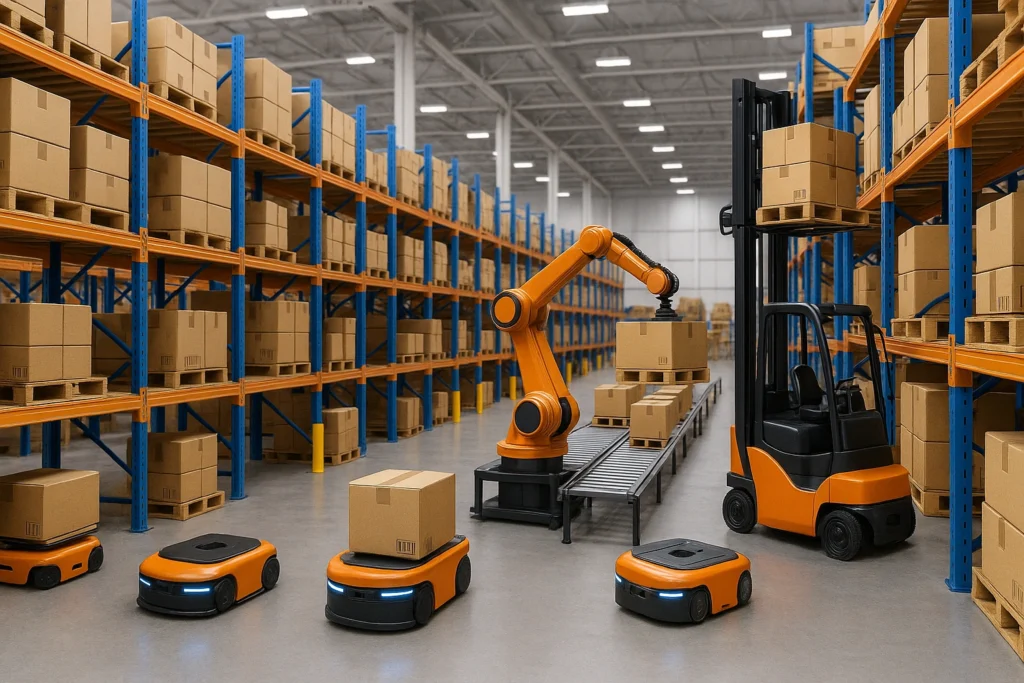
Common types include picking robots, automated guided vehicles (AGVs), and collaborative robotic arms.
How does robotics improve order accuracy?
With sensors, cameras, and barcode scanners, robots ensure each item is picked and packed exactly as required, reducing costly mispicks.