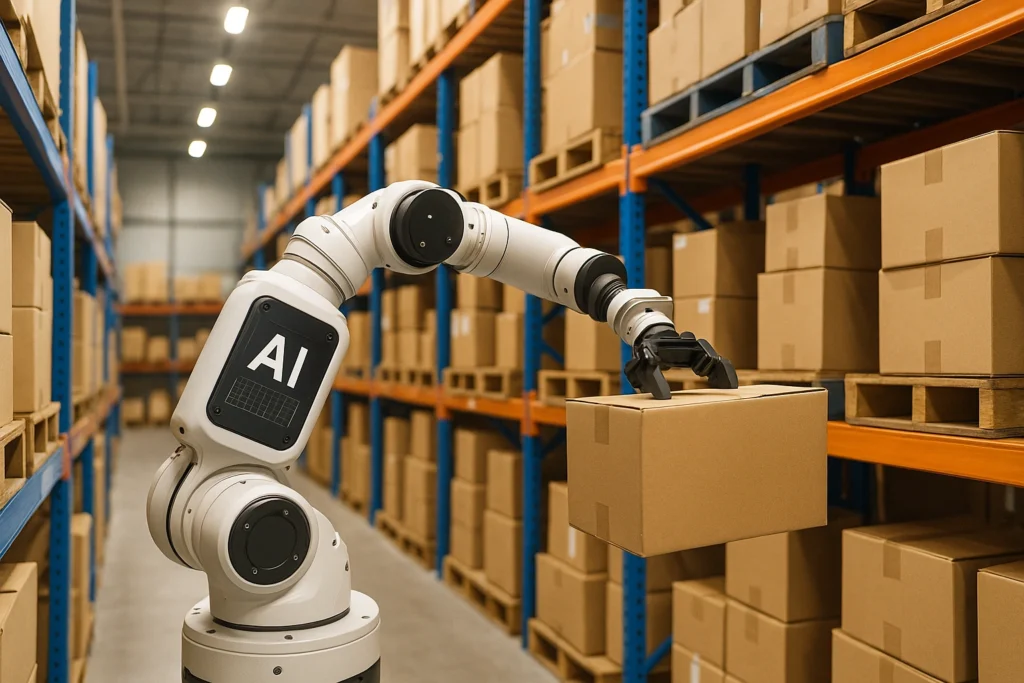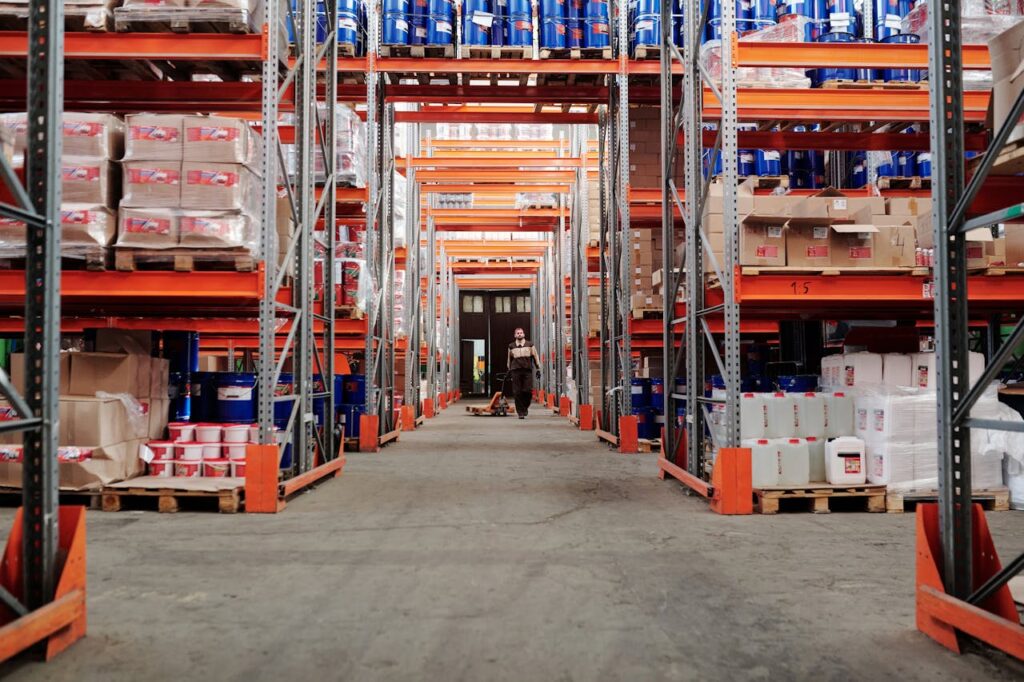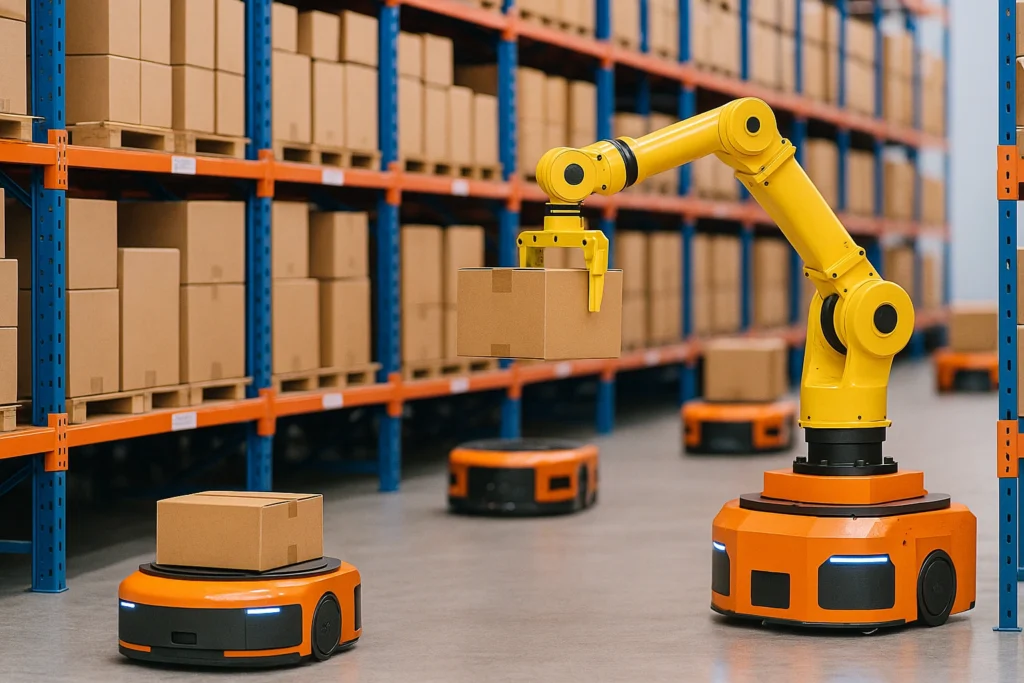
Lifting, bending, carrying, physically demanding tasks are part of many industries. Over time, these repetitive movements can lead to fatigue, injuries, and lost productivity. But what if workers had wearable machines that could absorb the strain, enhance strength, and reduce injury risk? Enter robotic exoskeletons, a rising star in the robotics world.
These wearable devices are helping people do more with less effort, transforming both how work gets done and how long people can safely do it.
What Are Robotic Exoskeletons?
Robotic exoskeletons are wearable machines designed to assist or amplify human motion. Built with lightweight materials and powered actuators or spring-based mechanics, they support arms, backs, and legs.
There are two major types:
Passive exoskeletons: Use mechanical support without motors (often spring-assisted)
Powered exoskeletons: Use motors or hydraulics for active movement and lifting
By synchronizing with the user’s movements, they reduce the strain on muscles and joints, particularly in industries like manufacturing, logistics, and construction.
Industrial Applications on the Rise
1. Construction and Heavy Lifting
On construction sites, exoskeletons assist with:
Lifting heavy materials
Overhead drilling
Concrete handling
Manual carrying
Workers experience less fatigue and greater control, even after long shifts. This improves both safety and output.
2. Warehouse and Logistics
In fast-paced logistics hubs, exoskeletons reduce injury risks from lifting and bending. Workers who wear these devices move faster, make fewer errors, and recover quicker between tasks.
Additionally, these suits help prevent chronic issues like lower back pain or shoulder injuries, leading causes of warehouse absenteeism.
A logistics worker wearing a lightweight robotic exosuit while lifting a heavy box in a warehouse.
3. Healthcare and Rehabilitation
Some exoskeletons are designed for patients, not just workers. In hospitals and rehab centers, powered suits help individuals relearn walking, rebuild leg strength, or restore upper limb motion.
These systems provide real-time feedback, encouraging proper posture and safe movement. This leads to faster recovery and better long-term outcomes.
Assembly-line workers often repeat the same overhead or crouching movements thousands of times. Wearable robotics reduce strain and improve endurance, making precision work safer and more sustainable.
Major companies like Ford and Hyundai have already introduced exosuits to support their assembly crews.
How Robotic Exoskeletons Improve Safety and Efficiency
These suits don’t just prevent injuries, they also:
Improve lifting force without added strain
Stabilize movement and reduce wobble
Correct posture through smart alignment
Support real-time alerts if unsafe motion is detected
Allow people to work longer without overexertion
Companies report fewer worker’s compensation claims, reduced fatigue-related errors, and improved morale after integrating wearable robotics.
Construction worker in a powered back-assist exoskeleton lifting steel bars.
The Technology Behind Exosuits
Smart robotic exoskeletons use sensors and AI to monitor:
Muscle exertion
Spinal posture
Joint angles
Step frequency
Load distribution
Some systems even include Bluetooth connectivity to sync with workplace dashboards. Supervisors can monitor team health metrics and optimize task assignments in real time.
Challenges and Considerations
While the benefits are promising, a few challenges remain:
Cost barriers: Some powered exosuits can cost thousands of dollars
User adaptation: Learning to move with assistance takes time
Battery limitations: Power units may need frequent recharging
Maintenance needs: Mechanical parts require regular checks
Sizing issues: Fit and comfort vary across body types
That said, the pace of innovation is lowering costs and improving usability every year.
Future Outlook: Where Exoskeletons Are Headed
In the coming years, expect to see:
AI-driven motion prediction: Allowing smoother, faster support
Lighter materials: Making suits more wearable for long periods
Wireless energy charging: To extend battery life
Data integration with wearables: Like smart helmets or wristbands
Use in elder care: Helping caregivers lift and support patients safely
These trends will move robotic exoskeletons from niche tech to everyday equipment across industries.
Conclusion
Robotic exoskeletons are transforming how physical work is performed. By supporting the human body with smart mechanics, these systems reduce injury, boost productivity, and extend careers. As costs fall and tech improves, more companies will adopt this powerful blend of human skill and robotic strength.
Ready to Explore More?
💪 Curious how wearable robotics can enhance your workplace? Download our Industrial Exoskeleton Starter Guide and explore vendor options, ROI calculators, and use cases tailored to your sector.
The warehousing industry is undergoing a revolutionary transformation driven by advances in robotics warehouse technology and simpler robotics & AI logistics systems. As consumer demands increase and supply chains become more complex, the future of warehousing hinges on the seamless integration of automation and artificial intelligence. From robotic picker technology to fully automated warehouse systems, intelligent machines are optimizing processes to achieve unprecedented levels of logistics efficiency and accuracy.
Robotics & AI: The Backbone of Smart Warehouses
Smart warehouses rely on AI robotics warehouse solutions that combine physical robots with powerful AI algorithms. These technologies enable:
Real-time inventory tracking
Automated picking and sorting
Predictive maintenance of warehouse equipment
This fusion of robotics & AI is at the core of robotic automation, driving smarter and faster fulfillment.
Key Innovations Shaping Warehouse Automation
1. Advanced Robotic Pickers Modern robotic picker technology uses AI-driven vision systems and robotic grippers that can adapt to various shapes and sizes of products. This flexibility allows robots to pick and place items with high precision, even in cluttered or variable environments. The result is reduced picking errors and increased throughput, crucial for meeting the demands of today’s fast-paced supply chains.
2. Automated Warehouse Systems These systems integrate robotics, conveyors, automated storage, and retrieval systems (AS/RS), and sophisticated warehouse management software to streamline every step of the logistics process. Automation reduces human error, improves safety, and optimizes space utilization, contributing to overall warehouse productivity.
3. AI-Powered Inventory Management AI not only powers the physical robots but also processes vast amounts of data to predict inventory needs, optimize stock levels, and prevent stockouts or overstock situations. By analyzing historical trends and real-time inputs, AI algorithms facilitate proactive decision-making that keeps warehouses lean yet responsive.
Robot Operating Conveyor Belts
Benefits of Robotics and AI in Warehousing
Increased Productivity Robots excel at repetitive tasks and can operate continuously without fatigue. This around-the-clock operation drastically increases order fulfillment speed, allowing warehouses to handle peak demand periods without hiring temporary labor.
Enhanced Accuracy AI-driven robots minimize picking mistakes by using advanced sensors and machine learning to identify items correctly. Accurate picking reduces costly returns, customer complaints, and inventory discrepancies.
Cost Reduction Automation cuts down on labor expenses and improves operational efficiency. Over time, the investment in robotic systems typically leads to significant cost savings and improved ROI.
Scalability and Flexibility Robotic systems can be scaled and reconfigured to fit warehouses of different sizes and layouts. This flexibility enables companies to expand operations or adapt to changing product mixes without major disruptions.
Robotics and AI have already demonstrated immense value across various industries:
E-commerce: During high-demand seasons, AI-powered robots manage millions of orders with speed and accuracy, ensuring timely deliveries.
Manufacturing: Robots assist assembly lines by delivering components and materials efficiently, reducing downtime.
Retail Distribution:Automated warehouses support restocking and processing returns seamlessly, improving overall supply chain responsiveness.
Collaborative Robots (CoBots) Operating in Warehouse
Overcoming Challenges in Adoption
Despite the clear benefits, implementing robotics and AI in warehousing also presents challenges:
High Initial Investment: The upfront cost for robotic infrastructure can be substantial, particularly for smaller businesses. However, decreasing hardware costs and cloud-based robotics platforms are making these technologies more accessible.
Workforce Integration: Employees require training to work alongside robots and manage AI systems effectively. Upskilling the workforce is essential to maximize benefits.
Data Security: As warehouses become more connected, ensuring the security of data and robotic networks is paramount to prevent cyber threats.
Looking Ahead: The Future Landscape
Collaborative Robots (Cobots) Future warehouses will see more collaborative robots, designed to work safely alongside human workers. These cobots can take over repetitive or physically demanding tasks while humans focus on strategic and supervisory roles.
AI-Driven Predictive Logistics AI will continue advancing to predict supply chain disruptions, optimize delivery routes, and dynamically adjust warehouse workflows in real-time.
Cloud-Based Robotics Control Cloud platforms will enable centralized control of multi-location warehouse networks, providing greater visibility and coordination for global logistics operations.
Integration with IoT and Blockchain The convergence of AI, robotics, IoT sensors, and blockchain technology will create fully transparent and efficient supply chains. Real-time tracking and immutable records will boost trust and reduce losses.
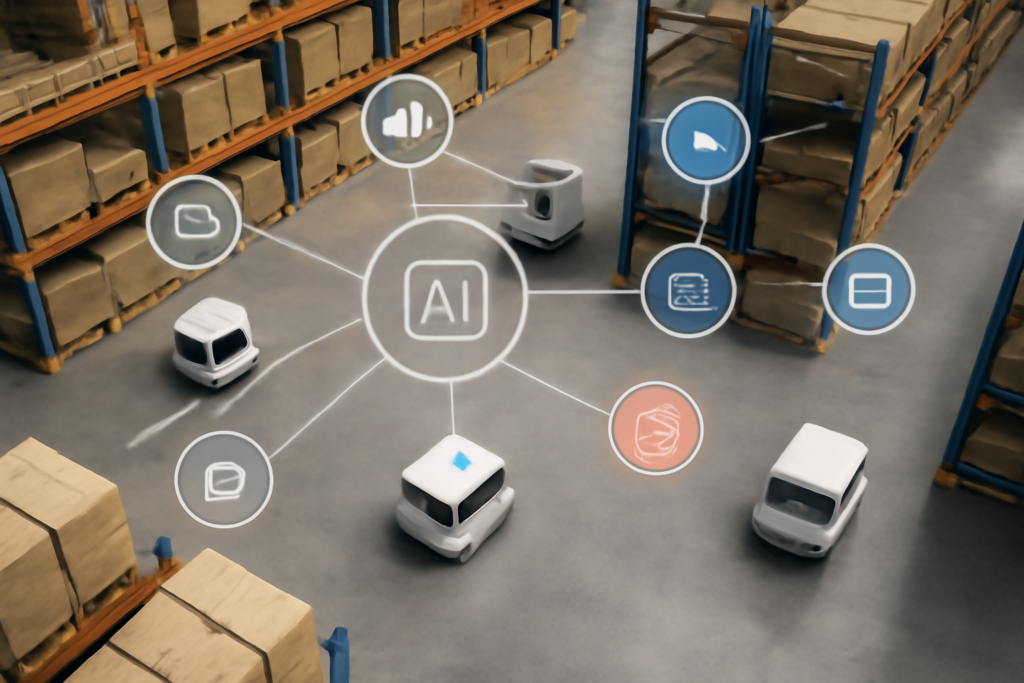
Image Prompt 4: Visual concept of interconnected warehouse robots controlled via a cloud-based platform, displaying data streams and blockchain icons in a futuristic interface
Frequently Asked Questions
What is the future of robotics in warehousing? Robotics will become more autonomous, intelligent, and integrated with AI to handle complex logistics tasks efficiently.
How does AI improve warehouse operations? AI enables predictive analytics, real-time decision-making, and automation of repetitive tasks, enhancing speed and accuracy.
Can robotics and AI be implemented in existing warehouses? Yes, many systems are designed for seamless integration with current warehouse management software and infrastructure.
Are robotic systems cost-effective? While initial investments can be significant, the long-term savings in labor, errors, and efficiency gains often justify the expense.
What role do smart warehouses play in logistics? Smart warehouses use connected technologies to optimize every stage of the supply chain, reducing downtime and boosting customer satisfaction.
Conclusion
The integration of robotics and AI is shaping the future of warehousing by enabling smarter, faster, and more efficient operations. Businesses adopting these technologies are poised to gain a competitive edge in an increasingly demanding market. As these technologies mature, warehouses will become more adaptive, sustainable, and customer-centric, paving the way for a new era in logistics.
Take the Next Step in Warehouse Innovation
Ready to future-proof your warehouse? Contact us today to explore how AI-driven robotic solutions can streamline your operations and boost efficiency.
The construction industry has always relied on human strength, skill, and coordination. Yet today, a new force is entering job sites, robotics. With smart machines taking on repetitive, hazardous, and time-sensitive tasks, robotics in construction is becoming a game-changer. These robots aren’t just about efficiency, they’re making building safer, faster, and more sustainable.
The Rise of Smart Construction Robots
Modern construction projects are more complex than ever. To meet tight deadlines and high safety standards, companies are turning to robotics. From autonomous bulldozers to robotic arms laying bricks, machines are transforming how infrastructure is built.
Key types of robots include:
Robotic bricklayers that can lay thousands of bricks per day
3D printing robots for walls, panels, and structural elements
Inspection drones that monitor progress from above
Demolition robots used in hazardous or unstable buildings
Surveying bots that create 3D maps in real time
Together, these systems reduce manual labor, limit injuries, and improve precision across all construction stages.
Boosting Productivity with Robotics
Time is money on a construction site. Robots can work longer hours without breaks or fatigue, allowing crews to operate around the clock. They also reduce bottlenecks by taking over repetitive or physically intensive jobs.
Examples include:
Concrete robots that pour and level surfaces evenly
Wall-painting drones that finish tasks in a fraction of the usual time
Rebar tying machines that speed up foundation work
With robotics, construction managers gain more predictable timelines and better quality control.
Improving Site Safety with Automation
Construction remains one of the most dangerous industries worldwide. Robotics can help reduce risks by keeping humans away from:
High altitudes or unstable scaffolding
Heavy machinery operation zones
Confined or toxic environments
For instance, autonomous bulldozers use GPS and sensors to clear land without operators inside. Similarly, demolition bots can tear down walls in damaged or fire-prone buildings, reducing the need for manual entry.
By offloading risky tasks, robots protect workers and reduce accident-related costs.
A robotic bricklayer laying bricks on a smart construction site.
AI Meets Construction Robotics
Artificial intelligence plays a major role in construction robotics. AI helps machines:
Learn from terrain data
Adapt movement to different site conditions
Optimize material usage in real time
Detect structural flaws or deviations
For example, an AI-powered inspection drone can scan a building’s frame, identify weak points, and alert engineers instantly. Combined with computer vision, these smart bots provide data faster than traditional inspections.
The Role of 3D Printing in Construction
3D printing is one of the most talked-about innovations in construction robotics. Using large-scale printers, entire walls and frames can be printed layer by layer using special concrete mixes.
Benefits include:
Rapid construction of low-cost housing
Waste reduction by using only required material
Precise customization of shapes and structures
Improved sustainability through local material sourcing
Some companies have already built homes, offices, and schools using robotic 3D printers, with fewer errors and lower emissions.
AI Image Prompt #2
A robotic bricklayer laying bricks on a smart construction site.
Robots and Human Workers: A Collaborative Future
Rather than replacing jobs, construction robots are assisting skilled labor. Humans continue to:
Monitor robots
Program task flows
Perform finishing work
Solve unexpected problems on site
This synergy creates safer roles and allows workers to upskill into robotics management, digital modeling, or equipment diagnostics.
Training programs for construction tech are growing, giving workers new career paths in a high-tech industry.
However, as more firms adopt robotics and see ROI benefits, these barriers are slowly breaking down.
Global Examples of Construction Robotics
Several countries are already pioneering robotics in construction:
Japan: Using humanoid robots to assist with labor shortages
Netherlands: 3D printing bridges and low-income housing
USA: Startups developing robotic framing systems
UAE: Printing entire villa complexes with autonomous systems
These examples show that robotics isn’t a future vision, it’s happening right now.
What’s Ahead for the Industry?
The future of robotics in construction includes:
Autonomous project managers using AI for resource allocation
Robot swarms that coordinate in real time
Green robots that use sustainable materials and energy sources
Remote-operated bots for disaster-zone rebuilding
Wearable robotics (exosuits) to assist human laborers
Eventually, entire construction sites may run semi-autonomously, with humans guiding and innovating instead of lifting and digging.
Conclusion
Robotics in construction is more than just automation, it’s about creating safer sites, smarter workflows, and sustainable growth. With machines taking over dangerous and repetitive tasks, construction becomes more efficient and resilient. The shift is already underway, and those who embrace it now will lead the infrastructure revolution.
Ready to Explore More?
🏗️ Want to modernize your construction processes? Download our Robotics Integration Toolkit for Builders and discover how to future-proof your projects with smart machines.
Modern warehouses are experiencing a technological shift. Gone are the days of manual inventory tracking and inefficient fulfillment. Enter the robotic warehouse picker, an innovation in inventory management robotics that blends AI, automation, and logistics to streamline operations. These smart machines are at the core of the new wave of automated warehouse technology, enabling faster, more accurate, and scalable inventory systems.
In this blog, we’ll explore how robotic warehouse pickers are transforming inventory control, boosting warehouse productivity, and redefining robotics in logistics.
The Evolution of Robotic Warehouse Pickers
A robotic warehouse picker is an autonomous machine designed to locate, pick, and transport items across a warehouse. Unlike traditional conveyor-based systems, these mobile robots operate independently using advanced sensors, AI algorithms, and real-time data.
Driven by AI and sensor fusion
Navigate dynamically using SLAM and machine vision
Improve robot picking accuracy over time
What sets robotic pickers apart is their ability to adapt. Whether it’s a shift in SKU location or an unexpected obstacle, these bots recalibrate on the fly. This makes them ideal for dynamic warehouse environments where change is constant.
Enhanced warehouse productivity through 24/7 operations
These robots are integrated with AI warehouse systems that update stock levels as items are picked, packed, and shipped. This reduces stockouts, overstocking, and operational delays, ultimately boosting customer satisfaction.
In addition, robotic systems ensure that high-value or sensitive goods are handled with precision, significantly reducing damage and loss.
The Role of AI in Warehouse Automation
At the heart of these robots lies AI warehouse systems. These systems enable:
Predictive stocking and restocking
Demand forecasting
Route and load optimization
Inventory cycle automation
With AI, warehouse automation shifts from reactive to proactive. Robots equipped with AI can predict when stock will run low, autonomously reorder, and optimize item placement for future efficiency.
For example, if a certain SKU becomes a top-seller, the AI system can reassign it to a more accessible zone and alert the robotic pickers. This constant feedback loop drives continuous improvement.
Image Prompt: AI-powered warehouse dashboard showing live robot activity, SKU heat maps, and predictive inventory analytics
Logistics Robots and Real-Time Fleet Coordination
Managing multiple logistics robots requires intelligent coordination. Modern systems employ centralized platforms that provide:
Task balancing among pickers
Collision avoidance and navigation
Monitoring of robot health and charge levels
These platforms enable warehouse automation on a fleet level. Managers can scale operations by simply adding new robots without extensive reconfiguration. The system auto-balances workloads and prevents downtime by directing robots to charge proactively.
As warehouses grow in complexity, logistics robots also support integration with ERP and WMS system, ensuring synchronized data flow across departments.
Optimizing Inventory with Robotics in Logistics
One of the most significant impacts of robotics in logistics is on inventory optimization. Robotics contributes to:
SKU-level tracking and reporting
Automated cycle counting
Smart zone replenishment
Faster stock audits
By using robots for inventory checks, warehouses can move from periodic to continuous auditing. This minimizes discrepancies and ensures a more agile and responsive supply chain.
Robots scanning and tracking SKU’s
Robot Picking Accuracy and Enhanced Warehouse Productivity
Precision is a hallmark of modern robotic systems. High robot picking accuracy is achieved through:
3D cameras and object recognition
AI-based grip and weight analysis
Adaptive learning from picking history
As accuracy improves, so does warehouse productivity. Fewer errors mean fewer returns, less rework, and faster order fulfillment. Warehouses can confidently handle high volumes without sacrificing quality.
Whether picking delicate pharmaceutical items or bulky consumer goods, robotic systems are trained to adjust their handling approach, ensuring consistent performance at scale.
Frequently Asked Questions
What is a robotic warehouse picker?
A robotic warehouse picker is an autonomous robot that locates, retrieves, and delivers inventory items using AI, sensors, and mobile navigation within a warehouse setting.
How do robotic pickers improve inventory management?
They reduce errors, offer real-time inventory updates, and improve picking speed, leading to more accurate and efficient stock control.
Are these robots suitable for all types of warehouses?
Yes, modern robotic pickers can be customized for various warehouse layouts, inventory types, and order volumes, from small startups to large-scale 3PLs.
What technologies power robotic warehouse pickers?
AI algorithms, 3D vision, LiDAR, SLAM (Simultaneous Localization and Mapping), and fleet management software power modern robotic picking systems.
Can robotic pickers scale with business growth?
Absolutely. These systems are modular, allowing businesses to add more robots as demand grows, without overhauling infrastructure.
Conclusion: The Robotic Picker Advantage
The future of warehouse operations is automated, intelligent, and resilient. Robotic warehouse pickers are a central part of this evolution, delivering unmatched efficiency, precision, and scalability.
From inventory accuracy to operational agility, these robots redefine how we manage modern logistics. With continued advances in automated warehouse technology, early adopters are already witnessing fewer errors, faster deliveries, and stronger bottom lines.
Whether you’re optimizing an e-commerce hub or a manufacturing warehouse, robotic pickers offer a smart path to competitive advantage.
Future-Proof Your Inventory Operations
Leverage the power of robotic warehouse pickers and transform your logistics with intelligent, AI-driven automation. Talk to our automation experts to find the right solution for your warehouse needs.
The future of warehouse picking is already here, and it’s powered by the amazing teamwork of many small robots. Swarm robotics is changing how warehouses work. It’s bringing in new automated picking systems. These systems use AI and many robots working together. And this makes picking items much faster.
In this article, I will show you how swarm robotics, driven by smart robotic logistics software and AI picking solutions, is revolutionizing smart warehouse technology.
If you’re a logistics manager or just someone who loves new tech, see how swarm robotics is reshaping warehouse picking systems in 2025 and for years to come.
Let’s dive in.
What Is Swarm Robotics?
Swarm robotics means many independent robots working together. It’s like how ants or bees work in nature. In warehouses, these robots use software. They coordinate tasks like picking, sorting, and moving goods.
Unlike traditional robot picking systems, swarm robotics leverages AI logistics for decentralized decision-making, enabling scalability and adaptability.
For example, Amazon’s Kiva robots use swarm robotics principles to optimize order fulfillment, reducing picking times. Smart warehouse tech is driving warehouse automation, transforming logistics with AI logistics plus autonomous warehouse bots and robot fleet management.
Key Characteristics of Swarm Robotics
Decentralization: No single point of control; intelligence is distributed among individual robots.
Scalability: Easily add or remove robots to match workload fluctuations without significant system overhauls.
Robustness: The system can continue functioning even if individual robots malfunction.
Self-Organization: Robots organize themselves to achieve collective goals without explicit programming for every scenario.
Flexibility & Adaptability: Swarms can quickly adapt to dynamic environments and changing tasks.
Swarm robotics improves warehouse automation by enabling collaborative robots to adapt to dynamic environments. AI picking solutions ensure efficiency, while robot fleet management optimizes coordination, making it ideal for high-demand logistics in 2025.
Improved Efficiency and Speed
One big benefit of swarm robotics is increased efficiency and speed. Many robots can work at the same time. They handle many picking tasks together. This parallel work greatly cuts down order fulfillment times. This is very important today. Customers expect same-day or next-day delivery.
Parallel Processing: Many robots can pick different items for one order. Or they can handle multiple orders at once.
Optimized Routing: AI algorithms help robots find the best paths. They avoid traffic and travel less.
24/7 Operation: Robots don’t need breaks like humans. They work all the time. This keeps productivity high.
Better Efficiency and Speed
One big benefit of swarm robotics is increased efficiency and speed. Many robots can work at the same time. They handle many picking tasks together. This parallel work greatly cuts down order fulfillment times. This is very important today. Customers expect same-day or next-day delivery.
Parallel Processing: Many robots can pick different items for one order. Or they can handle multiple orders at once.
Optimized Routing: AI algorithms help robots find the best paths. They avoid traffic and travel less.
24/7 Operation: Robots don’t need breaks like humans. They work all the time. This keeps productivity high.
Better Accuracy and Fewer Errors
Humans naturally make mistakes when picking. This leads to wrong picks, damaged goods, and costly returns. Swarm robotics, with its advanced sensors and AI, almost eliminates these errors. Each robot has precise navigation. It can recognize objects and scan them. This ensures the right item is picked every time.
Precision Picking: Robots can accurately find and pick items. Even if they look very similar.
Real-time Inventory Updates: When items are picked, the robot software updates inventory instantly. This gives accurate stock levels. It prevents mistakes.
Reduced Damage: Robots are programmed to handle items gently. This reduces damage during moving.
Scalability and Adaptability for Changing Demands
Warehouses have big changes in demand. This is especially true during holidays. It’s hard and costly to scale manual operations up or down. Swarm robotics offers great scalability. Warehouses can easily adjust their robot workforce. This helps meet changing needs.
Flexible Expansion: Just add more robots. They can handle more orders.
Dynamic Task Allocation: The robot management system can change tasks in real-time. This ensures the robots are used best. Even if priorities change.
Rapid Deployment: New robots can be added quickly. This reduces downtime.
Cost Savings and Return on Investment
The first cost for swarm robotics might seem high. But the long-term savings and quick return on investment are big. Lower labor costs, fewer errors, better output, and optimized inventory management. All these lead to major financial benefits.
Lower Labor Costs: Automation means fewer human workers for repetitive picking.
Decreased Operational Expenses: Optimized energy use and less need for lighting/heating in automated areas save money on bills.
Minimized Returns and Rework: Better accuracy means fewer customer complaints and costly returns.
How Swarm Robotics Revolutionizes Warehouse Picking
Swarm robotics transforms warehouse automation by letting collaborative robots work as a cohesive unit. Using AI logistics, these autonomous warehouse bots communicate in real-time to:
Optimize picking paths
Avoid collisions
Adapt to demand spikes
Robotic logistics software processes data from sensors, ensuring precise task allocation. A McKinsey report notes that swarm robotics can reduce picking costs by 25% and increase throughput by 30%.
So by using AI picking solutions, warehouses can achieve faster order fulfillment, making smart warehouse tech a game-changer for logistics in 2025.
Implementation Challenges and Solutions
While the benefits of swarm robotics are undeniable, successful implementation requires careful planning and addressing potential challenges.
Integration with Existing Infrastructure
Many warehouses have existing Warehouse Management Systems (WMS) and physical infrastructure. Integrating a new swarm robotics system seamlessly can be complex.
Solution: Opt for systems with open APIs and robust integration capabilities. Phased implementation can also help, allowing for gradual adoption and fine-tuning. Working with experienced system integrators is crucial.
Human-Robot Collaboration and Workforce Adaptation
The introduction of autonomous warehouse bots naturally raises concerns about job displacement. It’s essential to foster a culture of collaboration and provide training for the existing workforce.
Solution: Reposition human roles to higher-value tasks such as robot maintenance, supervision, data analysis, and exception handling. Emphasize that robots are tools to augment, not replace, human capabilities. Provide comprehensive training programs for employees to adapt to the new automated environment.
Security and Data Privacy
As more data is collected and shared within an automated warehouse, ensuring the security of that data and protecting against cyber threats becomes paramount.
Solution: Implement robust cybersecurity protocols, including encryption, secure network architectures, and regular security audits. Adhere to data privacy regulations and best practices.
Maintenance and Downtime
Even autonomous systems require maintenance. Ensuring minimal downtime and efficient troubleshooting is critical to maximizing ROI.
Solution: Implement predictive maintenance schedules based on sensor data. Partner with providers who offer comprehensive support and rapid response times. Leverage digital twin technology for simulations and proactive issue identification.
The Future of Warehouse Picking with Swarm Robotics
The trajectory of swarm robotics in logistics is undeniably upward. As the technology matures, we can expect even more sophisticated applications and widespread adoption.
Hyper-Personalization and Micro-Fulfillment
Swarm robotics will enable highly personalized order fulfillment, allowing for customized bundles and immediate shipping of unique combinations of products. This will facilitate the rise of micro-fulfillment centers located closer to urban areas, drastically reducing last-mile delivery times.
AI-Driven Predictive Maintenance
Future robot fleet management systems will leverage advanced AI to predict component failures before they occur, scheduling proactive maintenance and virtually eliminating unplanned downtime. This will further enhance the reliability and efficiency of robot picking systems.
Seamless Human-Swarm Interaction
The interface between human workers and robotic swarms will become increasingly intuitive. Augmented reality (AR) could provide human operators with real-time insights into swarm activity, while voice commands and gesture control might enable more natural interactions.
Environmentally Conscious Operations
As energy efficiency becomes a paramount concern, swarm robotics will contribute to more sustainable warehouse operations. Smaller, more efficient bots, coupled with AI-optimized routes and reduced reliance on energy-intensive equipment, will lower the carbon footprint of logistics.
Conclusion
Swarm robotics is a big change in how warehouses operate. It lets many smart, independent robots work together. Businesses can pick orders much faster and more accurately. They can also easily expand their operations.
There are some challenges. But with ongoing improvements in AI, robot team management, and smart warehouse devices, robot swarms will soon be a key part of how goods move globally. Embracing this new approach is not just a good idea. It’s essential for any business that wants to succeed in today’s competitive logistics world. The future of warehouse picking is already here. It’s powered by the amazing teamwork of many small robots.
FAQ – Swarm robotics in warehouse automation
What is swarm robotics?
Swarm robotics is an innovative method for coordinating multiple robot systems. It involves a large number of relatively simple physical robots. The aim is for complex collective behaviors to emerge from the interactions between these robots and their environment.
What are the core principles of swarm robotics?
Swarm intelligence is a revolutionary concept in robotics that offers fresh solutions to intricate challenges across various fields. It harnesses principles such as self-organization, decentralization, scalability, and robustness, enabling swarm robotics to accomplish tasks that individual robots could not.
What are common applications of swarm robotics?
Swarm robotics can be effectively applied to tasks such as demining, search and rescue operations, exploration of planets or underwater environments, and surveillance.
Modern warehouses are undergoing a quiet but radical transformation. Gone are the days of human-only pickers navigating aisles with paper lists. Enter swarm robotics, a groundbreaking leap in warehouse automation where fleets of intelligent bots coordinate seamlessly to pick, sort, and deliver goods. By mimicking behaviors from nature, especially swarm intelligence seen in ants and bees, these robotic fleets are revolutionizing logistics.
In this blog, we’ll explore how swarm robotics is being applied to robot picking systems, its impact on AI logistics, and why it’s the future of smart warehouse tech.
The Rise of Swarm Robotics in Warehouse Automation
Swarm robotics involves decentralized control where multiple robots collaborate based on local interactions, not centralized commands. This approach enhances flexibility, scalability, and fault tolerance, crucial for warehouse automation environments.
Inspired by biological swarms (ants, bees)
No central brain, each robot operates semi-independently
Ideal for dynamic environments like warehouses
Swarm robotics isn’t a niche idea, it’s a logical evolution of automation, moving from monolithic systems to self-organizing, adaptive networks of autonomous agents. In a traditional setup, a central system dictates movement, but in a swarm setup, bots react in real-time to changes, optimizing performance without external commands.
Swarm Robotics across Warehouses
Advantages of Swarm Robotics Over Traditional Robot Picking Systems
Conventional robot picking systems rely on centralized software and fixed paths. This limits adaptability. Swarm robotics offers:
Dynamic path planning based on real-time data
Redundancy, if one robot fails, others adapt
Speed and accuracy through multi-bot coordination
Reduced congestion via distributed decision-making
These benefits significantly enhance autonomous warehouse bots performance. Unlike traditional systems that bottleneck under stress or failure, swarm bots maintain operational flow even in disruptive scenarios. This makes them ideal for high-demand scenarios like seasonal spikes in e-commerce.
Furthermore, swarm bots do not need fixed routes or expensive infrastructure like conveyor belts or robotic arms. They simply require navigable floors, real-time mapping, and swarm coordination software, reducing initial setup and maintenance costs.
AI Logistics Meets Collaborative Robots
Swarm systems are powered by AI logistics platforms that handle:
Predictive maintenance
Inventory allocation
Route optimization
Real-time load balancing
These collaborative robots aren’t just mindless machines, they learn from each other and improve over time, enabling adaptive behaviors that traditional bots can’t achieve. In complex warehouse environments, where SKUs vary widely, this learning ability ensures efficiency and precision.
AI logistics systems analyze data from multiple robots to detect patterns. For example, if a particular route consistently leads to delays, the system redirects traffic automatically. Or if one robot’s performance drops, the system can proactively assign its tasks elsewhere. This level of intelligent orchestration would be impossible with legacy systems.
Image Prompt: AI logistics dashboard showing real-time paths of multiple autonomous robots inside a warehouse, with graphs, heat maps, and live metrics visualized
Robot Fleet Management for Dynamic Warehousing
Managing a swarm is complex. That’s where robot fleet management software comes in. It ensures:
Balanced task distribution
Collision avoidance
Fleet-level health monitoring
Power and charging coordination
Robotic logistics software enables a command center view without dictating every move. The software monitors robot health, battery levels, and performance metrics, then adjusts job assignments accordingly. Some systems even include simulation tools that allow warehouse managers to test workflows before deployment.
With multiple robot models often coexisting (e.g., different payload capacities), robot fleet management tools must support heterogeneous swarms. Advanced platforms offer integration with warehouse management systems (WMS) and enterprise resource planning (ERP) tools, ensuring seamless data flow from order intake to fulfillment.
Smart Warehouse Tech: A Modular and Scalable Future
Swarm robotics fits perfectly with smart warehouse tech:
Modular layouts with robotic zones
IoT-integrated inventory bins
Real-time restocking alerts
Seamless ERP/WMS integration
This synergy allows warehouses to evolve rapidly. For instance, a warehouse can start with a 20-robot swarm and scale up to 200+ bots without major overhauls. The system automatically redistributes tasks, optimizing for space, workload, and efficiency.
Smart warehouse tech also includes embedded sensors in shelves and bins. These sensors communicate inventory status in real-time, prompting swarm bots to act when stock is low or misplaced. This creates a self-healing, self-optimizing environment where human intervention is minimal.
Warehouses with Swarms and IOT Integrated Modular Racks
AI Picking Solutions: The Next Frontier
The latest in AI picking solutions integrates:
3D vision with robotic arms
Semantic understanding of SKU data
On-the-fly path recalculation
AI-generated picking priorities
This blend of hardware and intelligence makes swarm-based systems not just fast, but strategically smart. AI enables the system to prioritize high-demand items, minimize travel time, and learn from past mistakes. In peak seasons, the system can pre-emptively organize inventory zones for efficiency.
Imagine bots that don’t just follow orders, but understand context. For example, a robot might prioritize urgent orders or reroute due to temporary obstacles. That’s the power of AI-enhanced swarm robotics.
Frequently Asked Questions
What is swarm robotics in warehouse automation?
Swarm robotics in warehouses refers to multiple autonomous robots working collaboratively using decentralized control and local interactions to handle tasks like picking, sorting, and inventory transport.
How do swarm robotics improve robot picking systems?
Swarm robots adapt in real-time, balance loads dynamically, and ensure system-wide fault tolerance, making robot picking faster, smarter, and more resilient.
Are swarm robots managed centrally?
No. Swarm robots operate using distributed intelligence. However, fleet management software provides oversight and coordination support.
What industries benefit most from swarm robotics in logistics?
E-commerce, manufacturing, pharmaceuticals, and third-party logistics (3PLs) benefit most from deploying swarm robotics due to high SKU counts and dynamic inventory flows.
What is the role of AI in swarm robot picking?
AI drives swarm learning, real-time path planning, and predictive analytics, enabling continuous optimization of warehouse operations.
Conclusion: The Swarm Revolution Is Here
Swarm robotics isn’t just a trend, it’s a transformative shift in how warehouses operate. With the convergence of robotic logistics software, AI picking solutions, and smart warehouse tech, the industry is poised for faster, safer, and more scalable operations. Early adopters are already reporting improved throughput, reduced labor costs, and higher customer satisfaction.
Swarm systems bring a level of agility and intelligence that traditional automation cannot match. Whether you’re scaling a startup warehouse or optimizing a global distribution center, swarm robotics could be your key to next-gen fulfillment.
Ready to Future-Proof Your Warehouse?
Harness the power of swarm robotics with AI-driven solutions tailored for dynamic, high-volume environments. Contact our experts today to discover how collaborative bots can streamline your picking operations and boost ROI.
Manufacturing is changing fast. Factories are moving from rigid, isolated machines to smart, adaptive systems. At the heart of this shift are collaborative robots, or cobots. These robots are designed to work safely alongside humans, combining automation with flexibility. As a result, collaborative robots in manufacturing are helping companies boost productivity, cut downtime, and create safer workplaces, all at once.
What Are Collaborative Robots?
Collaborative robots are lightweight, sensor-equipped machines built to share workspaces with humans. Unlike traditional industrial robots, which require cages and safety zones, cobots can operate side by side with workers.
Several features set cobots apart:
Built-in force sensors to detect and respond to contact
Easy programming with hand-guided teaching
Adaptive behavior that fits dynamic environments
Lower upfront cost and space requirements
Because they are safe and easy to deploy, cobots are ideal for small and mid-sized manufacturers looking to embrace automation without major infrastructure changes.
How Cobots Are Revolutionizing Manufacturing Floors
Manufacturers across sectors, from automotive to electronics, are deploying cobots to handle repetitive or dangerous tasks. This allows human workers to focus on higher-value responsibilities like quality control or system monitoring.
Here’s how cobots improve operations:
1. Enhanced Productivity
Cobots work consistently and without fatigue. They help reduce cycle times by handling tasks like:
Assembly line automation
Material loading and unloading
Machine tending
Packaging and palletizing
As productivity increases, manufacturers can scale operations without scaling headcount.
2. Improved Safety
Workplace injuries cost billions each year. Cobots are built to minimize accidents. Features like force limitation and collision detection ensure they stop or slow down when encountering resistance.
Instead of replacing humans, cobots reduce their exposure to:
Sharp tools or hot surfaces
Repetitive strain from lifting
Enclosed or hazardous environments
In this way, cobots create a safer, more ergonomic workplace.
3. Workforce Augmentation, Not Replacement
A major fear with robotics is job loss. Cobots, however, are designed to augment human skills, not replace them. While robots take over monotonous jobs, workers can:
Oversee multiple cobots at once
Train and program robots for new tasks
Move into creative or supervisory roles
This partnership model boosts job satisfaction and opens up new career paths in robotics and automation.
A modern manufacturing floor with cobots and humans working side-by-side.
Cobots vs Traditional Industrial Robots
While both types automate tasks, their design and purpose differ significantly:
Feature
Collaborative Robots
Traditional Robots
Safety
Built-in, human-safe
Needs cages/barriers
Setup
Plug-and-play
Complex, costly installation
Flexibility
Easily reprogrammed
Fixed, rigid tasks
Cost
Affordable
High upfront investment
Ideal For
Mixed environments
Isolated operations
Because of these differences, cobots offer better ROI in dynamic, small-batch manufacturing setups.
Key Industries Benefiting from Cobots
Collaborative robots are finding use in several sectors:
Automotive: Assisting in interior assembly and inspection
Electronics: Handling delicate components during PCB assembly
Pharma: Aiding in lab automation and sterile packaging
Food and Beverage: Automating packing, sorting, and quality checks
Metal Fabrication: Supporting welding, deburring, and part polishing
The flexible nature of cobots makes them highly adaptable across these diverse industries.
AI Image Prompt #2
A visual dashboard of factory metrics with cobots operating in real time.
Integration with Smart Manufacturing Systems
Collaborative robots don’t work in isolation. They often integrate with other technologies such as:
Vision systems for object detection and alignment
AI algorithms that improve task precision and efficiency
IoT sensors that monitor temperature, pressure, and movement
Digital twins for simulating and optimizing workflows before deployment
These integrations enable real-time decision-making and predictive maintenance, further improving factory performance.
Challenges in Cobot Adoption
Despite their benefits, companies may face hurdles when adopting collaborative robots:
Training requirements for programming and maintenance
Integration complexity with legacy systems
Initial cultural resistance from workers unfamiliar with automation
Choosing the right use case for ROI demonstration
However, most of these challenges are temporary. With proper onboarding and change management, businesses can unlock full value from cobots quickly.
What’s Next for Collaborative Robots?
The future of collaborative robots in manufacturing looks promising. We can expect:
Smarter AI-powered cobots that learn tasks on the fly
Industry-specific models tailored for precision or heavy-duty work
Cloud-connected cobots for global monitoring and updates
Greater adoption in low-tech industries previously untouched by automation
Eventually, cobots will become standard factory assistants, just like forklifts or conveyor belts once did.
Conclusion
Collaborative robots in manufacturing are more than a trend. They represent a shift toward safer, smarter, and more efficient production. As factories evolve, cobots will be critical in creating environments where people and machines thrive together.
Ready to Explore More?
🎯 Want to integrate collaborative robots into your facility? Download our Cobot Deployment Checklist to assess readiness, cost, and best-fit applications.
Robots aren’t what they used to be. Not long ago, every command, every decision, had to travel through cloud servers. That meant delays, dependence on stable internet, and serious limitations when robots needed to think on their feet. Edge AI is changing that entirely.
Here’s the thing: Edge AI shifts the brainpower to the device itself. Robots don’t need to wait for answers from distant servers. They think and act on their own, instantly. Whether it’s a robotic arm on a factory floor or an agricultural drone scanning crops, Edge AI is making them smarter, faster, and more reliable.
Let’s break it down and see how this shift is playing out.
What Is Edge AI and Why It Matters
Edge AI refers to artificial intelligence that runs locally on hardware devices, instead of relying on cloud-based servers. The processing happens on-site. No internet lag. No round-trip communication.
For robotics, this means real-time action. A manufacturing robot can detect and react to a defective part instantly. A warehouse bot can avoid a collision the moment a human crosses its path. The difference is not just speed, but autonomy.
This kind of independence is a big deal. Robots no longer pause to think. They just act.
Cloud Robotics vs Edge Robotics
To see why this matters, compare the two setups:
Cloud Robotics relies on a constant connection to remote servers. Every image, signal, or sensor input must travel to the cloud, get processed, and then come back with a command. If your network hiccups, so does your robot.
Edge Robotics keeps everything local. The camera, sensors, AI model—all packed into the device. This means zero reliance on bandwidth, better response times, and far fewer vulnerabilities.
It’s not just a technical improvement. It’s a shift in how we build and trust autonomous systems.
Factory robot using Edge AI to inspect products on an assembly line.
Real-World Applications Already in Motion
Manufacturing: Smart arms and conveyors now detect anomalies without cloud input. They flag defects, adjust grip strength, or stop operations—all within milliseconds.
Agriculture: Drones fitted with edge AI models scan crops and soil patterns mid-flight. They deliver insights before landing. Ground bots spot pests or nutrient gaps and alert farmers instantly.
Logistics: In a warehouse, timing is everything. Edge-powered bots reroute in real time when aisles get blocked or crowded. No downtime, no drama.
Speed: No more waiting. Everything runs locally, which cuts out delays.
Stability: With no need for constant internet, robots stay sharp even in remote areas.
Security: Data stays on the device. That limits exposure and makes breaches less likely.
Scalability: Add more robots without overloading your cloud infrastructure.
Energy Efficiency: Less data transmission means lower power use, especially for mobile bots.
This isn’t just better performance. It’s smarter resource use across the board.
The Technical Hurdles That Still Exist
Nothing is perfect. Edge AI comes with trade-offs:
Processing Power: Devices have limits. You can’t run massive models on a tiny microchip.
Model Compression: Making models small enough to run on-device often means losing detail.
Battery Constraints: Mobile robots balancing AI workloads and battery life have tough choices to make.
Hardware Cost: Not every company can afford AI-ready edge devices right out of the gate.
These are solvable problems, but they slow down adoption in certain sectors.
How Edge AI Changes the Robotics Conversation
Before edge computing, we had to design robots around their connection to the cloud. With edge AI, we can start designing robots that make decisions like humans do—on the fly, based on local information.
It’s not just about making faster robots. It’s about building ones that are more aware, more responsive, and more reliable.
For industries that rely on uptime and precision, that shift matters. A self-correcting robot arm. A drone that adjusts its flight path mid-air. A delivery bot that reroutes without being told. These changes open up entirely new possibilities.
Agriculture robot using Edge AI to monitor crop health in real time.
What’s Coming Next?
The hardware is getting better. AI models are shrinking without losing smarts. Power systems are catching up. And that means edge robotics will scale faster in the next few years.
Expect smarter swarm bots. More self-repairing machines. Tighter integration with computer vision, predictive maintenance, and IoT networks.
What this really means is simple: robots are becoming less dependent, and more intelligent.
FAQ
Q1: Is edge AI better than cloud AI? Each has its place. Edge AI is better for real-time decisions and privacy. Cloud AI is still useful for large-scale data analysis.
Q2: What devices can run edge AI? From Raspberry Pi boards to NVIDIA Jetson modules, plenty of compact devices are edge-AI capable. It depends on the model size and task complexity.
Q3: Is it expensive to implement edge AI in robotics? Initial costs can be high due to hardware needs, but the long-term savings from efficiency and lower cloud costs often balance it out.
The modern warehouse is evolving rapidly, driven by innovations in AI-powered robots and robotic warehouse pickers that redefine how goods are handled and managed. As supply chains become increasingly complex and consumer expectations for fast, accurate delivery rise, companies are turning to automated inventory systems to boost warehouse efficiency and maintain a competitive edge.
AI and Robotics: Revolutionizing Warehouse Operations
AI in logistics is not just about replacing manual labor, it’s about enhancing operational precision, speed, and flexibility. Smart picking robots equipped with advanced sensors and machine learning algorithms are now capable of identifying, selecting, and transporting items with incredible accuracy. This drastically reduces errors and streamlines workflows that were once prone to human limitations.
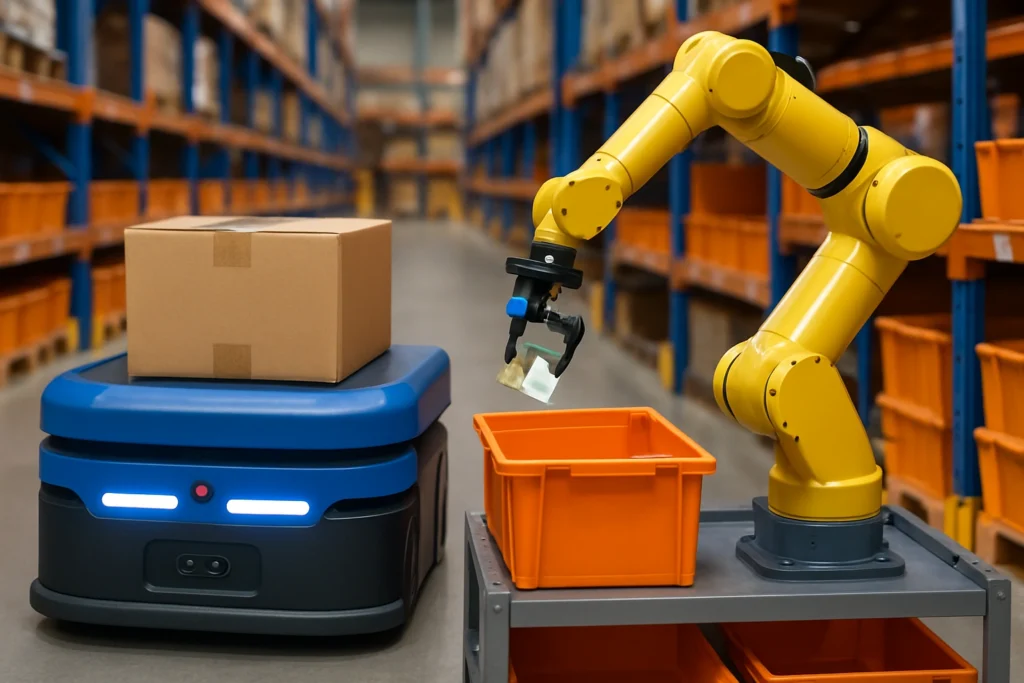
High Tech Warehouse with AI Powered Robotic pickers
Key Features of AI-Powered Robotic Pickers
Adaptive Vision Systems: Robots use AI-driven cameras and image recognition to identify products of varying sizes, shapes, and packaging.
Automated Gripping Technology: Robotic arms adjust grip strength and technique based on item fragility, minimizing damage.
Real-Time Data Integration: Connected to warehouse management software, these robots update inventory in real-time, ensuring accurate stock levels.
Self-Learning Capabilities: Machine learning models help robots improve their picking accuracy over time by learning from mistakes and adapting to new product types.
Seamless Collaboration: Some AI-powered pickers are designed to safely work alongside human workers, enhancing overall team productivity.
Boosting Picking Efficiency and Warehouse Optimization
The impact on picking efficiency is profound. AI-powered robotic pickers can work continuously without fatigue, drastically increasing throughput during peak demand periods. Furthermore, integration with automated inventory systems means restocking and order fulfillment can be coordinated seamlessly, reducing delays and operational bottlenecks.
Warehouse optimization extends beyond just speed, these robotics warehouse solutions improve space utilization by enabling dynamic storage and retrieval patterns, making even small warehouses more productive.
One of the biggest challenges in warehousing is maintaining up-to-date inventory records. Traditional manual inventory methods are prone to errors, delays, and discrepancies. AI-powered robotic pickers update stock levels instantly during picking or replenishment activities, which improves inventory accuracy significantly. Accurate inventory data means better demand forecasting, fewer stockouts, and less excess inventory, all contributing to lower carrying costs.
Enhanced Warehouse Layouts
The precision and flexibility of AI robots allow warehouses to adopt more compact storage layouts. Since robots can navigate tight aisles and reach items stored in unconventional ways, warehouses can maximize storage density without compromising access. This leads to reduced real estate costs and better utilization of available space.
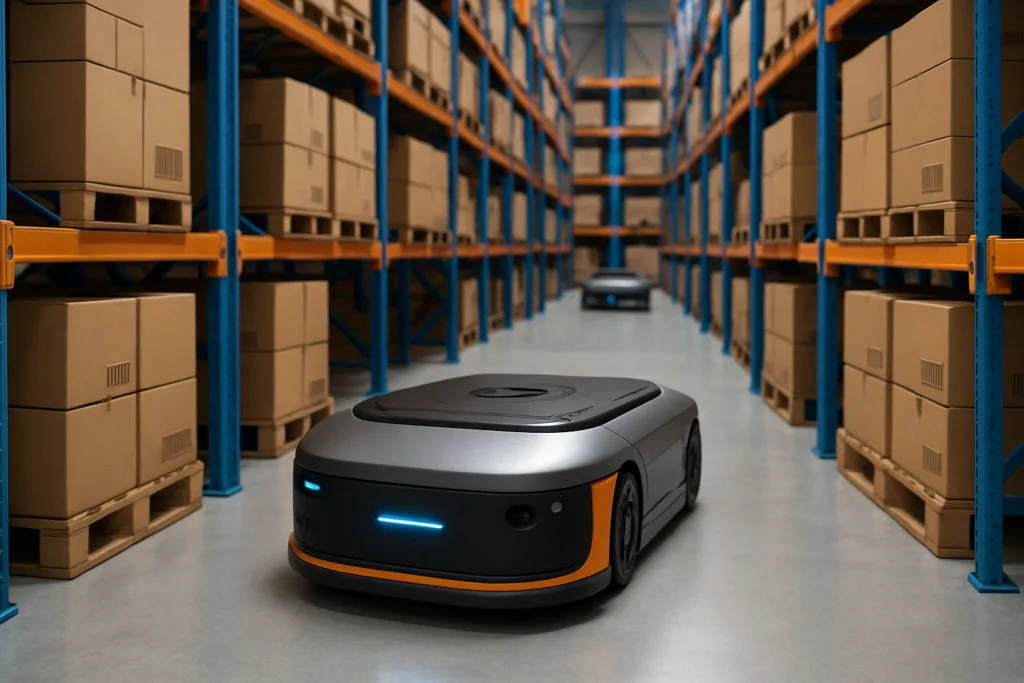
Efficient Maneuvering of AI Powered Robotic Pickers
Cost and Productivity Benefits
While the upfront investment in robotic technology may be significant, the long-term cost savings and productivity gains are undeniable:
Reduced Labor Costs: Robots automate repetitive tasks, freeing human workers for higher-value activities such as quality control, complex decision-making, or customer service.
Lower Error Rates: Improved accuracy reduces costly returns and mis-shipments, saving on reverse logistics and enhancing customer satisfaction.
Increased Throughput: Robots operate 24/7 without breaks, scaling with business demands.
Decreased Workplace Injuries: Robots take over physically strenuous or dangerous tasks, improving overall workplace safety.
Energy Efficiency: Many AI-powered robots are designed for energy-efficient operation, reducing power consumption compared to traditional equipment.
Real-World Applications
AI-powered robotic pickers are already transforming industries:
E-Commerce Fulfillment: Handling high volumes of diverse orders quickly and accurately. During peak seasons such as holidays or sales events, robotic pickers maintain rapid order fulfillment without needing additional temporary staff.
Manufacturing Supply Chains: Efficiently moving parts to assembly lines with minimal downtime. AI-powered robots can adjust to sudden changes in production schedules or custom orders.
Retail Distribution: Managing rapid restocking and returns in dynamic retail environments. Automated systems ensure shelves remain stocked and ready for customers, enhancing shopper experience.
Case Study: E-Commerce Giant
A leading e-commerce company integrated AI-powered robotic pickers into its fulfillment centers and reported a 40% increase in order processing speed. Errors dropped by 30%, and employee satisfaction improved as workers transitioned to less repetitive and safer tasks.
Overcoming Challenges in Adoption
Despite their benefits, integrating AI and robotics requires careful planning. Some common challenges include:
High Initial Investment: Purchasing and installing robotic systems require a substantial capital outlay. However, as technology advances, hardware costs are declining, and flexible leasing or robotics-as-a-service models are making these innovations accessible to smaller businesses.
Workforce Training and Change Management: Introducing robots changes job roles and workflows. Workers need to be trained to operate, maintain, and collaborate with these new technologies. Organizations that invest in upskilling tend to achieve smoother transitions and higher employee acceptance.
Integration with Legacy Systems: Many warehouses operate with existing warehouse management software and infrastructure. Ensuring compatibility between new robotic systems and legacy IT environments is critical to avoid disruptions.
Cybersecurity and Data Privacy: Increased connectivity exposes warehouses to potential cyber threats. Implementing robust cybersecurity protocols to safeguard data and robotic networks is essential for secure operations.
The Future Outlook: What’s Next for AI and Robotics in Warehousing?
The future of warehouse automation is bright and full of innovation. Here are some trends shaping the next wave:
Collaborative Robots (Cobots): Unlike traditional robots that operate separately, cobots are designed to safely work alongside humans. These machines assist with physically demanding or repetitive tasks, boosting productivity while allowing human workers to focus on more strategic activities.
AI-Driven Predictive Logistics: AI will increasingly enable warehouses to anticipate demand spikes, supply chain disruptions, and equipment maintenance needs. Predictive analytics will allow for proactive adjustments, reducing downtime and improving customer satisfaction.
Cloud-Based Robotics Management: Centralized cloud platforms will enable real-time monitoring and control of robotic fleets across multiple warehouses. This will enhance coordination and efficiency at a global scale.
Integration with IoT and Blockchain: Combining AI-powered robotics with IoT sensors and blockchain will bring unprecedented transparency and security to supply chains. Real-time tracking and immutable records will reduce theft, counterfeiting, and errors, fostering trust among stakeholders.
CoBots working Along with Humans enabling Efficiency
Conclusion
Improving warehouse efficiency with AI-powered robotic pickers is no longer a futuristic concept, it’s an operational necessity. By automating repetitive, error-prone tasks and integrating advanced AI capabilities, warehouses achieve greater speed, accuracy, and adaptability. These technologies empower businesses to meet rising consumer demands, reduce operational costs, and scale sustainably.
The journey to robotic warehouse automation requires strategic investment, workforce training, and IT integration, but the rewards are clear. Businesses that embrace AI-powered robotic pickers today position themselves for long-term competitive advantage in a rapidly evolving logistics landscape.
Take the Next Step in Warehouse Innovation
Ready to unlock the full potential of AI and robotics in your warehouse? Contact us today to explore how smart picking robots and automated inventory systems can transform your operations and drive efficiency.
The rise of robotic picking systems is transforming the backbone of supply chains: warehouse operations. With breakthroughs in AI, computer vision, and mechatronics, today’s warehouse robots are smarter, faster, and more accurate than ever. As companies push for warehouse efficiency and logistics automation, staying updated with the latest innovations is crucial.
This blog explores 10 of the most impactful scientific advancements in robotics that are revolutionizing inventory handling robotics and automated logistics.
1. Advanced 3D Vision and Depth Sensing
Modern robotic systems use high-resolution 3D cameras and depth sensors to identify items regardless of shape, size, or orientation.
Allows robots to recognize partially hidden or overlapping items
Increases robot accuracy in cluttered bins and mixed inventory
This advancement is key to enabling robots to function in real-world warehouse environments where chaos is the norm.
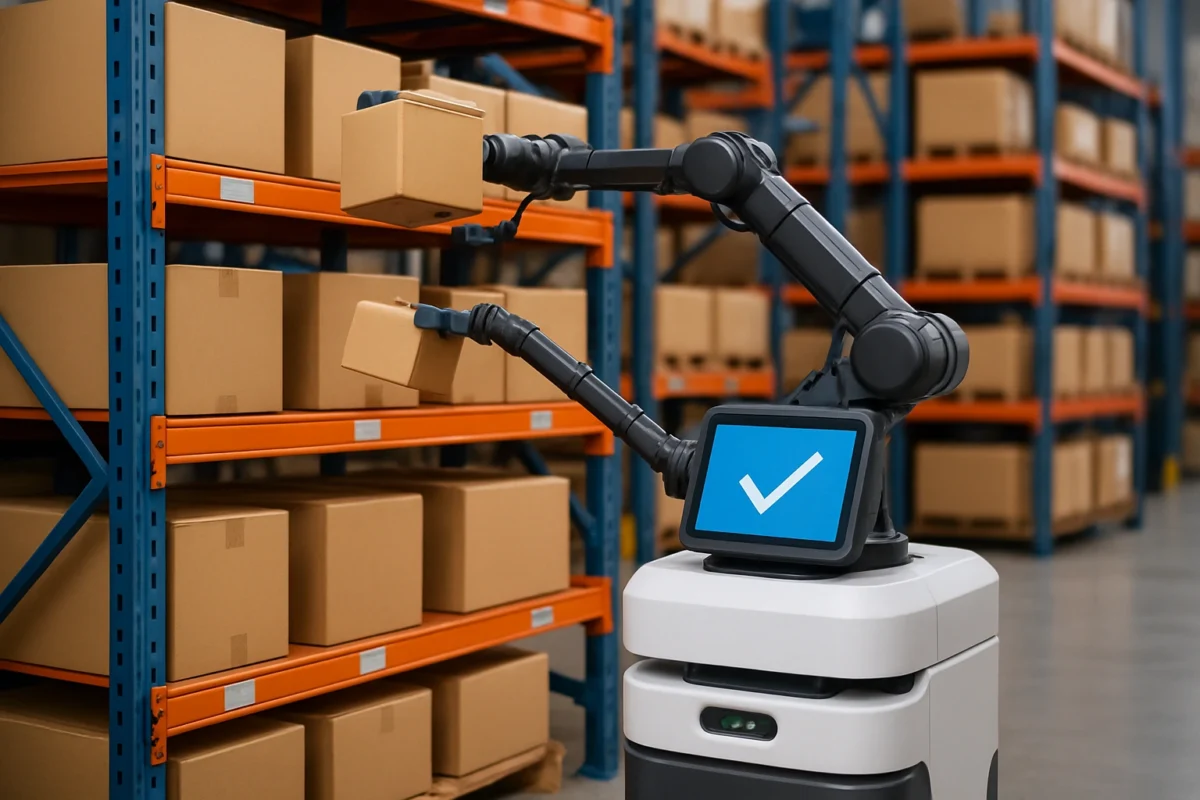
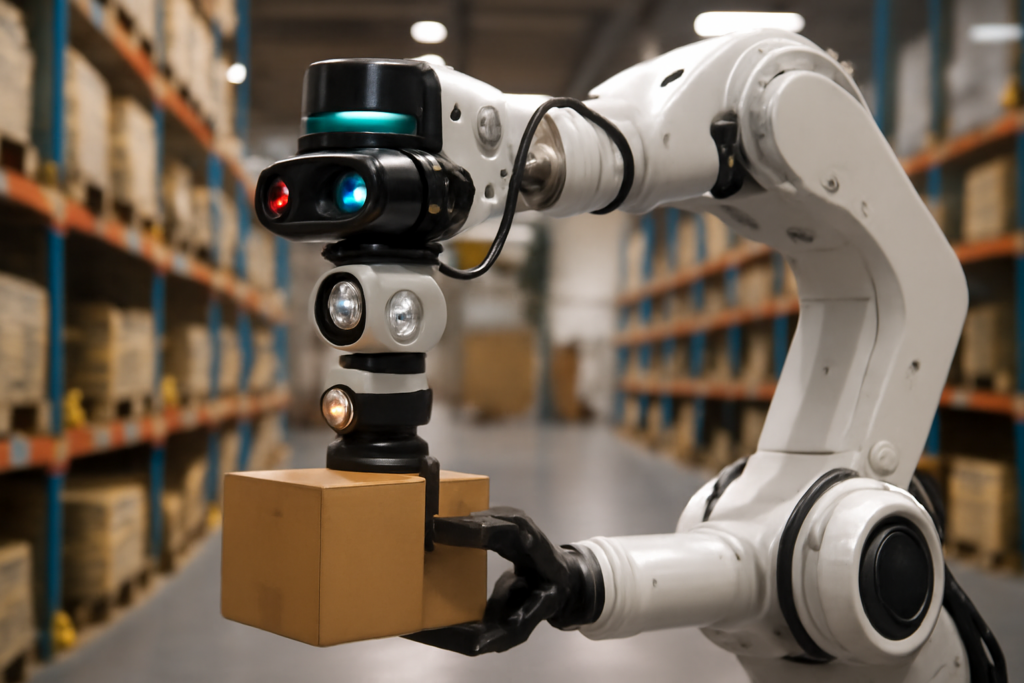
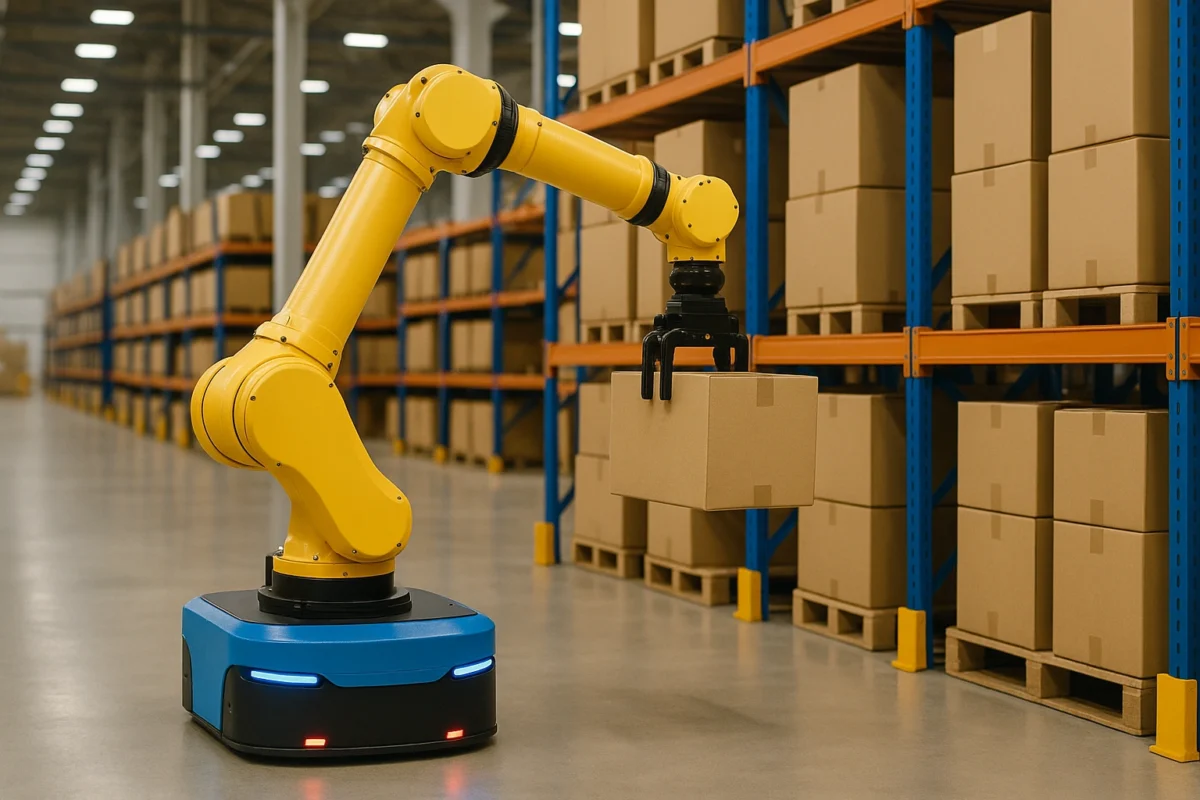
Robotic Arm in Action
2. Reinforcement Learning for Dexterous Grasping
Through reinforcement learning, robots improve their picking strategies over time. This self-learning ability mimics how humans learn via trial and error.
Trains robots to pick delicate, irregular, or deformable items
Minimizes damage while boosting warehouse efficiency
It’s a prime example of smart warehouse technology evolving autonomously.
Tactile feedback systems allow robots to “feel” pressure, texture, and resistance.
Ensures optimal grip strength
Prevents slippage and product damage
Crucial for inventory handling robotics in fragile product categories
This scientific advancement is inspired by human skin and muscle sensors, enabling robots to safely interact with complex inventory.
4. AI-Powered Dynamic Path Planning
Using AI and predictive algorithms, robots can dynamically adjust their routes.
Avoids congestion and delays in high-traffic zones
Improves speed and fluidity of automated logistics
This enables robotic warehouse innovation at scale, as systems operate efficiently even in large, decentralized environments.
Overhead view of warehouse robots
5. Edge Computing for Onboard Intelligence
Edge computing allows robots to process data locally instead of relying on cloud servers.
Reduces latency for real-time decision-making
Enhances autonomy and responsiveness
This decentralized processing boosts both robotic picking technology and overall system resilience during network interruptions.
6. Gripper Design Innovation
New gripper designs include adaptive fingers, suction-cup hybrids, and vacuum pads.
Picks up a wider range of items
Balances delicacy and strength
Supports robotic warehouse innovation in multi-SKU environments
Gripper adaptability is especially important in e-commerce where products vary dramatically in form and fragility.
7. Multi-Robot Coordination Systems
A key scientific leap is the ability for robots to collaborate intelligently.
Centralized platforms assign tasks based on proximity, charge, and workload
Robots avoid duplication and idling
Enables synchronized logistics automation across the floor
It mirrors swarm intelligence found in nature, applied to a warehouse environment.
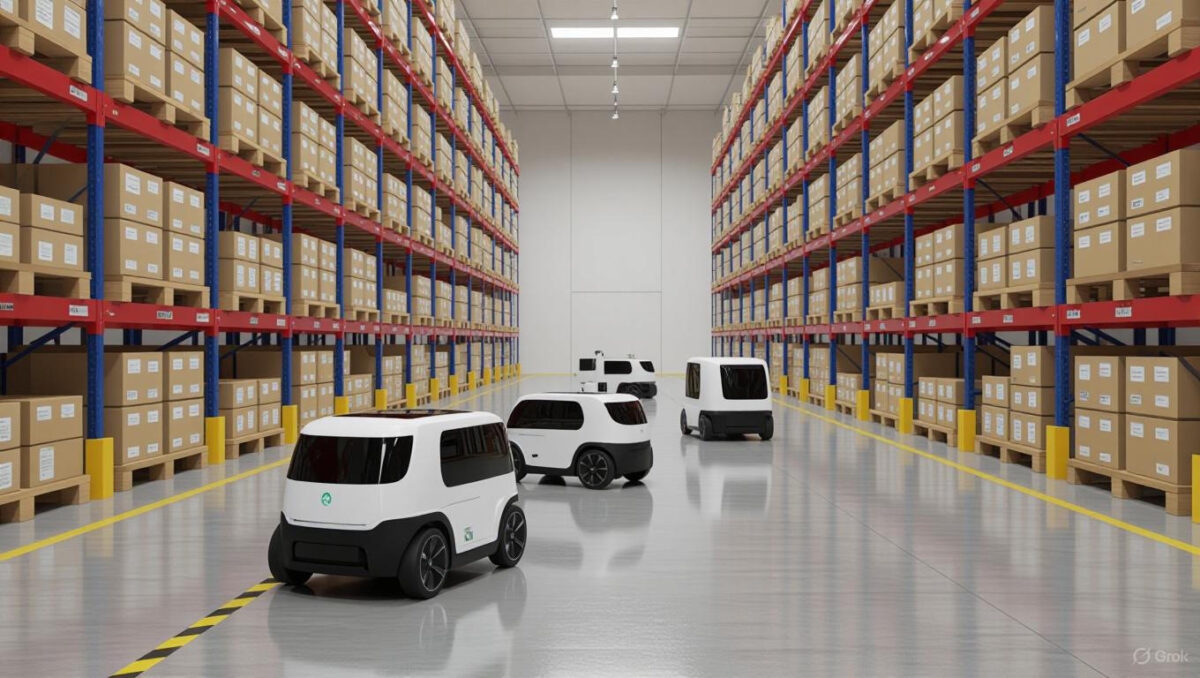
Dozens of Autonomous Robots working in Sync
8. Real-Time Inventory Synchronization
Robots now update WMS systems in real-time as they pick or move items.
Improves inventory visibility
Reduces errors and manual reconciliation
Increases trust in smart warehouse technology
This advancement supports just-in-time systems, ensuring accurate stock data at every step.
9. Modular Robotics Architecture
New modular frameworks allow warehouses to add, remove, or upgrade robots without major infrastructure changes.
Accelerates deployment of automated logistics systems
Minimizes downtime and boosts ROI
Enables agile scaling across industries
This is crucial for businesses anticipating seasonal peaks or scaling rapidly.
10. Digital Twins for Simulation and Testing
A digital twin is a virtual replica of a warehouse environment used for simulation.
Tests robotic workflows before deployment
Predicts system bottlenecks and efficiencies
Enables continuous improvement in warehouse efficiency
By simulating and stress-testing robotic systems virtually, businesses can make data-driven operational decisions before investing in hardware.
Digital Twin vs Real Time Simulation of robotic picking systems
Frequently Asked Questions
What is robotic picking technology?
Robotic picking technology involves autonomous systems that use AI, sensors, and mechanical grippers to retrieve and handle inventory items in warehouse environments.
How do scientific advancements improve warehouse robots?
Scientific advancements improve robot vision, mobility, learning, and coordination, making them more efficient, accurate, and scalable across diverse logistics tasks.
Are these technologies expensive to implement?
While initial investment is high, many technologies offer fast ROI through labor savings, error reduction, and improved warehouse throughput.
Can robotic pickers replace human workers?
They’re designed to assist rather than replace. Robotic systems handle repetitive tasks, freeing human workers to focus on strategic operations and problem-solving.
How scalable are robotic picking systems?
Modern robotic systems are modular and highly scalable, allowing companies to deploy as few or as many units as needed based on demand and space.
Conclusion: The Science Behind Smarter Warehouses
The warehouse of the future is already here, and it’s powered by science. From tactile sensors to AI-driven coordination, scientific advancements in robotics are revolutionizing how we manage goods, streamline operations, and optimize fulfillment.
By investing in the latest robotic picking technology, businesses can elevate warehouse efficiency, reduce operational risks, and stay ahead in a hyper-competitive logistics landscape.
Unlock Cutting-Edge Automation Today
Transform your supply chain with scientifically advanced robotic picking systems tailored for your warehouse. Connect with our automation specialists for a free consultation and live demo.