SAP Warehouse Robotics: Enhancing Supply Chain Efficiency

Introduction
The logistics and supply chain sectors have always been at the core of global commerce, but with the rise of e-commerce and consumer expectations for faster deliveries, warehouse operations are under more pressure than ever. SAP warehouse robotics offers innovative solutions to help businesses optimize supply chains, reduce operational costs, and enhance efficiency within their warehouses.
By integrating warehouse robotics solutions with SAP technology, companies can streamline workflows, automate repetitive tasks, and significantly improve the speed and accuracy of their operations. In this blog, we will explore how SAP warehouse robotics is helping businesses enhance warehouse efficiency and drive better results across the supply chain.
What is SAP Warehouse Robotics?
1. Defining SAP Warehouse Robotics
SAP warehouse robotics refers to the integration of robotic systems into SAP-powered warehouse management systems (WMS). SAP, a leader in enterprise software, offers advanced solutions that integrate with robotic warehouse systems to automate critical tasks such as order picking, inventory management, and material transport.
The combination of SAP’s powerful WMS with warehouse robotics technology creates a highly efficient and seamless system where robots autonomously perform tasks while being closely monitored and managed through SAP software. This combination allows warehouses to optimize workflows, improve inventory accuracy, and achieve real-time tracking of goods.
Benefits:
- Seamless integration between robotics and warehouse management software.
- Automated material handling to reduce manual labor.
- Increased accuracy in picking and tracking inventory.
How SAP Warehouse Robotics is Enhancing Supply Chain Efficiency
2. Streamlining Warehouse Operations with Robotics
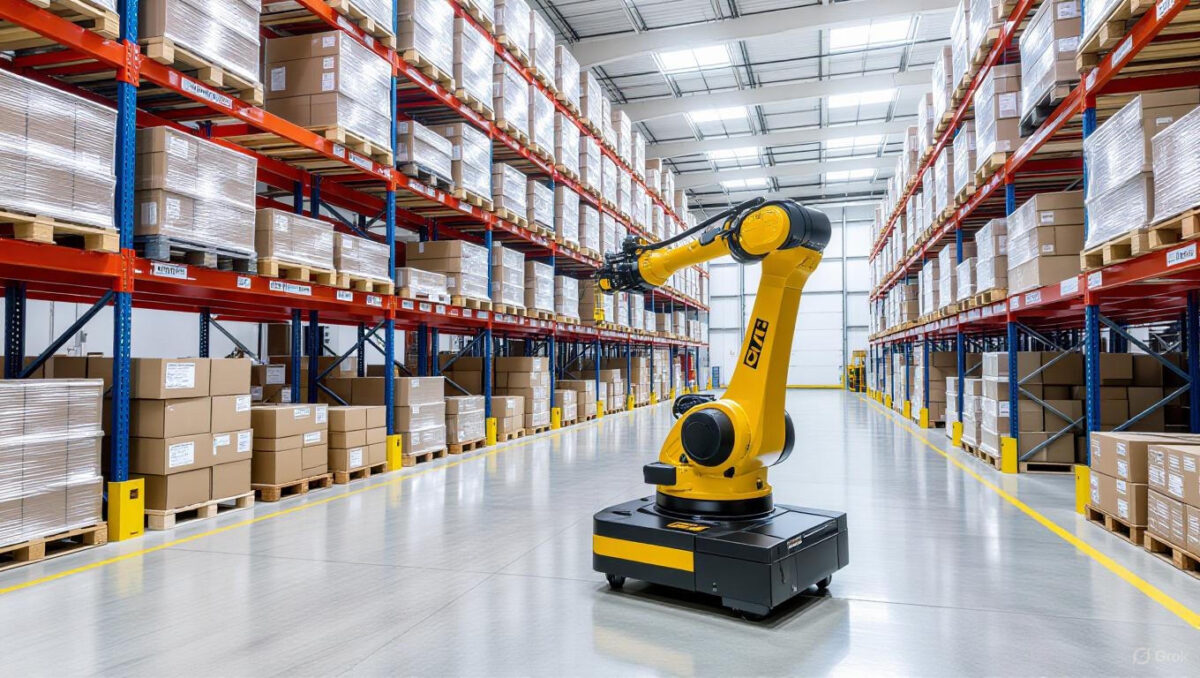
One of the most significant impacts of SAP warehouse robotics is its ability to automate key processes such as material transport, inventory sorting, and order fulfillment. Warehouse robots equipped with AI and machine learning can autonomously navigate the warehouse, pick and place items, and transport them to various parts of the facility. This reduces the time spent on manual labor, speeds up order fulfillment, and ensures that products are moved efficiently through the warehouse.
By leveraging SAP’s warehouse robotics solutions, businesses can also optimize the placement of goods within the warehouse, ensuring that products are stored in the most accessible locations, minimizing retrieval time, and reducing operational costs.
Benefits:
- Faster material movement and order fulfillment.
- Reduced operational costs with fewer human workers.
- Smarter warehouse layouts for quicker access to products.
3. Optimizing Inventory Management with Robotics
Warehouse robotics systems integrated with SAP technology enable real-time inventory tracking, allowing businesses to accurately monitor stock levels and streamline inventory management. Robotic warehouse systems equipped with RFID and sensors can automatically update inventory counts as products are moved, picked, or packed.
This real-time tracking reduces the risk of stockouts and overstocking, ensuring that the right products are available when needed. By automating the inventory management process, SAP warehouse robotics help businesses make more accurate forecasts and optimize their supply chain operations.
Benefits:
- Real-time inventory updates for better stock control.
- Improved forecasting and demand planning.
- Reduced errors in inventory management.
The Role of SAP Warehouse Robotics in Supply Chain Optimization
4. Enhancing Supply Chain Visibility and Control
One of the key benefits of SAP warehouse robotic is the enhanced visibility it provides into warehouse operations. With automated warehouse robots and SAP integration, businesses can track the movement of goods in real-time, identify bottlenecks, and make data-driven decisions to optimize their supply chains.
SAP software also provides detailed analytics and performance reports, helping companies monitor key performance indicators (KPIs) such as order processing speed, inventory accuracy, and robot utilization rates. This data-driven approach ensures that businesses can quickly adjust their processes to improve efficiency and meet customer demands.
Benefits:
- Improved visibility into supply chain operations.
- Data-driven decision-making for continuous optimization.
- Real-time tracking and analysis of warehouse activities.
5. Boosting Warehouse Robotics Integration in Supply Chain Management
Warehouse robotics plays a critical role in optimizing the supply chain by reducing the manual labor required for tasks like sorting, transporting, and inventory tracking. When integrated with SAP WMS, robotic systems are able to automate these tasks in real-time, allowing businesses to operate at maximum capacity.
SAP’s ability to seamlessly integrate with robots in warehouse logistics enables businesses to increase efficiency, reduce lead times, and meet customer expectations more effectively. By automating critical tasks, companies can scale their operations without increasing headcount, allowing for more agile and cost-effective supply chain management.
Benefits:
- Optimized workflows across the supply chain.
- Faster order fulfillment and improved service levels.
- Increased scalability for growing operations.
The Future of SAP Warehouse Robotics in Supply Chain
6. Future Trends in Warehouse Robotics and SAP Integration
As AI, machine learning, and robotics continue to evolve, the future of SAP warehouse robotic looks promising. In the coming years, we can expect even smarter robots that use predictive analytics to anticipate demand, optimize routes, and perform more complex tasks autonomously.
Additionally, the integration of collaborative robots (cobots), which work alongside human workers, will become more prevalent. These cobots can assist with tasks that require both human decision-making and robotic precision, further enhancing warehouse efficiency. SAP software will continue to advance, integrating new features such as self-optimizing systems that adapt to the dynamic needs of the warehouse.
Benefits:
- Smarter, more adaptable robots with predictive capabilities.
- Collaborative robots working alongside human workers.
- Increased efficiency with self-optimizing systems.
Conclusion
SAP warehouse robotics is playing a key role in shaping the future of warehouse operations. By combining robotic warehouse systems with SAP’s warehouse management software, businesses can automate critical tasks, improve inventory management, and enhance supply chain efficiency. These systems offer numerous benefits, including faster order fulfillment, improved accuracy, and lower operational costs.
As technology continues to evolve, SAP warehouse robotic will only become smarter, more efficient, and more integrated into supply chain systems, helping businesses stay competitive in an increasingly fast-paced world of e-commerce and logistics.
Start Implementing SAP Warehouse Robotics Today
Ready to take your warehouse operations to the next level with SAP warehouse robotics? Subscribe to our newsletter for the latest updates on robotic warehouse solutions, warehouse automation, and how robots in warehouse logistics can transform your operations. Or download our free guide to learn how to integrate automated warehouse robotics into your business today!