Fixed Automation vs. Flexible Warehouse Robotics: Which Automation Is Right for You?

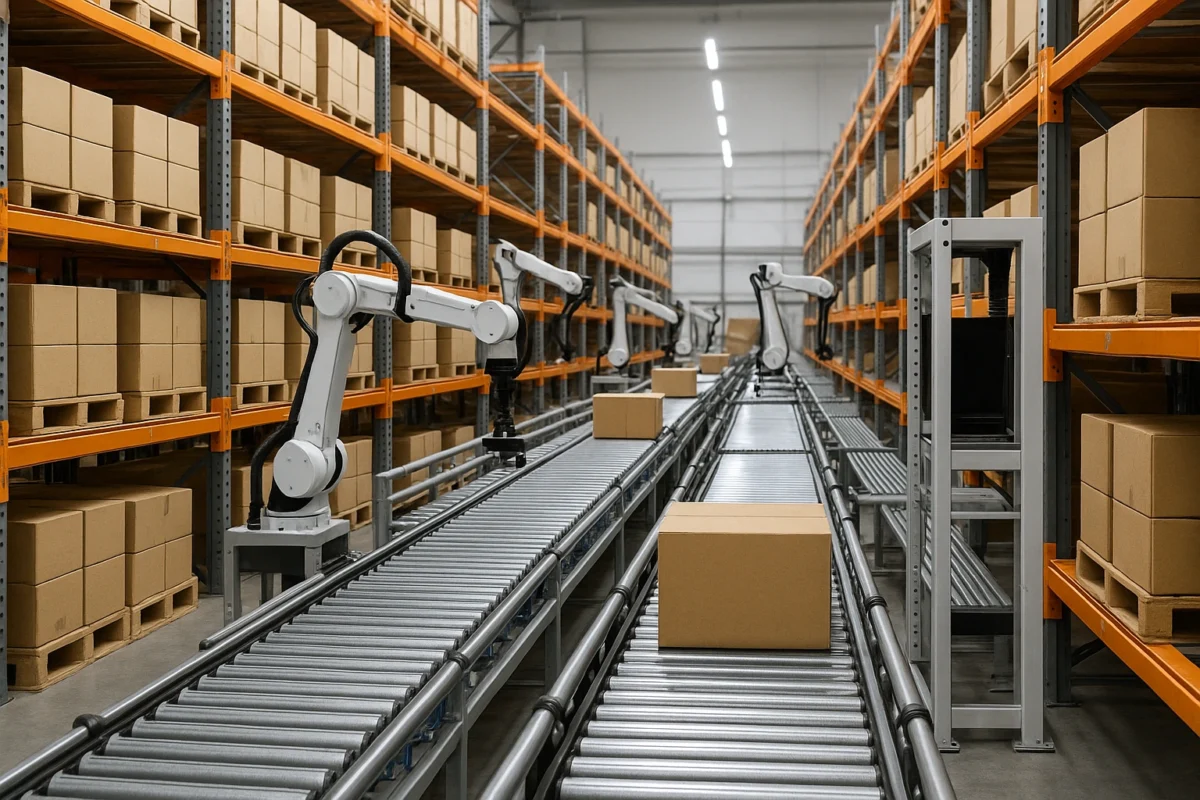
Warehouse automation has officially left the realm of science fiction and become the standard for modern logistics. But figuring out the right setup? That’s the hard part. The biggest headache for businesses is choosing between fixed automation, traditional automation and the adaptable, flexible world of robotics. They both save time and money, but they operate very differently when your needs start to change.
The core problem remains which of these automation types is actually a good fit for your operations? In this article, let’s dive deep to see whether fixed systems or flexible robotics are the investment your company should make.
What Is Fixed Automation?
Fixed automation refers to mechanized systems built for specific, repeatable tasks. Once installed, these systems follow a rigid workflow and rarely change without major reconstruction.
Common examples include:
- Conveyor belts
- AS/RS (Automated Storage and Retrieval Systems)
- Sortation machines
- Automated palletizers
Fixed systems are engineered for high-volume, low-variability operations, making them ideal for warehouses with predictable demand and stable inventory flows.
Key characteristics
- High upfront investment
- Low flexibility like changes require engineering modifications
- High throughput for consistent product lines
- Long lifespan but limited adaptability
Fixed automation thrives when efficiency and throughput matter more than adaptability.
Also See: The Role of Robot Sensing and Perception
What Are Flexible Warehouse Robotics?
Flexible robotics refers to autonomous systems that adapt to changing workflows. These robots can be reprogrammed, reassigned, and scaled with minimal disruption.
Common examples include:
- AMRs (Autonomous Mobile Robots)
- Picking robots with AI-guided vision
- Robotic arms with interchangeable tools
- Collaborative robots (cobots)
Flexible robots shine in environments where product types, order volumes, or workflows shift frequently.
Key characteristics
- Fast deployment
- High adaptability
- Scalable according to seasonal demand
- Lower initial cost than fixed automation
Flexible robotics align with warehouses prioritizing dynamic operations and growth.
Comparative Analysis: Fixed vs. Flexible Warehouse Robotics

To help you choose, we break down the analysis into five critical decision categories.
1. Scalability: How Well Does the System Grow with You?
Fixed automation struggles with scalability because expanding systems like conveyors or AS/RS typically requires structural modifications, engineering work, and sometimes full system shutdowns. This makes growth slow, costly, and disruptive. In contrast, flexible robotics scale almost instantly.
When order volumes increase, businesses can simply add more robots, relying on software-driven coordination to expand capacity without interrupting operations. Flexible robotics clearly win here, making them highly suitable for fast-growing or fluctuating warehouse environments.
2. Adaptability: Can the System Handle Change?
Adaptability is one of the biggest weaknesses of fixed automation. Any shift in SKU dimensions, packaging formats, or workflow types often demands physical redesign and reengineering. These systems only perform well when product demand is predictable, SKU variety is low, and processes remain stable.
Flexible robotics, however, adapt effortlessly to change. Software updates, reprogramming capabilities, and modular components allow them to adjust to new workflows, seasonal variations, and expanding SKU ranges. Flexible robotics dominate this category, making them ideal for dynamic and frequently evolving operations.
3. Cost: Short-Term vs. Long-Term Investments
Fixed automation comes with high upfront costs due to infrastructure, installation, and engineering requirements. While operating costs are lower once the system stabilizes, the return-on-investment period is long, often seven to ten years and maintenance typically requires specialized staff.
Flexible robotics offer a more accessible cost structure with lower upfront investment, subscription-based pricing, and significantly shorter ROI cycles, sometimes under 18 months. Their modular design also reduces maintenance complexity and cost. Flexible robotics win on cost-efficiency, especially for small to mid-size warehouses.
4. Warehouse Environment: What Type of Workflow Does It Support?
Fixed automation works best in stable, predictable environments where product lines change rarely and order patterns remain consistent. It is commonly used in industries such as pharmaceuticals, electronics manufacturing, and traditional retail settings where high-volume throughput and consistent workflows are essential.
Flexible robotics shine in environments with constant variability, such as e-commerce, FMCG, 3PLs, and seasonal businesses. Their ability to adapt rapidly makes them perfect for warehouses handling diverse clients, changing SKUs, and unpredictable order volumes. This category is a tie, as the optimal choice depends heavily on your warehouse model.
5. Reliability: Which System Minimizes Downtime?
Reliability is where fixed automation traditionally excels. These systems can operate continuously for years when properly maintained. However, a significant downside is systemic vulnerability. If one major component fails, the entire operation can come to a halt. Flexible robotics distribute reliability across many independent units.
A failure in one robot affects only a small part of the workflow, giving warehouses better redundancy and faster recovery. While they require ongoing software optimization, flexible systems still compete strongly. Fixed automation has a slight edge in pure reliability, but flexible robotics outperform when it comes to resilience and minimizing the impact of failures.
When Fixed Automation Is the Best Choice
Choose fixed automation if your warehouse meets at least three of the following criteria:
- You handle predictable product flows
- Your inventory type rarely changes
- You prioritize throughput over flexibility
- You plan long-term around stable demand
- Downtime must be minimized
- You can invest heavily upfront
In these environments, fixed systems outperform robots in speed and efficiency.
When Flexible Warehouse Robotics Is the Best Choice
Flexible robotics is ideal if:
- You operate in e-commerce or 3PL
- SKU variety is high
- Seasonal peaks require rapid scaling
- Your workflows evolve every few months
- You want quick deployment and fast ROI
- You prefer pay-as-you-grow automation
For dynamic businesses, flexible robotics provide unmatched adaptability.
Hybrid Automation: The Best of Both Worlds
More warehouses are now combining both systems to maximize performance.
Example hybrid setups:
- Conveyors + AMRs for dynamic picking
- Robotic arms + AS/RS for mixed storage
- Cobots assisting fixed palletizers
- AMRs feeding fixed sortation lines
Hybrid automation gives you structured reliability and responsive flexibility at the same time.
How to Choose the Right Automation Type

Ask these five core questions:
- How stable is your product mix?
- How fast is your business growing?
- Can you afford system downtime during upgrades?
- Do you face seasonal or unpredictable demand shifts?
- Is your warehouse design fixed or evolving?
The answers reveal whether scalability or stability matters more which determines your automation path.
FAQ: Fixed Automation vs. Flexible Warehouse Robotics
1. What is the main difference between fixed automation and flexible robotics?
Fixed automation is rigid and high-volume, while flexible robotics adapts to changing workflows and SKU variations.
2. Which is more cost-effective?
Flexible robotics offer a faster ROI and lower upfront cost.
3. Is fixed automation outdated?
Not at all. It remains the backbone for predictable, high-throughput operations.
4. Can both systems work together?
Yes. Hybrid setups are increasingly common and effective.
5. Which automation type supports long-term growth?
Flexible robotics provide greater scalability and future-proofing.
Conclusion
Choosing between fixed automation vs flexible robotics comes down to your operational needs, growth expectations, and workflow stability. Fixed automation excels in predictable environments, delivering unmatched throughput. Flexible robotics leads in adaptability, scalability, and long-term resilience.
Most modern warehouses find success by adopting hybrid automation, combining structured stability with intelligent adaptability.
Automation isn’t a one-size-fits-all decision but with the right analysis, you can choose a system that enhances productivity, lowers cost, and positions your warehouse for the future.