
How Robotic Picking Systems Are Revolutionizing Logistics

Introduction
The advent of robotic picking systems has marked a significant shift in how warehouses manage operations. As e-commerce continues to rise, the demand for faster, more accurate order fulfillment has never been higher. Robotic picking systems in warehouses are automating the picking process, improving efficiency, and reducing human error. These systems are part of a broader movement toward warehouse automation robotics, enabling businesses to scale operations while minimizing costs.
In this blog, we’ll explore how robotic picking systems are changing the landscape of warehouse operations, their impact on productivity, and how they are helping businesses meet the growing demands of the supply chain.
What Are Robotic Picking Systems?
1. Defining Robotic Picking Systems in Warehouses
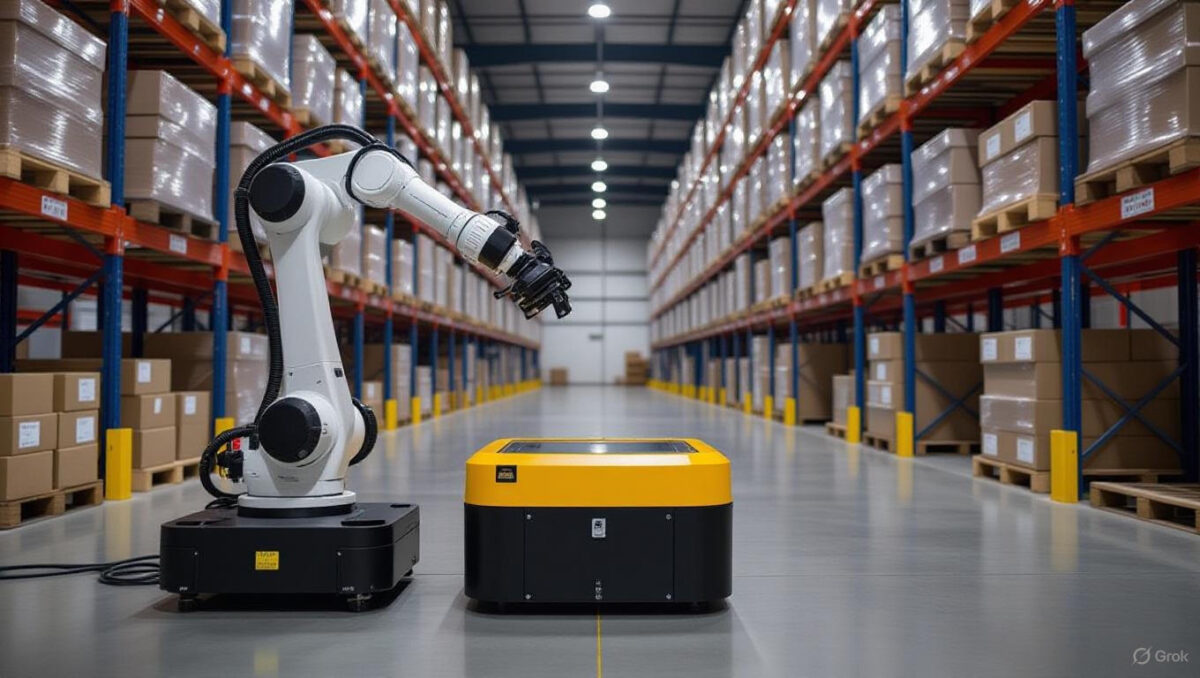
Robotic picking systems refer to automated machines that assist or fully take over the picking process in warehouses. These robots are designed to pick products from shelves or bins and transport them to the next stage in the warehouse, such as sorting or packing areas. Equipped with advanced sensors, AI-powered vision systems, and gripping tools, these systems are capable of identifying and picking various types of products, including irregularly shaped or fragile items.
Unlike traditional manual picking, which requires human workers to travel through aisles and pick items individually, robotic picking system uses machines that can handle a wide range of tasks. These robots work seamlessly with other automation technologies, such as warehouse robots for transport and sorting systems for packaging.
Benefits:
- Faster picking with automated systems.
- Reduced human error and improved accuracy.
- Greater scalability as businesses can quickly expand operations.
How Robotic Picking Systems Are Revolutionizing Warehouse Operations
2. Speeding Up the Order Fulfillment Process
One of the most significant ways robotic picking system is revolutionizing warehouse operations is by increasing the speed of order fulfillment. With traditional manual picking, workers need to move from one shelf to another, often losing valuable time. Picking robots in warehouses can retrieve products faster and more accurately, cutting down the time spent on each order.
These robots operate 24/7, ensuring that warehouses can meet the demands of round-the-clock e-commerce. They eliminate delays caused by shift changes, breaks, or human fatigue, and ensure that orders are processed quickly and with minimal downtime.
Benefits:
- Faster order picking for quicker deliveries.
- Increased warehouse throughput by eliminating downtime.
- Higher productivity with robots working non-stop.
3. Reducing Labor Costs and Increasing Efficiency
Robotic picking system helps businesses reduce labor costs by automating a significant portion of the picking process. By deploying robots in warehouse picking, companies can decrease their reliance on manual labor for routine tasks. This reduces wage expenses, particularly for low-skill, high-turnover jobs.
In addition, warehouse automation robotics are designed to work alongside human workers, handling tasks that are repetitive or physically demanding. This allows human employees to focus on higher-value tasks, such as quality control, customer service, and supervising robots. The automation of picking tasks also leads to fewer errors and faster processing, improving overall warehouse efficiency.
Benefits:
- Lower labor costs with robotic assistance.
- Improved efficiency in order fulfillment.
- Greater productivity with robots handling repetitive tasks.
The Role of Robots in Warehouse Logistics
4. Warehouse Robots and Their Integration with Picking Systems
Warehouse robots play a critical role in the success of robotic picking systems. These robots are responsible for transporting the items that picking robots retrieve to different areas within the warehouse, such as sorting stations or packing areas. The integration of robots in warehouse logistics ensures that goods flow seamlessly throughout the facility, eliminating bottlenecks and optimizing storage and transport.
By working alongside robotic picking system, warehouse robots can improve the efficiency of the entire supply chain by facilitating quicker material movement, better inventory management, and smarter storage solutions.
Benefits:
- Seamless integration between picking robots and warehouse robots.
- Optimized warehouse flow with automated transport and picking systems.
- Improved storage and retrieval through integrated systems.
5. Increasing Accuracy in Picking and Inventory Management
Accuracy is one of the most important factors in warehouse operations, and robotic picking systems significantly improve accuracy. Unlike human workers, who are prone to mistakes, robots can work with high precision, ensuring that the right items are picked and placed in the correct packaging. With warehouse robots equipped with vision systems, AI, and machine learning, they can also track and update inventory in real-time, reducing the risk of stockouts or overstocking.
This improved inventory accuracy leads to better demand forecasting, more efficient supply chain management, and fewer customer complaints about incorrect orders. It also minimizes the waste generated by mis-picks and returns.
Benefits:
- Higher accuracy in picking and order fulfillment.
- Real-time inventory tracking with robotic systems.
- Reduced error rates in order picking and inventory management.
The Future of Robotic Picking Systems in Warehousing
6. Emerging Trends in Robotic Picking Systems
As robotic picking system continue to evolve, new advancements are improving their capabilities. Some of the emerging trends include:
- AI-powered robots capable of adaptive picking, allowing them to handle a wider variety of products.
- Collaborative robots (cobots) that work alongside human workers, providing assistance with physically demanding tasks.
- Robotic arms equipped with grippers and vision systems for more complex picking tasks.
As these trends develop, we can expect robotic systems to become even more intelligent and efficient, enhancing the future of warehouse automation and order fulfillment.
Benefits:
- Smarter robots capable of handling complex tasks.
- Increased flexibility in adapting to different warehouse environments.
- Future-proof technology for businesses in warehousing and logistics.
Conclusion
Robotic picking systems are transforming warehouse operations by increasing efficiency, reducing labor costs, and improving order accuracy. As businesses demand faster processing times and more scalable solutions, the role of picking robots in warehouses continues to grow. These robotic warehouse systems are revolutionizing how products are retrieved, sorted, and delivered, offering businesses a competitive edge in a rapidly evolving logistics industry.
The future of warehouse automation robotics is promising, with innovations in AI, machine learning, and collaborative robots pushing the boundaries of what’s possible in warehouse operations. By adopting robotic picking system, businesses can improve warehouse efficiency, reduce operational costs, and scale their operations to meet growing demand.
Start Implementing Robotic Picking Systems Today
Interested in improving your warehouse operations with robotic picking systems? Subscribe to our newsletter for the latest insights on warehouse robotics, automation technologies, and how robotic picking systems can transform your logistics operations. Or download our free guide to get started with robotic warehouse systems today!