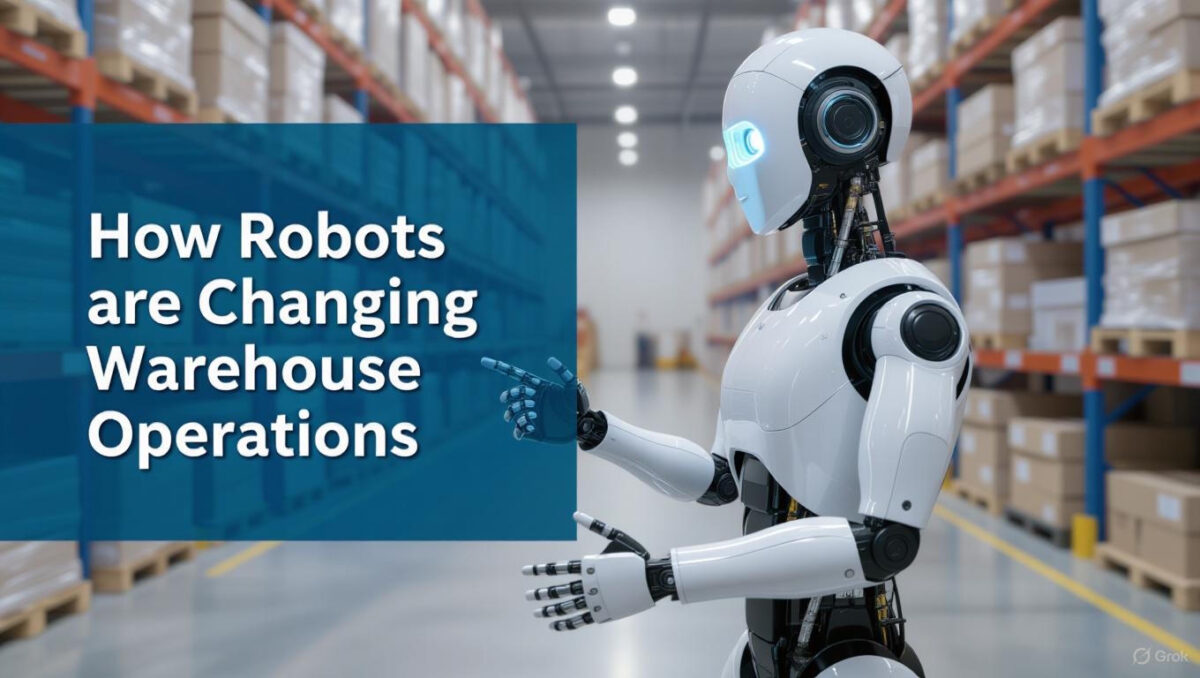
How Robots are Changing Warehouse Operations: An Insight

Introduction

The logistics and warehousing industry is undergoing a profound transformation, largely due to the integration of robots in warehouses. From inventory management to order fulfillment, warehouse robotics technology is streamlining operations, increasing efficiency, and reducing costs. Robots are no longer just a futuristic concept; they are actively shaping the way warehouses operate.

In this blog, we will explore how warehouse robots are changing warehouse operations, the technology behind robotic warehouse systems, and the broader impact on the supply chain. Whether you are a business owner, logistics professional, or someone interested in the future of warehouse automation, this guide will provide you with valuable insights into the role of robots in warehouses.


What is Warehouse Robotics Technology?

1. Defining Warehouse Robotics Technology

Warehouse robotics technology refers to the use of robots, artificial intelligence (AI), machine learning, and automation systems to carry out tasks traditionally done by human workers in a warehouse. These tasks can include inventory management, picking, packing, sorting, and transporting goods. The primary advantage of using robotics in warehouses is that these systems can work autonomously, at a faster pace, and with higher precision than human workers.

These technologies work in tandem with other warehouse systems (like conveyor belts, AI-driven software, and autonomous mobile robots (AMRs)) to create a more efficient and seamless operation. As a result, businesses are able to scale their operations, reduce labor costs, and improve order fulfillment speed.

Benefits:

  • Higher efficiency with minimal human intervention.
  • Faster processing and order fulfillment.
  • Cost reduction through automation.

How Robots Are Changing Warehouse Operations

2. The Role of Robots in Warehouses

Robots in warehouses perform a wide range of functions that would otherwise require significant manual labor. They are not just limited to carrying out basic tasks; modern warehouse robots can handle complex processes, like inventory tracking, dynamic sorting, and automated picking.

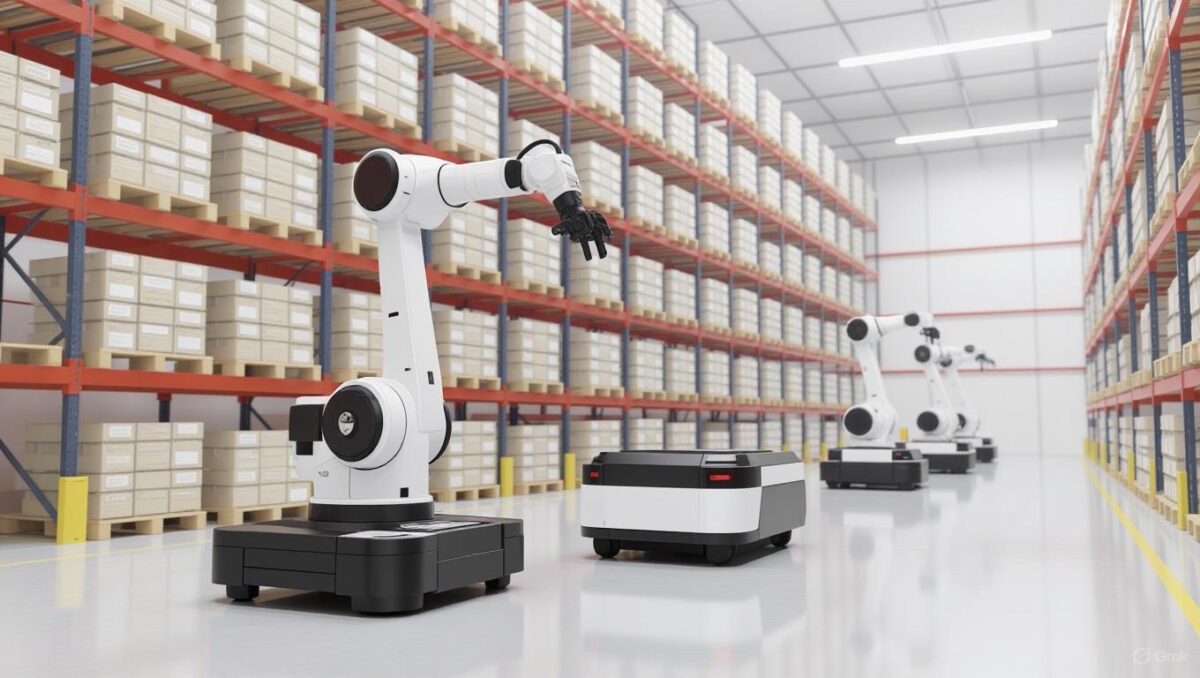
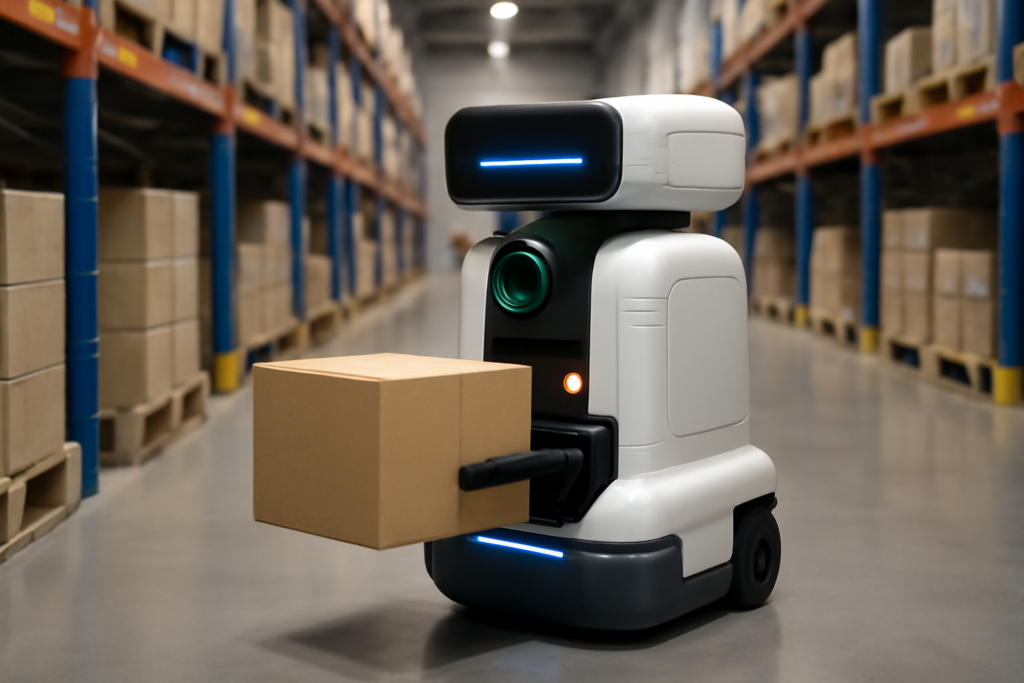
Warehouse robots use sensors and cameras to navigate the warehouse, ensuring that products are picked, sorted, and transported without human assistance. Some of the most commonly used robots include autonomous mobile robots (AMRs), robotic arms, and automated guided vehicles (AGVs). These robots work together to create a fully integrated system that moves goods around the warehouse, increasing the overall speed and accuracy of warehouse operations.

Benefits:

  • Increased speed in picking and transporting goods.
  • Improved precision and accuracy in inventory management.
  • 24/7 operation without downtime.

3. Robotic Warehouse Automation: Streamlining Operations

Robotic warehouse automation refers to the use of robotics systems to automate tasks traditionally performed by human workers in warehouses. These tasks can include everything from picking and sorting to packaging and shipping.

The most significant advantage of warehouse robotics automation is that it reduces reliance on human labor for repetitive tasks, which often leads to inefficiencies, errors, and higher costs. By automating these tasks, robotic systems not only enhance efficiency but also reduce human error, resulting in faster and more accurate order fulfillment.

For example, robotic arms can sort products by type, size, and weight, while autonomous robots can transport those products to the correct location for packing or shipment. The seamless integration of these systems leads to faster fulfillment cycles and improved throughput.

Benefits:

  • Enhanced accuracy in inventory management and order picking.
  • Reduced labor costs and lower dependency on manual work.
  • Optimized workflows for smoother warehouse operations.

How Robots Are Enhancing the Warehouse Supply Chain

4. Robots Warehouse: Improving Supply Chain Efficiency

Robots warehouse are transforming the supply chain by enhancing inventory management and order fulfillment. As the backbone of warehouse operations, robots are now playing a critical role in how goods move through the entire supply chain. By automating material handling, sorting, and packaging, robots help streamline the supply chain, making it faster and more efficient.

For instance, AMRs can autonomously transport products to different parts of the warehouse, while robotic arms handle more complex tasks like sorting and packaging. These robots ensure that products are handled efficiently, reducing delays and increasing throughput.

Furthermore, the use of robots improves supply chain visibility. With real-time tracking and data integration, warehouse robots ensure that managers have accurate information about inventory levels, product movement, and order statuses, which allows for better decision-making and improved forecasting.

Benefits:

  • Faster shipping and delivery times.
  • Improved supply chain transparency with real-time data.
  • Better resource allocation through optimized processes.

5. Robotics in Warehouse Management

Robotics in warehouse management involves the integration of automated systems to optimize the entire warehouse operation, from receiving goods to final delivery. With robots in warehouses, businesses can track products more efficiently, reduce inventory errors, and even predict demand patterns with the help of AI-driven analytics.

Warehouse robots are integrated with warehouse management systems (WMS) to provide real-time data about inventory, product locations, and even product movement within the warehouse. This integration allows for better decision-making and ensures that the warehouse operates as efficiently as possible.

Benefits:

  • Streamlined warehouse management through automation.
  • Real-time data tracking and improved inventory visibility.
  • Smarter decision-making using AI and robotics.

The Future of Robotics Warehouse Technology

6. The Future of Robotic Warehouse Systems

As robotics warehouse technology continues to advance, we can expect more autonomous systems that are smarter, faster, and more adaptable to changing warehouse environments. The future of robots in warehouses will involve collaborative robots (cobots) working alongside human workers, enhancing the overall warehouse operation.

Future innovations in warehouse robotics will also include AI-powered robots, machine learning, and advanced sensors that allow robots to handle even more complex tasks. For example, robots might be able to predict inventory needs, autonomously place items in storage, or even self-maintain with predictive maintenance technologies.

Benefits:

  • Continued growth in robotic automation.
  • Smarter robots that learn and adapt to warehouse environments.
  • Increased efficiency through innovations in AI and robotics.

Conclusion

The integration of robots in warehouses is fundamentally changing the way logistics and supply chain operations are managed. From inventory tracking to order fulfillment, warehouse robotics technology is enabling faster, more efficient, and cost-effective warehouse operations. Robotic warehouse systems are not only improving the speed and accuracy of tasks but also allowing businesses to scale their operations and improve their supply chain performance.

As robotic warehouse automation continues to advance, the warehouse robotics market will only grow, offering businesses new opportunities to innovate and remain competitive in the fast-paced world of logistics. The future of robots in warehouses is bright, and it will continue to shape the future of warehousing and supply chain management.


Start Integrating Robotic Warehouse Systems Today

Interested in learning how robotic warehouse systems can improve your warehouse operations? Subscribe to our newsletter for the latest insights on warehouse robotics, automation technology, and the future of logistics robotics. Or download our free guide to start integrating robotic systems into your warehouse today!

Benefits of Robotic Warehouse Systems for Modern Logistics

Introduction

In the fast-paced world of logistics, efficiency and accuracy are crucial for success. Traditional warehouse operations, often reliant on manual labor, are now being replaced by robotic warehouse systems, revolutionizing how goods are stored, sorted, and shipped. The integration of warehouse robotics into logistics operations not only boosts productivity but also enhances safety, reduces errors, and lowers operational costs.

As warehouse robotics companies continue to innovate, robotic warehouse automation is becoming more widespread, changing the landscape of the warehouse robotics market. This blog will explore the numerous benefits of robotic warehouse systems and how they are shaping the future of modern logistics.


What Are Robotic Warehouse Systems?

1. Defining Robotic Warehouse Systems

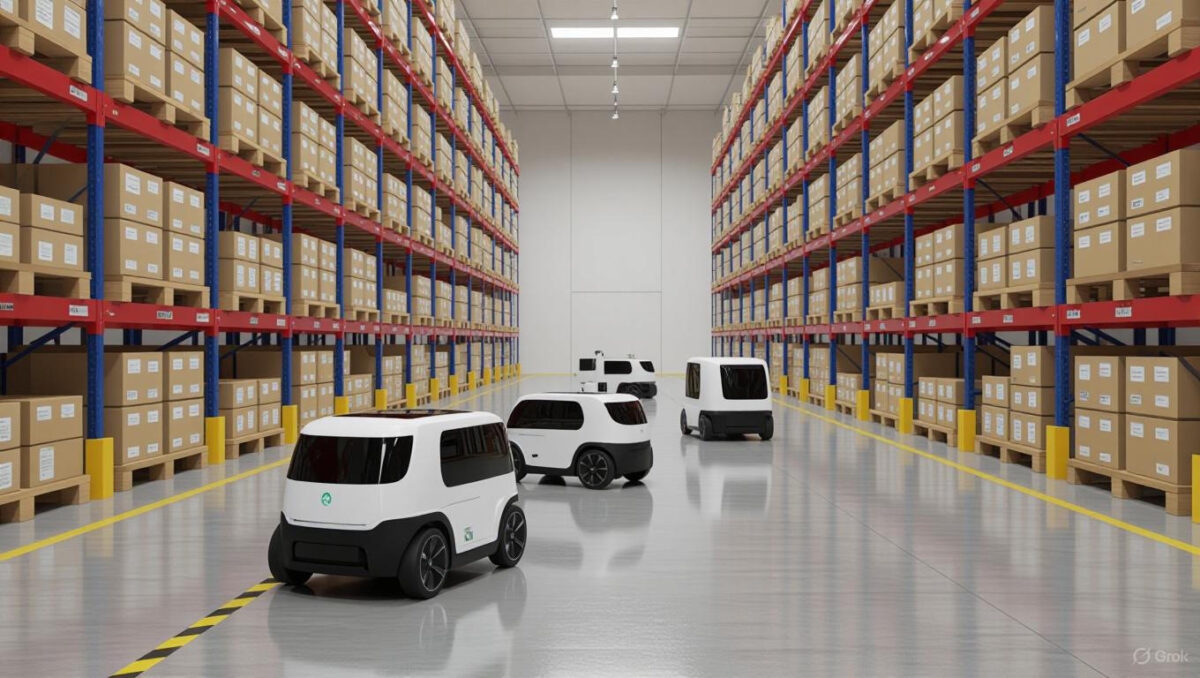
Robotic warehouse systems refer to automated solutions designed to perform tasks traditionally done by human workers within a warehouse. These tasks include inventory management, order picking, sorting, and transporting goods. The key distinction between traditional warehouses and those employing robotic systems is the use of robots that operate autonomously or in collaboration with humans to streamline operations.

These systems often utilize autonomous mobile robots (AMRs), robotic arms, automated guided vehicles (AGVs), and AI-powered software to manage inventory and optimize workflows. Robotics warehouse automation can significantly reduce labor costs, improve order fulfillment times, and increase overall warehouse efficiency.

Benefits:

  • Increased operational efficiency.
  • Reduced dependency on human labor for repetitive tasks.
  • Faster order fulfillment and processing times.

The Benefits of Robotic Warehouse Systems

2. Increased Efficiency and Productivity

One of the most significant advantages of robotic warehouse systems is the increase in efficiency and productivity. Robots can work continuously, without the need for breaks, sleep, or shift changes, which allows warehouses to operate 24/7. This round-the-clock operation boosts productivity and reduces the overall time spent on inventory management and order fulfillment.

Robots can perform tasks such as sorting and picking much faster than humans, reducing the time required to retrieve and package products. Additionally, robots can work in environments that may be challenging for humans, such as tight spaces, high-density storage areas, and hazardous environments, increasing warehouse capacity and efficiency.

Benefits:

  • Non-stop operations without breaks or downtime.
  • Increased throughput and faster processing times.
  • Higher capacity for sorting, picking, and inventory management.

3. Improved Accuracy and Reduced Errors

Human error is inevitable in any manual process, but with robotic warehouse systems, the risk of errors is minimized. Robots can accurately pick, pack, and sort products with precision, ensuring that the right products are shipped to customers every time. Warehouse robotics can also track inventory levels in real-time, reducing the likelihood of stockouts or overstocking, which can lead to lost sales or excess inventory costs.

Automated systems are designed to follow predefined instructions to the letter, reducing mistakes in order fulfillment, inventory management, and product handling. This improvement in accuracy has a direct impact on customer satisfaction, as it leads to fewer returns, exchanges, and complaints.

Benefits:

  • Higher order accuracy and fewer shipping errors.
  • Real-time inventory tracking with automated systems.
  • Increased customer satisfaction due to fewer mistakes.

The Impact of Warehouse Robotics Companies on Modern Logistics

4. Advancements in Technology by Warehouse Robotics Companies

Warehouse robotics companies are continuously developing new and advanced technologies to improve the functionality and efficiency of robotic warehouse systems. These companies are introducing next-generation robots that are faster, smarter, and more adaptable than ever before.

AI and machine learning are being incorporated into warehouse robots, enabling them to learn from their environment and adapt to new tasks without human intervention. For example, robotic systems can now handle more complex tasks, such as identifying and categorizing items, managing stock, and performing quality control.

With the development of more intelligent robots, warehouse robotics is becoming more sophisticated, allowing businesses to tackle more complicated logistics challenges. These innovations help to create a more flexible, responsive, and scalable supply chain.

Benefits:

  • Advanced AI integration to improve decision-making.
  • Smarter robots that can handle complex tasks autonomously.
  • More efficient operations through continuous innovation.

5. Cost Savings in Labor and Operations

Although the initial investment in robotic warehouse systems can be significant, the long-term cost savings are considerable. By automating tasks traditionally performed by human workers, warehouses can reduce their reliance on manual labor, leading to lower labor costs. This is particularly important in industries with high labor turnover or where labor shortages exist.

Additionally, warehouse robotics help reduce other operational costs, such as energy consumption, storage inefficiencies, and errors in order fulfillment. The long-term savings from automated robotics warehouse systems are substantial, especially as these systems continue to scale and improve over time.

Benefits:

  • Lower labor costs through automation.
  • Reduced operational expenses related to human error and inefficiency.
  • Long-term cost savings as technology advances.

Warehouse Robotics Market and Its Growing Influence

6. The Growing Demand for Warehouse Robotics in the Market

The warehouse robotics market is expanding rapidly, as more and more businesses realize the advantages of automation. Warehouse robotics have become a vital part of logistics and supply chain management, with companies of all sizes adopting robotic systems to improve their efficiency and scalability.

From large retailers like Amazon and Walmart to smaller logistics providers, businesses are investing heavily in robotic warehouse systems. As demand for e-commerce continues to rise, the need for efficient, automated warehouses has never been greater. This trend is expected to continue as more robots in warehouses are integrated into supply chains across industries.

Benefits:

  • Increased demand for warehouse robotics solutions.
  • Greater adoption across various industries and warehouse sizes.
  • Expansion of the robotics market, with more companies implementing automation.

7. The Future of Warehouse Robotics and Automation

The future of robotic warehouse systems is exciting, with continuous advancements in AI, machine learning, and automation technology. As these systems become more intelligent and adaptable, they will play an even bigger role in the future of logistics and warehouse operations.

We can expect to see further integration of autonomous mobile robots (AMRs), robotic arms, and AI-powered software to optimize inventory management, order fulfillment, and supply chain operations. These innovations will enable warehouses to scale more easily, improve operational efficiency, and offer a better customer experience.

Benefits:

  • Continuous improvement of robotics technology.
  • Seamless integration with other supply chain and warehouse systems.
  • Sustainable growth for businesses adopting robotic systems.

Conclusion

Robotic warehouse systems are transforming the logistics and supply chain industries by increasing efficiency, reducing labor costs, and enhancing accuracy. As warehouse robotics companies continue to innovate, robotic warehouse automation will play an even larger role in shaping the future of warehouse operations.

With the ability to work around the clock, reduce human error, and optimize inventory management, robots are revolutionizing how goods are stored, sorted, and shipped. The warehouse robotics market is growing rapidly, and businesses are increasingly realizing the long-term benefits of automation.

By embracing robotic warehouse systems, companies can enhance their operational performance, lower costs, and position themselves for success in the competitive world of logistics.


Start Implementing Robotic Warehouse Systems Today

Interested in improving the efficiency of your warehouse operations? Subscribe to our newsletter for the latest updates on robotic warehouse systems, automation technology, and how you can enhance your warehouse operations. Or download our free guide to learn more about warehouse robotics and robotic warehouse automation.

Amazon Robots in the Warehouse: Efficiency and Innovation

Introduction

Amazon is known for revolutionizing e-commerce, but another area where the company is making significant strides is in warehouse robotics. With its vast network of fulfillment centers, Amazon has been at the forefront of using robots in warehouses to increase efficiency, speed, and accuracy in its operations. From robotic arms to autonomous mobile robots (AMRs), Amazon robots warehouse are not just transforming the way products are sorted and packed, but also how the entire supply chain functions.

In this blog, we’ll explore how robots at Amazon warehouse are improving operational efficiency and what innovations Amazon is introducing with its robotics warehouse systems. We’ll also discuss the future of Amazon warehouse robots and how they continue to push the boundaries of logistics.


What Are Amazon Robots in the Warehouse?

1. The Rise of Robots at Amazon Warehouses

Amazon has been using robots in Amazon warehouses for several years, but the company’s robotics warehouse technology continues to evolve. Amazon Robotics, which began as Kiva Systems in 2012, has since become a key part of Amazon’s automation strategy. These robots at Amazon warehouses are designed to perform a variety of tasks, from picking and sorting to transporting goods throughout the fulfillment center.

The robots used by Amazon are equipped with sensors and AI algorithms that allow them to navigate through complex warehouse environments, move products, and communicate with other robots and warehouse systems in real-time. Amazon robots warehouse include robotic arms for sorting and packaging and autonomous mobile robots (AMRs) for transporting inventory.

Benefits:

  • Improved operational efficiency with automation.
  • Faster order fulfillment with robotic systems.
  • Reduced human error in sorting and packing.

How Amazon Robots Are Enhancing Efficiency in Warehouses

2. Faster and More Efficient Picking and Packing

One of the primary ways Amazon warehouse robots are improving efficiency is by automating picking and packing. Traditionally, warehouse workers would walk up and down aisles to pick products. Now, with the help of robots, autonomous robots like the Kiva robots bring shelves of products directly to human workers, who then pick the required items. This system reduces the time it takes to retrieve goods, allowing for faster processing and order fulfillment.

Additionally, robotic arms in Amazon’s warehouses help automate the packing process, ensuring that items are packed into boxes with minimal human intervention. This speeds up the entire logistics cycle, ensuring quicker deliveries and improved customer satisfaction.

Benefits:

  • Faster picking and packing processes.
  • Reduced labor costs and increased productivity.
  • Improved accuracy in order fulfillment.

3. Autonomous Mobile Robots (AMRs) for Efficient Transportation

Another significant innovation at Amazon warehouses is the use of autonomous mobile robots (AMRs). These robots are responsible for moving products between different parts of the warehouse. Instead of relying on forklifts or human workers to transport goods, AMRs can autonomously navigate the warehouse, avoiding obstacles and optimizing their paths to transport goods efficiently.

The use of AMRs allows Amazon to maximize the use of available space in its fulfillment centers and keep goods flowing through the system seamlessly. These robots are equipped with advanced sensors and machine learning algorithms that help them adapt to new tasks and environments quickly.

Benefits:

  • Optimized transportation of goods within the warehouse.
  • Increased storage space and efficient use of warehouse capacity.
  • Faster processing times with reduced human involvement.

Amazon Robotics: A Step Towards a Fully Automated Warehouse

4. How Amazon is Using Robots to Streamline Warehouse Operations

Amazon’s use of robots in warehouses isn’t limited to picking and packing. Amazon robotics warehouse systems are deeply integrated into the company’s overall fulfillment process. These robots work together with AI-powered systems to handle inventory management, sort products, and optimize storage.

Robots are also playing an essential role in quality control, ensuring that products are handled carefully and are placed in the correct locations within the warehouse. With real-time data from sensors and cameras, these systems can track every product’s location and movement, enabling quick and accurate updates to Amazon’s inventory system.

Benefits:

  • Efficient inventory management with real-time tracking.
  • Improved warehouse coordination with AI and robotics.
  • Better quality control through automated systems.

The Future of Amazon Robotics in Warehouses

5. Scaling Amazon’s Robotics Technology for Global Warehouses

The future of Amazon robots in warehouses looks promising. With the success of Amazon Robotics and Kiva robots, Amazon plans to expand its robotic systems to more of its fulfillment centers around the world. As e-commerce demand continues to increase, robots at Amazon warehouse will play an even more vital role in scaling Amazon’s logistics operations.

The company is investing in next-generation robots, such as collaborative robots (cobots) that can work alongside humans in warehouses. These cobots are designed to assist human workers with physically demanding tasks, such as lifting heavy packages, without replacing them entirely. This evolution in warehouse technology will help Amazon further streamline its operations and maintain its competitive edge in the e-commerce industry.

Benefits:

  • Scalable robotic systems for global fulfillment centers.
  • Collaborative robots working alongside humans to enhance productivity.
  • Future-proofing Amazon’s warehouse operations with cutting-edge technology.

6. Environmental and Sustainability Benefits of Amazon Robots

As robots in Amazon warehouses continue to evolve, sustainability is becoming an increasingly important factor in their development. With automated robotics, Amazon can improve energy efficiency, reduce waste, and lower its carbon footprint by optimizing warehouse operations.

For example, Amazon robots are designed to reduce energy consumption by operating more efficiently than traditional warehouse equipment. These robots also help minimize waste by improving the accuracy of order picking and reducing packaging materials.

Benefits:

  • Reduced energy consumption and environmental impact.
  • Waste reduction through efficient processes.
  • Sustainable growth through the use of robotic systems.

Conclusion

Amazon robots are revolutionizing the way warehouses operate, making processes faster, more efficient, and more scalable. From autonomous mobile robots to robotic arms for sorting and packing, Amazon robotics warehouse systems are enhancing the speed and accuracy of logistics, enabling Amazon to meet growing customer demand. As robots in Amazon warehouse continue to evolve, they will play an even more significant role in shaping the future of warehousing, e-commerce, and supply chain management.

With continued innovation, Amazon robot will continue to push the boundaries of what’s possible in warehouse automation. The efficiency and innovation brought by Amazon’s use of robotics will remain a central part of its success in the e-commerce industry.


Start Exploring the Future of Warehouse Robotics

Interested in learning more about how Amazon robots in warehouses are changing the logistics industry? Subscribe to our newsletter for more insights into warehouse robotics, automation technology, and the future of robotic systems in logistics. Or download our free guide to understand how Amazon robotics can transform your warehouse operations today!

How Autonomous Warehouse Robots Are Shaping the Future of Warehousing

Introduction

The logistics and warehousing industry is undergoing a major transformation, and one of the driving forces behind this shift is the rise of autonomous warehouse robots. These advanced robots are not only enhancing operational efficiency but also shaping the future of how warehouses and distribution centers function. As autonomous mobile robots for warehouse become more advanced, they are helping businesses streamline processes, reduce costs, and improve safety.

In this blog, we will explore how autonomous warehouse robot are changing the landscape of warehouse automation, the role they play in enhancing robotics warehouse operations, and why they are essential for the future of warehousing.


What Are Autonomous Warehouse Robots?

1. Defining Autonomous Warehouse Robots

Autonomous warehouse robot are robots that operate independently in warehouse environments without the need for human intervention. These robots are equipped with sensors, artificial intelligence (AI), and machine learning algorithms that allow them to navigate the warehouse, perform tasks, and communicate with other systems within the warehouse. Their autonomy allows them to work around the clock, increasing the efficiency and speed of warehouse operations.

Unlike traditional robots that require human input or remote control, autonomous robots are capable of decision-making based on their environment and predefined tasks. This level of automation in warehousing is transforming how goods are handled, moved, and sorted within distribution centers.

Benefits:

  • Self-operating robots with no human control.
  • Higher efficiency in warehouse operations.
  • 24/7 productivity, reducing downtime.

The Role of Robotics in Warehouse Automation

2. How Robotics Warehouse Systems Are Enhancing Efficiency

The integration of robotics warehouse systems into warehousing operations has significantly improved operational efficiency. Autonomous warehouse robot can perform a variety of tasks, including inventory management, order picking, sorting, and material handling, all while operating with high precision.

These robots work collaboratively with automated systems, such as conveyor belts and sorting systems, to seamlessly move goods within the warehouse. By automating repetitive and time-consuming tasks, these robots free up human workers to focus on more complex activities, such as quality control, customer service, and overseeing robotic operations.

Benefits:

  • Reduced human error through robotic precision.
  • Faster processing and order fulfillment.
  • Increased productivity by automating repetitive tasks.

3. Autonomous Mobile Robots for Warehouse Operations

One of the standout features of autonomous warehouse robot is their ability to move goods throughout the warehouse using autonomous mobile robots (AMRs). These AMRs navigate the warehouse by using advanced navigation systems, AI, and machine learning, which allow them to avoid obstacles, identify and follow designated paths, and transport materials across long distances within the facility.

Unlike traditional automated guided vehicles (AGVs) that require fixed tracks or rails, AMRs are highly flexible and adaptable to dynamic warehouse environments. They can be programmed to work alongside other robots and human workers, ensuring smooth operations and better coordination between different warehouse systems.

Benefits:

  • Increased flexibility and adaptability compared to traditional systems.
  • Seamless integration with other robotic systems and human workers.
  • Efficient material handling across large warehouse spaces.

The Advantages of Autonomous Warehouse Robots

4. Enhancing Safety in Warehouse Environments

Autonomous warehouse robot contribute significantly to improving warehouse safety. Since robots take over physically demanding tasks and work in environments that may be hazardous, they help reduce the risk of injuries caused by repetitive movements, lifting, and working with heavy machinery.

Additionally, autonomous robots can operate in tight spaces and navigate environments that are difficult for humans to reach, such as areas with high shelving or high-stress tasks. This reduces the risk of accidents, improving safety for human workers while ensuring a smoother workflow.

Benefits:

  • Safer work environments for human employees.
  • Reduction in workplace injuries and fatigue.
  • Increased safety when handling heavy loads or hazardous tasks.

5. Improving Inventory Management and Accuracy

One of the most significant benefits of robotic warehouse systems is their ability to perform inventory management with high accuracy and efficiency. Autonomous warehouse robots can scan and track inventory in real-time, reducing the chances of stockouts, overstocking, and human error in inventory tracking.

Robots equipped with RFID scanners and barcode readers can quickly identify and sort products, ensuring that the right items are in the right place. Additionally, robots can work in tight aisles or high-rack environments, improving storage capacity and inventory management.

Benefits:

  • Real-time inventory tracking with higher accuracy.
  • Reduced stock discrepancies and errors.
  • Efficient use of warehouse space and resources.

The Future of Autonomous Warehouse Robots

6. Emerging Trends in Autonomous Warehouse Robots

The future of autonomous warehouse robots looks bright, with continuous advancements in robotics, AI, and machine learning driving innovation. In the coming years, we can expect to see smarter robots that can learn from their environment, improve their decision-making abilities, and integrate more seamlessly with other systems within the warehouse.

Some key trends include:

  • Collaborative robots (cobots) working alongside humans.
  • Increased use of AI-powered robots for predictive maintenance and performance optimization.
  • Advanced sensors and computer vision for even more precise and efficient navigation.

These advancements will lead to more efficient, autonomous, and intelligent warehouse operations that require fewer human interventions and provide better scalability for businesses.

Benefits:

  • Continual improvement in robotic capabilities.
  • Seamless interaction between humans and robots.
  • Smarter and more efficient operations.

7. The Impact of Autonomous Robots on Warehouse Costs

While the initial investment in autonomous warehouse robots can be significant, the long-term savings are considerable. Warehouse automation reduces reliance on human labor, lowers operating costs, and boosts productivity. Additionally, robots in warehouses can work continuously without the need for breaks or shifts, providing businesses with a 24/7 workforce.

As technology becomes more affordable and efficient, we can expect autonomous warehouse robot to become an even more attractive option for businesses seeking to reduce their logistics costs and optimize operations.

Benefits:

  • Cost savings through reduced labor expenses.
  • Increased operational efficiency with 24/7 robot functionality.
  • Scalable solutions that can grow with demand.

Conclusion

Autonomous warehouse robots are revolutionizing the logistics industry by automating key warehouse functions such as inventory management, order picking, and material handling. With robotic warehouse systems, businesses can achieve higher efficiency, reduce costs, and enhance safety in their operations.

As robotics technology continues to advance, we can expect autonomous robots to play an even bigger role in transforming warehouse environments, making them smarter, faster, and more cost-effective. With the benefits of automation and the future potential of these robots, the logistics and warehousing industries are entering a new era of productivity and innovation.


Start Implementing Autonomous Robots in Your Warehouse Today

Interested in autonomous warehouse robot? Subscribe to our newsletter for more insights on robotics warehouse systems, warehouse automation, and how autonomous mobile robots can improve your logistics operations. Or download our free guide to learn how to implement robotics solutions in your warehouse today!
The Future of Automated Warehouse Robots: Revolutionizing Logistics

Introduction

The logistics industry is undergoing a dramatic transformation, and at the heart of this evolution are automated warehouse robots. These advanced machines are increasingly becoming integral to modern warehouses, revolutionizing how businesses manage their supply chains, handle inventory, and fulfill orders. With the growing demand for speed, accuracy, and efficiency in logistics, companies are turning to warehouse robotics to meet these challenges.

In this blog, we will explore how robots in warehouses are reshaping logistics operations, the role of warehouse robots companies, and how industry leaders like Amazon are leveraging robotics to enhance their warehouse operations. We’ll also look at the benefits of automated warehouse robots and how they are improving productivity and reducing costs in logistics.


What Are Automated Warehouse Robots?

1. Defining Automated Warehouse Robots

Automated warehouse robots are machines designed to perform tasks typically done by humans in a warehouse or distribution center. These tasks can include picking, sorting, packing, and transporting goods within the warehouse. Unlike traditional manual labor, these robots operate autonomously, utilizing advanced sensors, AI algorithms, and machine learning to navigate and carry out tasks with precision.

The key feature of automated warehouse robots is their ability to operate without direct human intervention, thereby increasing efficiency and productivity while reducing the likelihood of human error. These robots are also often designed to work in collaboration with human workers, allowing for a more integrated warehouse system.

Benefits:

  • Reduced labor costs by automating routine tasks.
  • Increased productivity through 24/7 operation.
  • Higher accuracy in inventory management and order fulfillment.

The Role of Warehouse Robotics in Logistics

2. How Warehouse Robotics is Transforming the Logistics Industry

Warehouse robotics is not just a trend; it’s a significant shift in how warehouses and distribution centers operate. From robotic arms for sorting and packing to autonomous mobile robots (AMRs) for transporting goods, warehouse robots are improving the speed and accuracy of logistics operations.

These robots can work in environments that might be challenging for human workers, such as high-density storage areas, high-risk tasks, or hazardous conditions. By taking over routine and physically demanding jobs, robots allow human workers to focus on more complex tasks, ultimately leading to a more efficient and safer warehouse environment.

Benefits:

  • Faster order fulfillment with increased throughput.
  • Improved safety by reducing human exposure to hazardous conditions.
  • Optimized space utilization through robot-driven storage systems.

Amazon Robots in the Warehouse: A Leading Example

3. How Amazon is Using Robotics to Improve Warehouse Efficiency

Amazon, a leader in the e-commerce industry, has embraced warehouse robotics to streamline its logistics operations. With its vast network of fulfillment centers, Amazon has incorporated robotic systems into nearly every aspect of its operations, from inventory management to order fulfillment.

One of the most famous examples of Amazon’s warehouse robotics is its Kiva robots, now known as Amazon Robotics. These robots are responsible for automating the picking and packing processes, moving goods to human workers who then prepare them for shipment. Amazon’s robotics system allows for faster processing times, more efficient use of space, and fewer errors in order fulfillment.

In addition to Kiva robots, Amazon uses other advanced robotic systems such as autonomous mobile robots (AMRs), robotic arms, and AI-driven sorting systems, all working together to create a seamless, highly efficient warehouse operation.

Benefits:

  • Fast order fulfillment with robot-driven automation.
  • Scalable operations that grow with increasing demand.
  • Improved warehouse productivity with the integration of robots.

Robots in Warehouse Operations: Enhancing Efficiency and Reducing Costs

4. How Robots Improve Operational Efficiency in Warehouses

Robots in warehouses play a crucial role in improving operational efficiency. Automated systems handle repetitive tasks such as order picking, sorting, and inventory management, all of which are essential to warehouse operations. By allowing robots to perform these tasks, human workers can focus on more value-added activities, such as quality control and customer service.

The robotic warehouse systems are designed to work around the clock, reducing the dependency on human labor, increasing operational capacity, and speeding up order processing times. Moreover, these systems can communicate with each other to coordinate tasks in real time, ensuring smooth operations and quick adaptation to changing demand.

Benefits:

  • Faster cycle times for inventory handling and order fulfillment.
  • Optimized workflows with robots working alongside humans.
  • Cost savings in labor and operational expenses.

The Future of Warehouse Robotics: Trends and Innovations

5. The Evolution of Robotic Systems in Warehouses

As technology advances, the future of automated warehouse robots looks even brighter. The next generation of warehouse robots will include smarter AI, better machine learning capabilities, and advanced sensor technologies. These robots will be able to work even more autonomously, integrating seamlessly into the supply chain and warehouse management systems.

Some of the emerging trends in warehouse robotics include:

  • AI-powered robots: Robots that use AI to make real-time decisions and adapt to changes in the warehouse environment.
  • Collaborative robots (cobots): Robots designed to work alongside humans, enhancing efficiency and reducing the risk of accidents.
  • Advanced sorting robots: Robots that can handle a wide variety of products, including irregularly shaped or fragile items.

With these advancements, the role of robots in warehouses will continue to expand, leading to more efficient, cost-effective, and innovative warehouse operations.

Benefits:

  • Continuous improvement of robotic capabilities.
  • Greater flexibility in handling diverse tasks.
  • Enhanced collaboration between humans and robots.

The Impact of Warehouse Robots on the Future of Logistics

6. Warehouse Robots: The Backbone of Future Logistics Networks

Automated warehouse robots are rapidly becoming the backbone of modern logistics networks. As e-commerce and supply chain demands continue to grow, companies must adapt to new technologies to remain competitive. Robotic warehouse systems are helping businesses meet these demands by improving speed, accuracy, and scalability.

The integration of robots into warehouses is not just about replacing human labor but enhancing the entire logistics ecosystem. Warehouse robots enable companies to process more orders in less time, reduce operational costs, and deliver goods faster to customers.

Benefits:

  • Increased operational agility in logistics networks.
  • Cost-efficient operations through automation.
  • Enhanced customer satisfaction with faster deliveries.

Conclusion

The rise of automated warehouse robots marks a new chapter in the logistics and supply chain industries. With the ability to streamline processes, reduce costs, and improve efficiency, robots in warehouses are revolutionizing how companies handle inventory and fulfill orders. Companies like Amazon are leading the charge with robotic warehouse systems, and as technology continues to evolve, the role of robots will only become more critical in shaping the future of logistics.

By embracing warehouse robotics, businesses can increase productivity, optimize workflows, and position themselves for success in an increasingly competitive market. As automation continues to play a larger role in warehouses, the potential for growth in automated warehouse robots is virtually limitless.


Embrace the Future of Warehouse Robotics Today

Interested in incorporating automated warehouse robots into your operations? Subscribe to our newsletter for the latest insights on warehouse robotics, AI-driven automation, and how robotic systems can improve your logistics operations. Or download our free guide to learn how to optimize your warehouse with robotic systems and warehouse automation.

Sensor Fusion Robotics: The Future of Robotic Picking Accuracy


Introduction

The evolution of warehouse automation has reached a turning point. As the demand for speed, precision, and scale intensifies, traditional robotic systems are struggling to meet modern accuracy standards in complex environments.

Sensor fusion robotics, the convergence of multiple sensing technologies into one cohesive framework, is now redefining how robots perceive, interpret, and act within their operational space. This capability is crucial for enhancing warehouse picker accuracy and enabling dependable performance in high-throughput logistics settings.

This article examines the transformative impact of sensor fusion on robot guidance technology, AI logistics tracking, and the broader ecosystem of precision robotic systems.


What Is Sensor Fusion in Robotics?

Sensor fusion robotics refers to the integration of multiple sensory data streams, such as visual, tactile, infrared, and ultrasonic, into a single coherent dataset that improves a robot’s perception and decision-making capabilities.

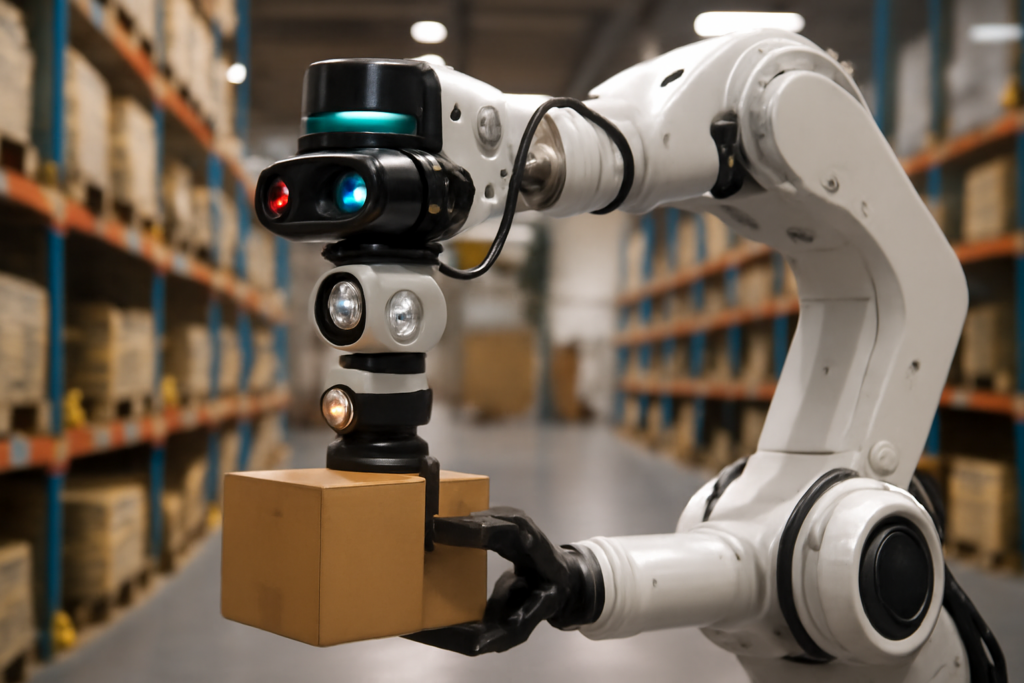
In the context of warehouse automation sensors, this approach compensates for the limitations of individual sensors and improves overall system reliability. A camera may detect color and shape, while LiDAR estimates depth and dimensions. When synchronized, they yield a 3D understanding that enables far more accurate robotic interactions with the physical environment.

This layered insight drives not only picking efficiency but also adaptability, robots can react to variations in lighting, unexpected obstacles, or misaligned products, all without human intervention.

High-tech robotic arm equipped with various sensors including cameras, LiDAR, and infrared, picking up a small cardboard box from a well-organized warehouse with shelves and stacked boxes.
Robotic arm using advanced sensors for precise object picking in a high-tech warehouse.

ALSO READ: Predictive Maintenance Extending Robotic Picker Lifespan


Why Robotic Perception Needs Sensor Fusion

Single-sensor approaches are insufficient in dynamic or cluttered warehouse environments. For example, visual sensors alone may fail in low-light conditions or when objects are reflective. Sensor fusion ensures robust robotic perception by aggregating different types of data to create a contextual understanding of surroundings.

This multidimensional awareness enables robots to:

  • Detect objects with varying shapes and materials.
  • Operate seamlessly in unpredictable warehouse layouts.
  • Adjust in real time using AI-driven sensor weighting algorithms.

The result is increased efficiency and dramatically reduced picking errors.

Moreover, fusion algorithms continuously learn from previous tasks using reinforcement learning and machine vision models, resulting in incremental performance improvements over time, something traditional single-sensor setups cannot match.


Enhancing Warehouse Picker Accuracy

Warehouse picker accuracy is a core KPI in logistics. Mistakes in product picking translate to delays, customer dissatisfaction, and revenue loss. Sensor fusion enhances:

  • Spatial awareness: Combining depth sensing and visual data improves target identification.
  • Grip optimization: Tactile feedback sensors aid adaptive gripping.
  • Collision avoidance: Ultrasonic and LiDAR sensors work in tandem to prevent mishandling.

In facilities handling thousands of SKUs, this level of granularity ensures that robots can distinguish between near-identical items based on size, weight, or position, crucial for pharmaceutical, electronics, and high-value product categories.

Autonomous mobile robot in a warehouse aisle using integrated vision and proximity sensors to identify and pick a cardboard box from a shelf
Autonomous robot efficiently picking up a cardboard box in a warehouse using advanced vision and proximity sensors.

The Role of AI in Logistics and Sensor Fusion

AI logistics tracking systems process fused sensor data to optimize:

  • Navigation paths for robotic arms or AMRs (Autonomous Mobile Robots)
  • Real-time task scheduling
  • Predictive maintenance alerts for hardware longevity

When fused with robot guidance tech, AI models provide situational analysis and micro-adjustments to ensure highly accurate picking performance.

This also introduces enhanced scalability, each additional robot added to the system benefits from a centralized intelligence layer that already understands spatial and functional layouts. As a result, even small-to-medium enterprises can now afford intelligent automation previously accessible only to enterprise-scale operations.


Use Cases: Sensor Fusion in Leading Logistics Systems

Industry leaders like Amazon Robotics and Boston Dynamics are already integrating sensor fusion to support:

  • High-speed logistics robot software
  • Cloud-based robotic coordination across facilities
  • Scalability of picker vision AI systems

In addition to traditional warehousing, sensor fusion has also found applications in:

  • Cold-chain logistics (handling sensitive products in varied temperature/light conditions)
  • Micro-fulfillment centers (compact, high-density picking environments)
  • Last-mile delivery robots requiring obstacle-rich navigation

These applications show measurable improvements in pick success rates, downtime reduction, and order accuracy.

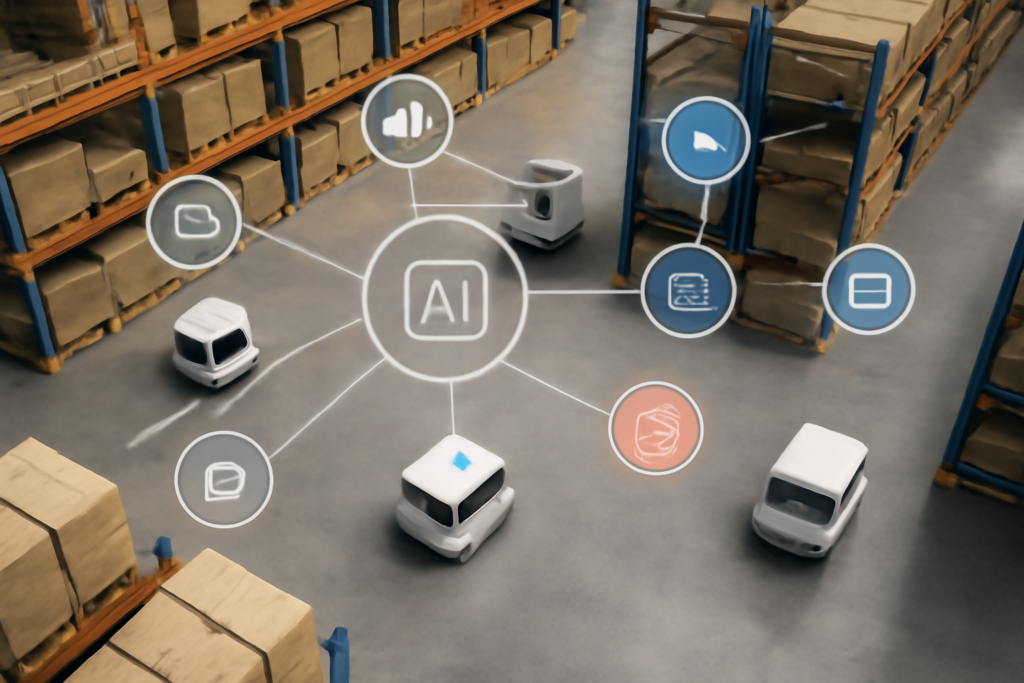
Bird’s-eye view of a modern warehouse with autonomous robots guided by AI and sensor fusion technology, digital overlays showing sensor types like cameras, LiDAR, and infrared.
AI-guided autonomous robots working in a warehouse, with digital overlays showcasing integrated sensor technology for efficient operations.

Challenges and Future Outlook

While the benefits are substantial, challenges remain in:

  • Sensor calibration and drift over time
  • Data overload and latency in real-time processing
  • Integration with legacy robotic systems

However, advancements in edge computing and 5G infrastructure are expected to reduce these barriers, paving the way for near-zero-error robotic operations in logistics.

Open-source frameworks like ROS (Robot Operating System) and modular sensor packages are making adoption easier and more cost-efficient across industries.


FAQs

What is sensor fusion in warehouse robotics?

Sensor fusion combines multiple sensor data streams, like vision, LiDAR, and touch, into one dataset to improve robotic accuracy and reliability.

How does sensor fusion impact warehouse picker accuracy?

It reduces errors by providing a detailed and holistic understanding of the warehouse environment, enabling robots to pick items more precisely.

Why is AI logistics tracking important in robotic perception?

AI models analyze real-time fused sensor data to guide robots efficiently, boosting productivity and decision-making in logistics.

Which sensors are used in sensor fusion robotics?

Common sensors include RGB cameras, depth sensors, LiDAR, ultrasonic sensors, IMUs, and tactile sensors.

Is sensor fusion cost-effective for small warehouses?

Yes. With modular hardware and open-source robotics platforms, sensor fusion is becoming increasingly accessible to small- and medium-sized warehouses.


Conclusion

Sensor fusion represents a significant leap in robotic intelligence, bringing together hardware and AI to achieve unmatched warehouse picker accuracy. As robotics continues to drive the future of logistics, businesses that invest in these precision systems will stand at the forefront of operational excellence.

Ready to Explore More?

Looking to integrate sensor fusion into your warehouse automation strategy? Contact our robotics solutions team today for a tailored deployment plan.

Cobots vs Robots: What’s Shaping the Future of Work?


Introduction

Robots in factories used to mean big machines in cages, doing repetitive tasks far away from humans. But now, a new type of robot is quietly redefining automation: the cobot.

Short for collaborative robot, cobots aren’t just efficient, they’re built to work with people, not replace them. They’re smaller, smarter, safer, and often more affordable than traditional industrial robots.

So here’s the big question: Are cobots the future, or just a niche tool in a growing robotics landscape?

Let’s break down the differences, strengths, and trade-offs between cobots and traditional robots. Whether you’re in manufacturing, logistics, or research, knowing which one fits your workflow could change how you think about automation entirely.


What Are Traditional Robots?

Traditional robots are what most people picture when they think of factory automation. They’ve been around for decades and usually have these traits:

  • Large and fast
  • Built for repetitive, high-volume tasks
  • Often fenced off for safety
  • Controlled via pre-programmed routines
  • Used in automotive, electronics, and heavy manufacturing

These machines excel at consistency and speed. But they also require a lot of upfront investment, space, and supervision.

ALSO READ


What Makes Cobots Different?

Cobots, on the other hand, are designed to work safely alongside humans. Their defining features include:

  • Built-in sensors and force limits to avoid injuries
  • Compact design
  • Easy to program (often with drag-and-drop interfaces or hand-guided training)
  • Ideal for tasks that require human-robot collaboration
  • Suited for small and medium-sized businesses (SMBs)

Instead of replacing workers, cobots help them. Think of them as robotic assistants rather than automated replacements.


Cobots vs Traditional Robots: Side-by-Side Comparison

FeatureCobotsTraditional Robots
SpeedModerateVery fast
SafetyBuilt for human interactionRequires fencing and isolation
ProgrammingIntuitive, low-codeComplex, often requires experts
FlexibilityHighly adaptableDesigned for fixed tasks
CostLower upfront costHigh installation and setup cost
ApplicationsAssembly, packaging, inspectionWelding, painting, machining
Ideal ForSmall-medium businessesLarge-scale industrial settings

Where Cobots Win

✅ Ease of Deployment

Cobots can be set up in days, not months. You don’t need a team of robotics engineers to get started.

✅ Agile Manufacturing

In industries where product lines change often, cobots offer quick reprogramming and redeployment.

✅ Worker Support, Not Replacement

Cobots handle tasks like screwdriving, box lifting, or repetitive inspections, freeing up humans for higher-value work.

✅ Lower Cost Barrier

Many cobots cost under $50,000, making them accessible to smaller firms looking to automate without major restructuring.


Where Traditional Robots Still Dominate

⚙ Speed and Power

Traditional robots can move faster and handle heavier payloads. In car manufacturing or large-scale electronics, they’re still essential.

🏭 High-Volume Consistency

If your operation involves thousands of identical tasks per hour, traditional robots are unmatched.

🔧 Specialized Tasks

Robotic welding, laser cutting, or precision machining require the force and precision of industrial-grade arms.


Safety: A Key Differentiator

Cobots are inherently safe. That’s their core design principle. They include:

  • Force feedback to stop motion if contact is made
  • Vision systems to detect nearby humans
  • Speed and power limits based on risk assessment

Traditional robots, on the other hand, are often fast enough to cause serious injury. That’s why they operate in fenced-off areas with strict safety protocols.

Still, safety isn’t automatic. Cobots must undergo risk assessments too. But the built-in protections give them a major edge in mixed environments.


Industry Use Cases: Cobots in Action

🏭 Manufacturing

Small factories use cobots for pick-and-place, screwdriving, and component testing.

📦 Logistics

Cobots assist with sorting packages, scanning barcodes, and loading goods on conveyors.

💊 Pharma and MedTech

In cleanrooms, cobots handle repetitive lab tasks, reducing human contamination risks.

🍴 Food & Beverage

Cobots decorate cakes, sort produce, and package goods with speed and hygiene compliance.


So, Which One Should You Choose?

It depends on your needs.

  • If you’re a large-scale manufacturer with strict speed and precision requirements, traditional robots still make sense.
  • But if you want flexible automation that works with your team, cobots offer huge value.

In many cases, a hybrid setup, using both types, gives you the best of both worlds.


The Bigger Picture: Robots as Coworkers, Not Replacements

Cobots are part of a broader shift in how we think about machines. The goal isn’t to push humans out. It’s to build smarter workflows where robots assist, augment, and collaborate.

As labor shortages rise and production gets more personalized, companies that can integrate collaborative tech will gain speed and agility.

The future of work? It’s not robot vs human. It’s robot with human.


    FAQs

    1. What’s the main difference between cobots and traditional robots?
    Cobots are designed to work with humans safely and flexibly. Traditional robots are faster and stronger but require isolated workspaces.

    2. Are cobots safe to use in public or open environments?
    Yes, most cobots are built with safety sensors and force limits. However, each deployment still requires a risk assessment.

    3. Can cobots replace workers?
    They’re more likely to assist than replace. Cobots handle repetitive or strenuous tasks, allowing humans to focus on creative or supervisory roles.


    Call to Action

    Ready to bring collaboration into automation?
    Explore cobot options and see how your team can work with robots, not around them. The future of work is closer, and more collaborative, than you think.


    Keywords (comma-separated)

    cobots vs robots, collaborative robots, industrial automation, future of robotics, traditional robot comparison, cobot safety, cobot use cases, robotics in manufacturing, cobot vs industrial robot, human robot collaboration, robot coworker

    Exoskeletons in Robotics: Augmenting Human Strength on the Job Site


    Introduction

    Lifting, bending, carrying, physically demanding tasks are part of many industries. Over time, these repetitive movements can lead to fatigue, injuries, and lost productivity. But what if workers had wearable machines that could absorb the strain, enhance strength, and reduce injury risk? Enter robotic exoskeletons, a rising star in the robotics world.

    These wearable devices are helping people do more with less effort, transforming both how work gets done and how long people can safely do it.


    What Are Robotic Exoskeletons?

    Robotic exoskeletons are wearable machines designed to assist or amplify human motion. Built with lightweight materials and powered actuators or spring-based mechanics, they support arms, backs, and legs.

    There are two major types:

    • Passive exoskeletons: Use mechanical support without motors (often spring-assisted)
    • Powered exoskeletons: Use motors or hydraulics for active movement and lifting

    By synchronizing with the user’s movements, they reduce the strain on muscles and joints, particularly in industries like manufacturing, logistics, and construction.


    Industrial Applications on the Rise

    1. Construction and Heavy Lifting

    On construction sites, exoskeletons assist with:

    • Lifting heavy materials
    • Overhead drilling
    • Concrete handling
    • Manual carrying

    Workers experience less fatigue and greater control, even after long shifts. This improves both safety and output.


    2. Warehouse and Logistics

    In fast-paced logistics hubs, exoskeletons reduce injury risks from lifting and bending. Workers who wear these devices move faster, make fewer errors, and recover quicker between tasks.

    Additionally, these suits help prevent chronic issues like lower back pain or shoulder injuries, leading causes of warehouse absenteeism.


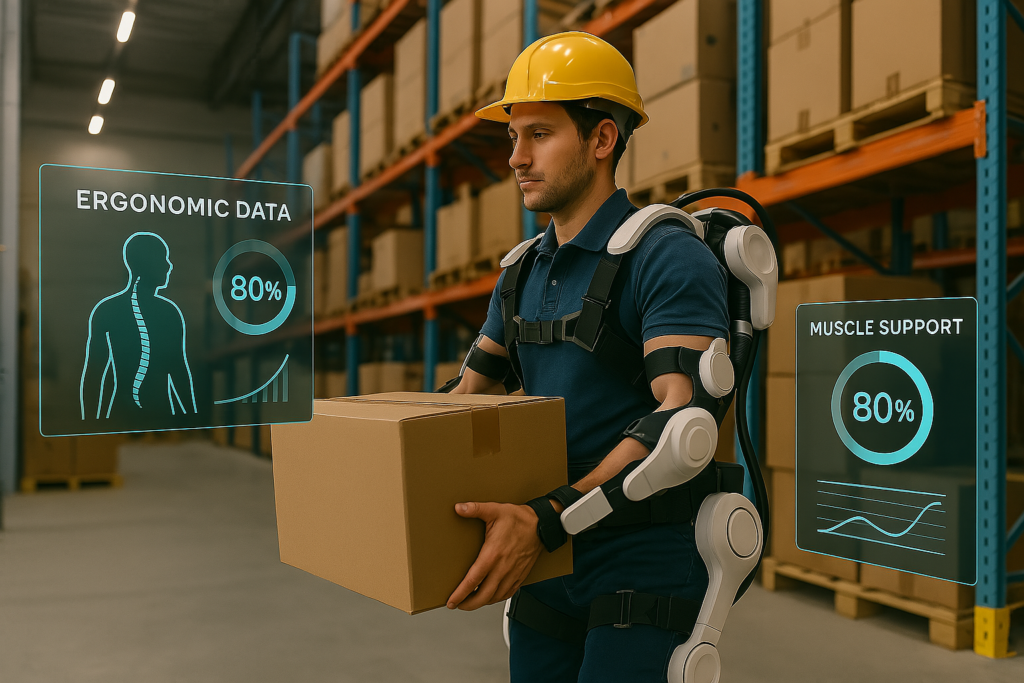
    A logistics worker wearing a lightweight robotic exosuit while lifting a heavy box in a warehouse. Futuristic HUD overlays show ergonomic data and muscle support levels. 4K resolution, clean industrial setting.
    A logistics worker wearing a lightweight robotic exosuit while lifting a heavy box in a warehouse.

    3. Healthcare and Rehabilitation

    Some exoskeletons are designed for patients, not just workers. In hospitals and rehab centers, powered suits help individuals relearn walking, rebuild leg strength, or restore upper limb motion.

    These systems provide real-time feedback, encouraging proper posture and safe movement. This leads to faster recovery and better long-term outcomes.

    ALSO READ


    4. Automotive Manufacturing

    Assembly-line workers often repeat the same overhead or crouching movements thousands of times. Wearable robotics reduce strain and improve endurance, making precision work safer and more sustainable.

    Major companies like Ford and Hyundai have already introduced exosuits to support their assembly crews.


    How Robotic Exoskeletons Improve Safety and Efficiency

    These suits don’t just prevent injuries, they also:

    • Improve lifting force without added strain
    • Stabilize movement and reduce wobble
    • Correct posture through smart alignment
    • Support real-time alerts if unsafe motion is detected
    • Allow people to work longer without overexertion

    Companies report fewer worker’s compensation claims, reduced fatigue-related errors, and improved morale after integrating wearable robotics.


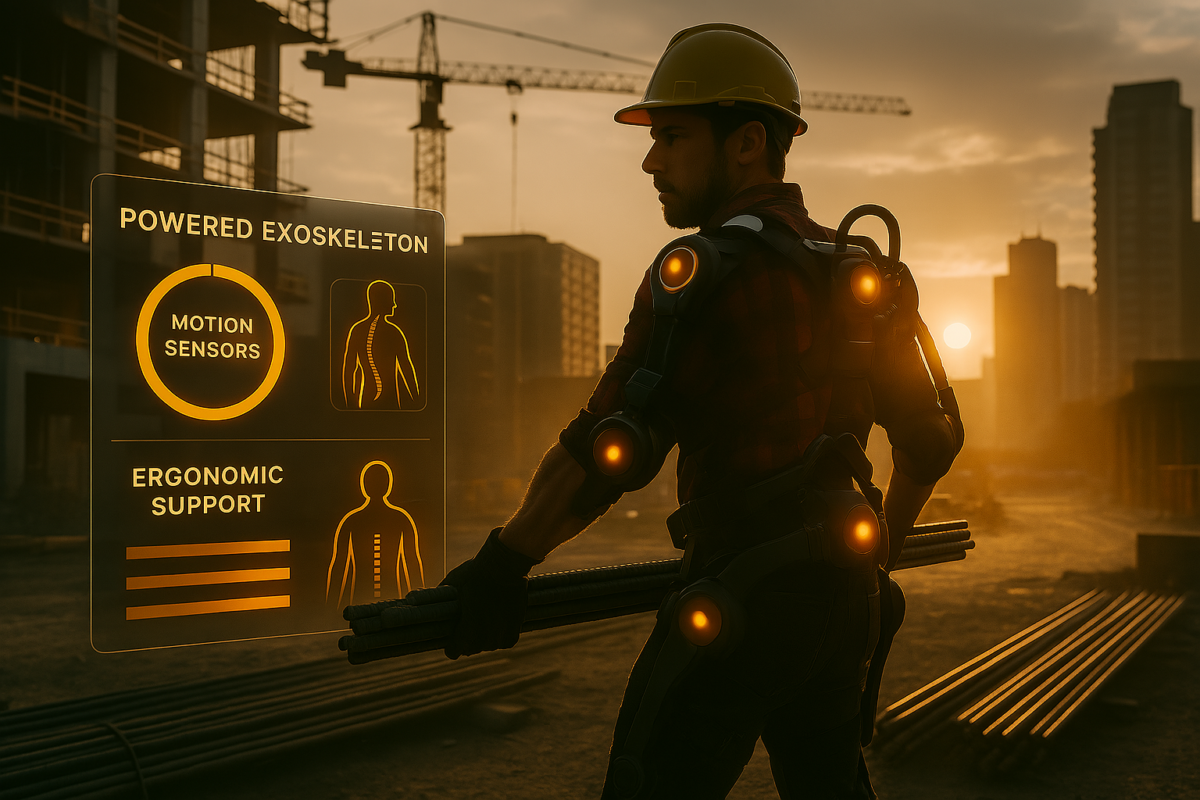
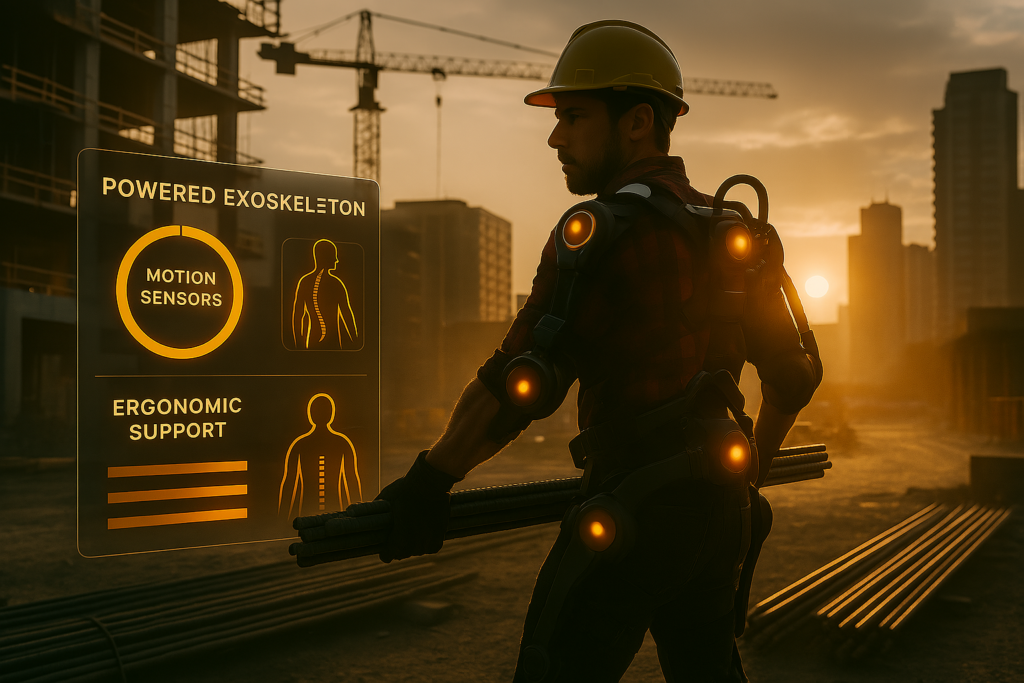
    Construction worker in a powered back-assist exoskeleton lifting steel bars, with motion sensors active and ergonomic support indicators glowing. Urban job site in background, sunrise lighting, high contrast, 4K detail.
    Construction worker in a powered back-assist exoskeleton lifting steel bars.

    The Technology Behind Exosuits

    Smart robotic exoskeletons use sensors and AI to monitor:

    • Muscle exertion
    • Spinal posture
    • Joint angles
    • Step frequency
    • Load distribution

    Some systems even include Bluetooth connectivity to sync with workplace dashboards. Supervisors can monitor team health metrics and optimize task assignments in real time.


    Challenges and Considerations

    While the benefits are promising, a few challenges remain:

    • Cost barriers: Some powered exosuits can cost thousands of dollars
    • User adaptation: Learning to move with assistance takes time
    • Battery limitations: Power units may need frequent recharging
    • Maintenance needs: Mechanical parts require regular checks
    • Sizing issues: Fit and comfort vary across body types

    That said, the pace of innovation is lowering costs and improving usability every year.


    Future Outlook: Where Exoskeletons Are Headed

    In the coming years, expect to see:

    • AI-driven motion prediction: Allowing smoother, faster support
    • Lighter materials: Making suits more wearable for long periods
    • Wireless energy charging: To extend battery life
    • Data integration with wearables: Like smart helmets or wristbands
    • Use in elder care: Helping caregivers lift and support patients safely

    These trends will move robotic exoskeletons from niche tech to everyday equipment across industries.


    Conclusion

    Robotic exoskeletons are transforming how physical work is performed. By supporting the human body with smart mechanics, these systems reduce injury, boost productivity, and extend careers. As costs fall and tech improves, more companies will adopt this powerful blend of human skill and robotic strength.


    Ready to Explore More?

    💪 Curious how wearable robotics can enhance your workplace? Download our Industrial Exoskeleton Starter Guide and explore vendor options, ROI calculators, and use cases tailored to your sector.

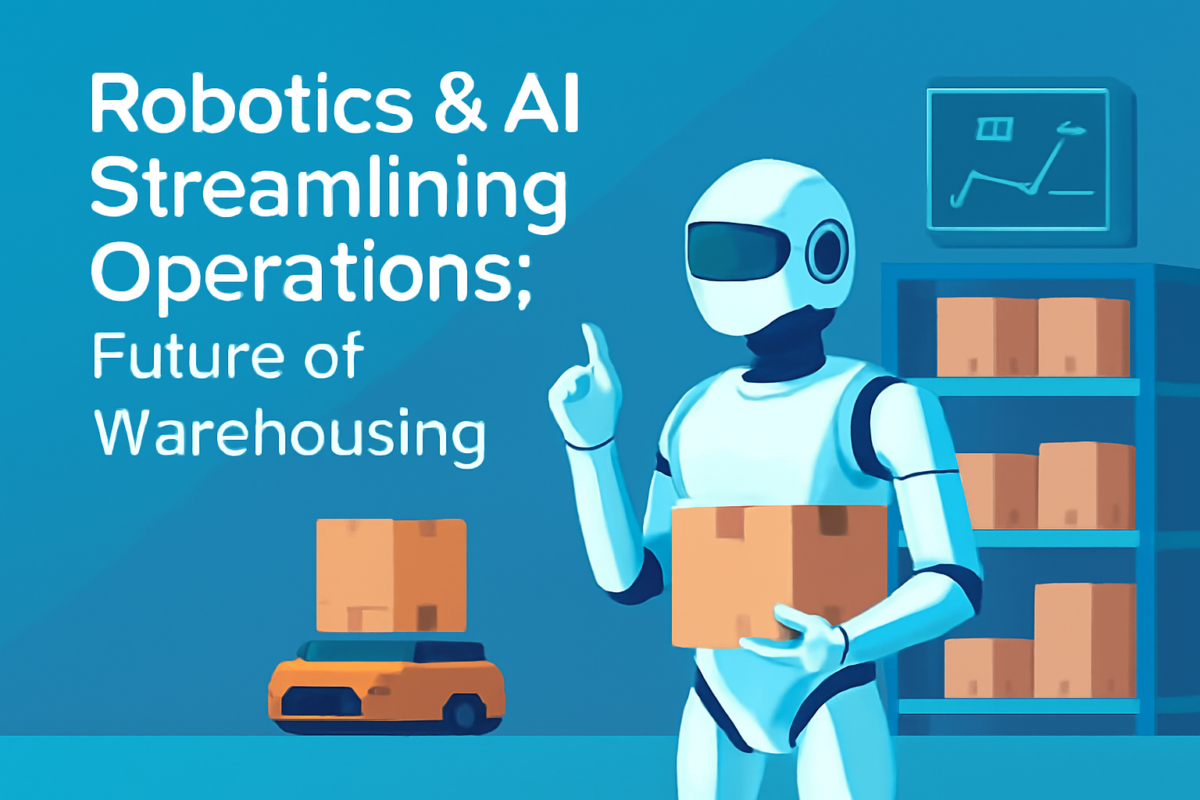
    Robotics & AI Streamlining Operations: Future of Warehousing


    Introduction

    The warehousing industry is undergoing a revolutionary transformation driven by advances in robotics warehouse technology and simpler robotics & AI logistics systems. As consumer demands increase and supply chains become more complex, the future of warehousing hinges on the seamless integration of automation and artificial intelligence. From robotic picker technology to fully automated warehouse systems, intelligent machines are optimizing processes to achieve unprecedented levels of logistics efficiency and accuracy.


    Robotics & AI: The Backbone of Smart Warehouses

    Smart warehouses rely on AI robotics warehouse solutions that combine physical robots with powerful AI algorithms. These technologies enable:

    • Real-time inventory tracking
    • Automated picking and sorting
    • Predictive maintenance of warehouse equipment

    This fusion of robotics & AI is at the core of robotic automation, driving smarter and faster fulfillment.


    Key Innovations Shaping Warehouse Automation

    1. Advanced Robotic Pickers
    Modern robotic picker technology uses AI-driven vision systems and robotic grippers that can adapt to various shapes and sizes of products. This flexibility allows robots to pick and place items with high precision, even in cluttered or variable environments. The result is reduced picking errors and increased throughput, crucial for meeting the demands of today’s fast-paced supply chains.

    2. Automated Warehouse Systems
    These systems integrate robotics, conveyors, automated storage, and retrieval systems (AS/RS), and sophisticated warehouse management software to streamline every step of the logistics process. Automation reduces human error, improves safety, and optimizes space utilization, contributing to overall warehouse productivity.

    3. AI-Powered Inventory Management
    AI not only powers the physical robots but also processes vast amounts of data to predict inventory needs, optimize stock levels, and prevent stockouts or overstock situations. By analyzing historical trends and real-time inputs, AI algorithms facilitate proactive decision-making that keeps warehouses lean yet responsive.

    Robot Operating Conveyor Belts
    Robot Operating Conveyor Belts

    Benefits of Robotics and AI in Warehousing

    Increased Productivity
    Robots excel at repetitive tasks and can operate continuously without fatigue. This around-the-clock operation drastically increases order fulfillment speed, allowing warehouses to handle peak demand periods without hiring temporary labor.

    Enhanced Accuracy
    AI-driven robots minimize picking mistakes by using advanced sensors and machine learning to identify items correctly. Accurate picking reduces costly returns, customer complaints, and inventory discrepancies.

    Cost Reduction
    Automation cuts down on labor expenses and improves operational efficiency. Over time, the investment in robotic systems typically leads to significant cost savings and improved ROI.

    Scalability and Flexibility
    Robotic systems can be scaled and reconfigured to fit warehouses of different sizes and layouts. This flexibility enables companies to expand operations or adapt to changing product mixes without major disruptions.

    ALSO READ: Listen Up: Here’s How to Stop Your Warehouse Wasting Your Money


    Real-World Applications

    Robotics and AI have already demonstrated immense value across various industries:

    • E-commerce: During high-demand seasons, AI-powered robots manage millions of orders with speed and accuracy, ensuring timely deliveries.
    • Manufacturing: Robots assist assembly lines by delivering components and materials efficiently, reducing downtime.
    • Retail Distribution: Automated warehouses support restocking and processing returns seamlessly, improving overall supply chain responsiveness.
    Collaborative Robots (CoBots) Operating in Warehouse
    Collaborative Robots (CoBots) Operating in Warehouse

    Overcoming Challenges in Adoption

    Despite the clear benefits, implementing robotics and AI in warehousing also presents challenges:

    • High Initial Investment: The upfront cost for robotic infrastructure can be substantial, particularly for smaller businesses. However, decreasing hardware costs and cloud-based robotics platforms are making these technologies more accessible.
    • Workforce Integration: Employees require training to work alongside robots and manage AI systems effectively. Upskilling the workforce is essential to maximize benefits.
    • Data Security: As warehouses become more connected, ensuring the security of data and robotic networks is paramount to prevent cyber threats.

    Looking Ahead: The Future Landscape

    Collaborative Robots (Cobots)
    Future warehouses will see more collaborative robots, designed to work safely alongside human workers. These cobots can take over repetitive or physically demanding tasks while humans focus on strategic and supervisory roles.

    AI-Driven Predictive Logistics
    AI will continue advancing to predict supply chain disruptions, optimize delivery routes, and dynamically adjust warehouse workflows in real-time.

    Cloud-Based Robotics Control
    Cloud platforms will enable centralized control of multi-location warehouse networks, providing greater visibility and coordination for global logistics operations.

    Integration with IoT and Blockchain
    The convergence of AI, robotics, IoT sensors, and blockchain technology will create fully transparent and efficient supply chains. Real-time tracking and immutable records will boost trust and reduce losses.

    Image Prompt 4: Visual concept of interconnected warehouse robots controlled via a cloud-based platform, displaying data streams and blockchain icons in a futuristic interface


    Frequently Asked Questions

    What is the future of robotics in warehousing?
    Robotics will become more autonomous, intelligent, and integrated with AI to handle complex logistics tasks efficiently.

    How does AI improve warehouse operations?
    AI enables predictive analytics, real-time decision-making, and automation of repetitive tasks, enhancing speed and accuracy.

    Can robotics and AI be implemented in existing warehouses?
    Yes, many systems are designed for seamless integration with current warehouse management software and infrastructure.

    Are robotic systems cost-effective?
    While initial investments can be significant, the long-term savings in labor, errors, and efficiency gains often justify the expense.

    What role do smart warehouses play in logistics?
    Smart warehouses use connected technologies to optimize every stage of the supply chain, reducing downtime and boosting customer satisfaction.


    Conclusion

    The integration of robotics and AI is shaping the future of warehousing by enabling smarter, faster, and more efficient operations. Businesses adopting these technologies are poised to gain a competitive edge in an increasingly demanding market. As these technologies mature, warehouses will become more adaptive, sustainable, and customer-centric, paving the way for a new era in logistics.


    Take the Next Step in Warehouse Innovation

    Ready to future-proof your warehouse?
    Contact us today to explore how AI-driven robotic solutions can streamline your operations and boost efficiency.

    Robotics in Construction: Smarter Builds and Safer Worksites


    Introduction

    The construction industry has always relied on human strength, skill, and coordination. Yet today, a new force is entering job sites, robotics. With smart machines taking on repetitive, hazardous, and time-sensitive tasks, robotics in construction is becoming a game-changer. These robots aren’t just about efficiency, they’re making building safer, faster, and more sustainable.


    The Rise of Smart Construction Robots

    Modern construction projects are more complex than ever. To meet tight deadlines and high safety standards, companies are turning to robotics. From autonomous bulldozers to robotic arms laying bricks, machines are transforming how infrastructure is built.

    Key types of robots include:

    • Robotic bricklayers that can lay thousands of bricks per day
    • 3D printing robots for walls, panels, and structural elements
    • Inspection drones that monitor progress from above
    • Demolition robots used in hazardous or unstable buildings
    • Surveying bots that create 3D maps in real time

    Together, these systems reduce manual labor, limit injuries, and improve precision across all construction stages.


    Boosting Productivity with Robotics

    Time is money on a construction site. Robots can work longer hours without breaks or fatigue, allowing crews to operate around the clock. They also reduce bottlenecks by taking over repetitive or physically intensive jobs.

    Examples include:

    • Concrete robots that pour and level surfaces evenly
    • Wall-painting drones that finish tasks in a fraction of the usual time
    • Rebar tying machines that speed up foundation work

    With robotics, construction managers gain more predictable timelines and better quality control.


    Improving Site Safety with Automation

    Construction remains one of the most dangerous industries worldwide. Robotics can help reduce risks by keeping humans away from:

    • High altitudes or unstable scaffolding
    • Heavy machinery operation zones
    • Confined or toxic environments

    For instance, autonomous bulldozers use GPS and sensors to clear land without operators inside. Similarly, demolition bots can tear down walls in damaged or fire-prone buildings, reducing the need for manual entry.

    By offloading risky tasks, robots protect workers and reduce accident-related costs.


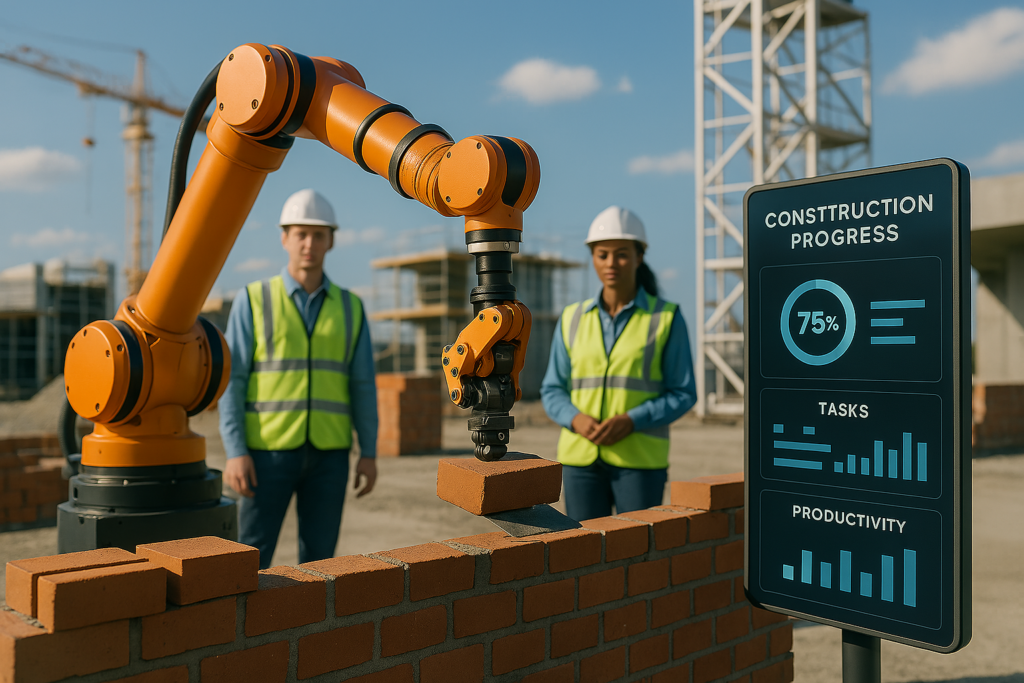
    A robotic bricklayer laying bricks on a smart construction site. Humans oversee the process while a digital dashboard tracks progress. Sunny weather, futuristic equipment, 4K resolution.
    A robotic bricklayer laying bricks on a smart construction site.

    AI Meets Construction Robotics

    Artificial intelligence plays a major role in construction robotics. AI helps machines:

    • Learn from terrain data
    • Adapt movement to different site conditions
    • Optimize material usage in real time
    • Detect structural flaws or deviations

    For example, an AI-powered inspection drone can scan a building’s frame, identify weak points, and alert engineers instantly. Combined with computer vision, these smart bots provide data faster than traditional inspections.


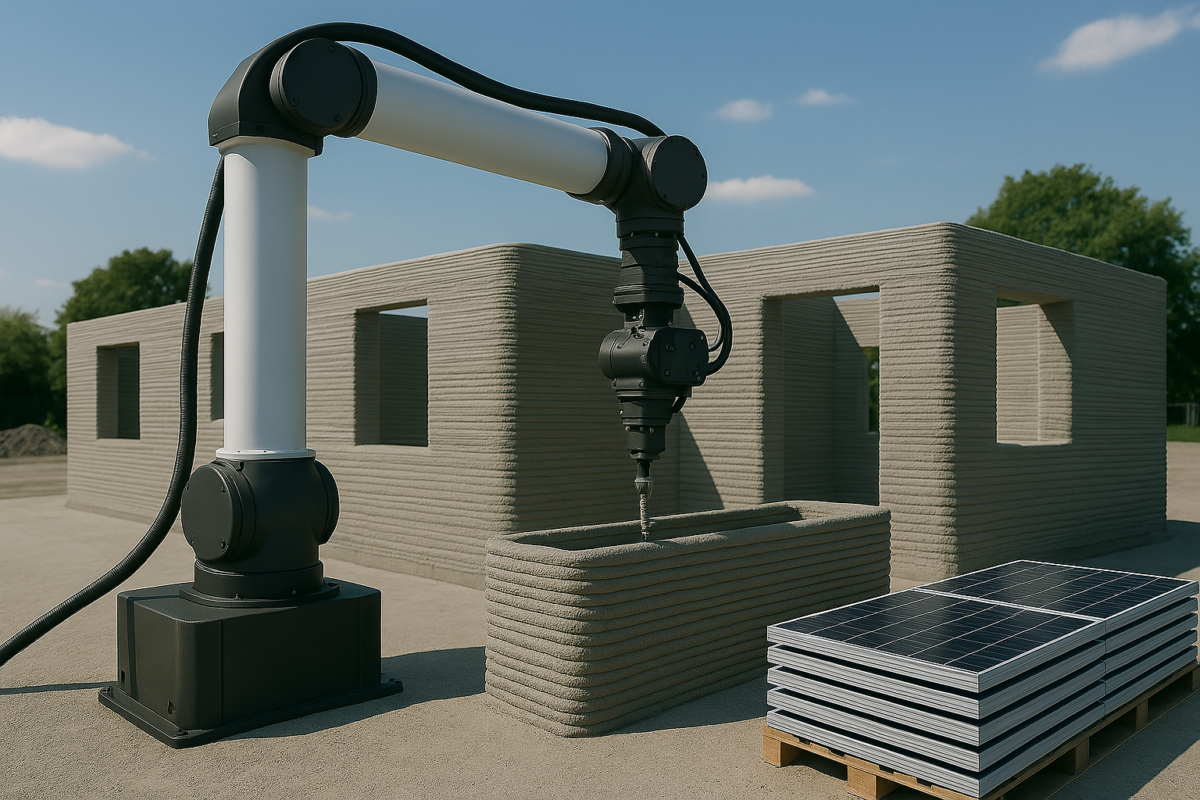
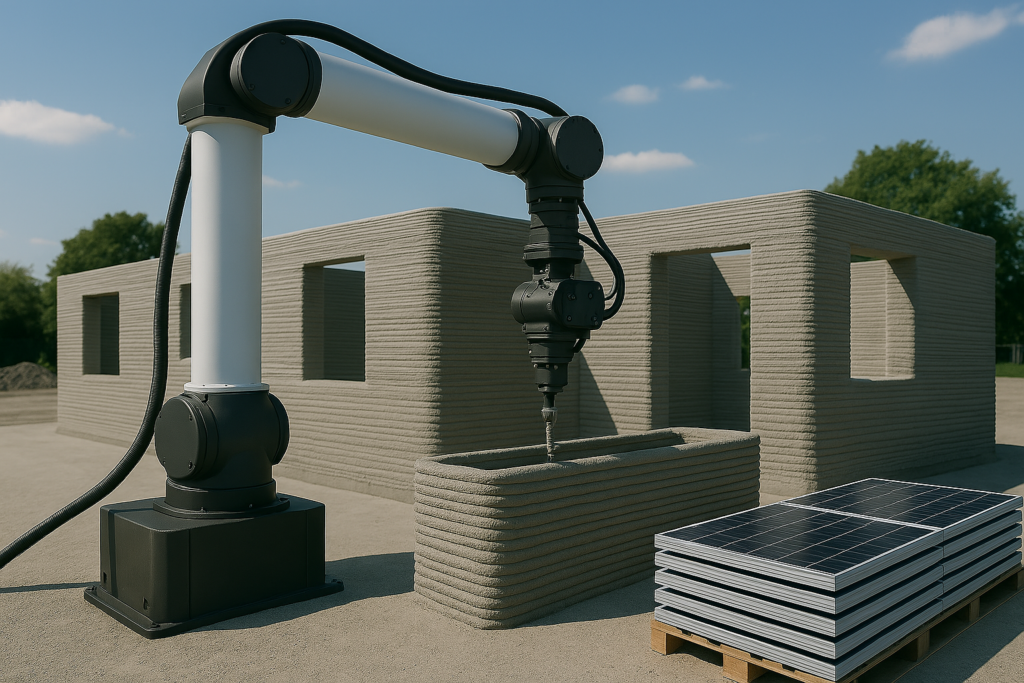
    The Role of 3D Printing in Construction

    3D printing is one of the most talked-about innovations in construction robotics. Using large-scale printers, entire walls and frames can be printed layer by layer using special concrete mixes.

    Benefits include:

    • Rapid construction of low-cost housing
    • Waste reduction by using only required material
    • Precise customization of shapes and structures
    • Improved sustainability through local material sourcing

    Some companies have already built homes, offices, and schools using robotic 3D printers, with fewer errors and lower emissions.


    AI Image Prompt #2

    A robotic bricklayer laying bricks on a smart construction site. Humans oversee the process while a digital dashboard tracks progress. Sunny weather, futuristic equipment, 4K resolution.
    A robotic bricklayer laying bricks on a smart construction site.

    Robots and Human Workers: A Collaborative Future

    Rather than replacing jobs, construction robots are assisting skilled labor. Humans continue to:

    • Monitor robots
    • Program task flows
    • Perform finishing work
    • Solve unexpected problems on site

    This synergy creates safer roles and allows workers to upskill into robotics management, digital modeling, or equipment diagnostics.

    Training programs for construction tech are growing, giving workers new career paths in a high-tech industry.

    Also Read


    Barriers to Full Adoption

    Despite the promise of robotics in construction, some challenges persist:

    • High upfront costs for new equipment
    • Integration difficulties with older workflows
    • Regulatory uncertainty around autonomous machines
    • Limited technical skill among current workforce
    • Environmental unpredictability (weather, debris, terrain)

    However, as more firms adopt robotics and see ROI benefits, these barriers are slowly breaking down.


    Global Examples of Construction Robotics

    Several countries are already pioneering robotics in construction:

    • Japan: Using humanoid robots to assist with labor shortages
    • Netherlands: 3D printing bridges and low-income housing
    • USA: Startups developing robotic framing systems
    • UAE: Printing entire villa complexes with autonomous systems

    These examples show that robotics isn’t a future vision, it’s happening right now.


    What’s Ahead for the Industry?

    The future of robotics in construction includes:

    • Autonomous project managers using AI for resource allocation
    • Robot swarms that coordinate in real time
    • Green robots that use sustainable materials and energy sources
    • Remote-operated bots for disaster-zone rebuilding
    • Wearable robotics (exosuits) to assist human laborers

    Eventually, entire construction sites may run semi-autonomously, with humans guiding and innovating instead of lifting and digging.


    Conclusion

    Robotics in construction is more than just automation, it’s about creating safer sites, smarter workflows, and sustainable growth. With machines taking over dangerous and repetitive tasks, construction becomes more efficient and resilient. The shift is already underway, and those who embrace it now will lead the infrastructure revolution.


    Ready to Explore More?

    🏗️ Want to modernize your construction processes? Download our Robotics Integration Toolkit for Builders and discover how to future-proof your projects with smart machines.